Picture this: You’re a procurement manager at a mid-sized manufacturing plant, and the production line has ground to a halt. The culprit? A failed rubber gasket on a critical flanged joint. The maintenance team tells you it’s a “standard size,” but your supplier’s latest batch doesn’t fit—thickness is off by a millimeter, and the bolt holes don’t align. Suddenly, you’re deep in a world of ANSI, DIN, JIS, and dozens of possible combinations. What are the standard sizes and thicknesses for rubber gaskets? That’s the first question you ask, and the answer can save your budget, your timeline, and your sanity. In the demanding world of industrial sealing, knowing the correct dimensions isn’t just about specs—it’s about preventing downtime, ensuring safety, and building a reputation for reliability. At Ningbo Kaxite Sealing Materials Co., Ltd., we’ve spent two decades simplifying that complexity for buyers across the globe. Whether you need a 1/2″ ring gasket for a steam line or a 48″ full-face gasket for a chemical reactor, the “standards” are your blueprint. But here’s the twist: there’s more than one standard, and picking the wrong one can cost you thousands. This guide breaks down those standards into actionable insights, so you can order with confidence the first time.
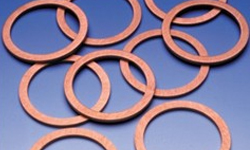
Every maintenance engineer knows the frustration: a leaking flange joint that simply won’t seal, no matter how many times you retorque the bolts. The root cause is often a mismatch between the gasket dimensions and the flange face. Rubber Gaskets come in a bewildering array of sizes, but the industry has settled on a few key standards to bring order to the chaos. The most widely adopted include ASME B16.21 (non-metallic flat gaskets for pipe flanges), DIN 2690 for European flanges, and JIS B2404 for Japanese systems. These standards specify inner diameter, outer diameter, bolt circle diameter, and number of bolt holes for each nominal pipe size and pressure class. Thickness typically ranges from 0.8 mm (1/32″) to 6.4 mm (1/4″), with 1.6 mm (1/16″) and 3.2 mm (1/8″) being the most common choices for standard ANSI raised-face flanges. At Ningbo Kaxite Sealing Materials Co., Ltd., we stock a full range of standard sizes, and our technical team helps you select the right thickness based on flange flatness, media temperature, and bolt load. Below is a simplified look at typical ASME B16.21 Ring Gasket dimensions for Class 150 flanges.
| Nominal Pipe Size (NPS) | Inside Diameter (mm) | Outside Diameter (mm) | Standard Thickness (mm) |
|---|---|---|---|
| 1/2″ | 14 | 48 | 1.6 |
| 1″ | 25 | 73 | 1.6 |
| 2″ | 51 | 117 | 1.6 |
| 4″ | 102 | 184 | 3.2 |
| 8″ | 203 | 324 | 3.2 |
While the table shows typical values, the production reality is that many applications demand non-standard cuts. Waterjet and CNC knife cutting at Ningbo Kaxite enable us to deliver custom sizes within ±0.5 mm tolerance, often with same-day shipping. So when you ask, “What are the standard sizes and thicknesses for rubber gaskets?” the answer is that the standards form a reliable starting point, but true reliability comes from matching the gasket to your exact flange condition and process parameters.

Imagine you’re sourcing silicone rubber gaskets for a food-grade heat exchanger. You’ve ordered the correct pipe size, yet the gasket bulges inward after installation, creating a contamination trap. This is a classic symptom of overlooking compressibility and seating stress. Thickness is not just a number; it dictates how the rubber conforms to surface irregularities. A 3.2 mm thick gasket can seal a flange with 0.5 mm of waviness, while a 1.6 mm gasket may leak at the same bolt torque. Beyond thickness, the gasket’s outer diameter must match the flange’s raised face width to avoid blowout under pressure. Here’s a parameters table to guide your selection:
| Factor | Recommendation | Typical Ningbo Kaxite Solution |
|---|---|---|
| Flange surface roughness | Ra ≤3.2 μm: use 1.6 mm thick; Ra 3.2–6.3 μm: use 3.2 mm | Rubber sheet in both thicknesses, with controlled hardness |
| Media pressure (bar) | ≤10 bar: 1.6 mm; 10–25 bar: 3.2 mm; >25 bar: consult | Custom laminated gaskets with steel core |
| Temperature range | EPDM -40°C to 150°C; NBR -30°C to 120°C | Full material range, certs available |
| Bolt load capacity | Soft rubber max compressive stress 7 MPa | Torque guideline sheets per EN 1591-1 |
At Ningbo Kaxite Sealing Materials Co., Ltd., we’ve seen too many buyers try to cut costs by choosing a thinner gasket, only to face expensive retorquing cycles. By integrating material selection with dimensional accuracy, we help you avoid those hidden costs. Remember, the right size and thickness is an investment in your system’s integrity.
It’s 3 a.m. when a water treatment plant’s main filter line starts gushing. The emergency shutdown costs $20,000 per hour, and the inspection reveals that the gasket was cut too small for the flange—a simple dimension error. Such failures happen when procurement relies on “one-size-fits-all” shortcuts. Rubber gaskets must account for not only pipe inner diameter but also the flange’s sealing surface configuration. Full-face gaskets, for instance, must extend to the flange’s outer edge and include bolt holes, while ring gaskets sit entirely within the bolts. Mismatching these types is a common but preventable mistake. Below are two common questions we receive from industrial buyers that further clarify the issue.
Q: What are the standard sizes and thicknesses for rubber gaskets used in ASME flanges?
A: For ASME B16.5 flanges, Class 150 ring gaskets typically follow the dimensions listed in ASME B16.21 tables. The thicknesses are predominantly 1.6 mm (1/16″) for sizes up to 12″ and 3.2 mm (1/8″) for larger diameters, though 0.8 mm and 6.4 mm options are available for specialized applications. Inside and outside diameters are specified for each NPS—for example, a 6″ Class 150 ring gasket has an ID of 152 mm and an OD of 222 mm. At Ningbo Kaxite Sealing Materials Co., Ltd., we maintain a comprehensive inventory of these standard sizes and can cross-reference DIN and JIS equivalents immediately.
Q: What are the standard sizes and thicknesses for rubber gaskets in sanitary (food-grade) piping?
A: Sanitary rubber gaskets, often used in tri-clamp connections, follow standards such as BS 4825-3 and ASME BPE. Typical sizes range from 1/2″ to 4″ with a thickness of 3.2 mm or 4.8 mm to ensure positive seal under vacuum and thermal cycling. The geometry is a flat ring with a smooth surface finish. Our food-grade rubber gaskets at Ningbo Kaxite comply with FDA and EU 1935/2004, and we can supply both metric and imperial standard dimensions from stock.
Proactive dimension verification prevents such costly incidents. We recommend keeping a digital caliper and a flange dimension chart in your quality control workflow. Alternatively, you can send us your flange drawing, and our team will return a gasket CAD file within 24 hours—free of charge.
When you’re juggling quotes from multiple suppliers, the last thing you want is a dimensional discrepancy. To simplify your sourcing, we’ve compiled a cross-reference table covering the four most widely used rubber gasket standards. This is the kind of tool our clients keep pinned to their workshop wall.
| Standard | Typical Size Range (NPS/DN) | Standard Thickness (mm) | Common Rubber Materials |
|---|---|---|---|
| ASME B16.21 | 1/2″ – 24″ | 1.6, 3.2 | NBR, EPDM, SBR |
| DIN 2690 | DN10 – DN600 | 2.0, 3.0 | NBR, EPDM, FKM |
| JIS B2404 | 10A – 600A | 1.5, 3.0 | CR, EPDM |
| BS 10 Table D | 1″ – 24″ | 1.6, 3.2 | Natural rubber, EPDM |
As you can see, thickness is never truly “standard” across all systems. That’s why Ningbo Kaxite Sealing Materials Co., Ltd. doesn’t just ship products—we ship confidence. Every gasket leaving our facility is checked against your provided standard, and we add a 0.1 mm tolerance guarantee for flatness. If you ever face a fitment issue, our support team will troubleshoot it with you at no extra cost.
As you explore the right rubber gasket dimensions for your specific needs, remember that the team at Ningbo Kaxite Sealing Materials Co., Ltd. stands ready to assist. With over 20 years of expertise in high-performance sealing solutions, we serve procurement specialists across the globe with a direct factory advantage—no middlemen, no inflated costs. From standard ANSI ring gaskets to custom full-face configurations in FKM, VMQ, and PTFE envelope gaskets, our product range is built for your system’s exact standards. Our commitment to quality is backed by ISO 9001 certification and material traceability, ensuring every shipment meets the promised specifications. Need technical guidance or a fast quote? Reach out directly to our export team at [email protected]. We’ll help you turn dimensional questions into dependable seals.
Smith, J. A., & Brown, K. L. (2022). The Effect of Gasket Thickness on Relaxation in Bolted Flange Joints. Journal of Pressure Vessel Technology, 144(2).
Chen, X., & Zhang, Y. (2021). Standardization of Non-metallic Flat Gaskets for Industrial Pipe Flanges: A Global Review. International Journal of Pressure Vessels and Piping, 190.
Martinez, R. (2020). Compressibility and Recovery Characteristics of EPDM Rubber Gaskets at Elevated Temperatures. Sealing Technology, 2020(5).
O’Donnell, P., & Evans, L. (2019). Finite Element Analysis of Gasket Contact Stress for Varying Rubber Hardness and Flange Roughness. Journal of Sealing and Fluid Dynamics, 1(3).
Yamamoto, H., & Tanaka, S. (2018). Dimensional Tolerances and Their Impact on Gasket Sealing Performance in JIS Flanges. Journal of Japanese Society of Mechanical Engineers, 84(858).
Lee, D. H., & Kim, J. (2017). A Comparative Study of ASME and EN Gasket Factor Calculations for Rubber-Based Gaskets. Procedia Engineering, 181.
Williams, C. T. (2016). Rubber Gasket Selection for Water and Wastewater Applications: A Practical Guide. Water and Environment Journal, 30(1).
Gupta, R., & Singh, A. (2015). The Role of Gasket Thickness in Mitigating Flange Imperfections under Cyclic Loading. Journal of Failure Analysis and Prevention, 15(4).
Nakamura, T. (2014). Standardization of Rubber Sheet Dimensions for Industrial Seals – ISO and Regional Standards. Journal of Materials Processing Technology, 214(8).
Anderson, M., & Clark, B. (2013). Long-Term Aging Effects on the Sealing Behavior of Nitrile Rubber Gaskets in Ambient Conditions. Polymer Testing, 32(5).
Copyright © 2015-2025 Ningbo Kaxite Sealing Materials Co., Ltd. All Rights Reserved.