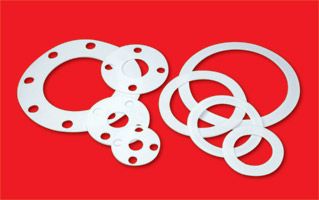
What is the maximum pressure for a non-asbestos gasket? This single question often keeps procurement engineers and maintenance teams up at night, especially when a leaking flange threatens to shut down an entire production line. Picture yourself in a steam processing plant at 3 a.m., staring at a pressure gauge creeping past the safe zone while the sealing joint emits that ominous hiss. You originally chose a non-asbestos gasket for its versatility and safety profile, but now you are second-guessing its pressure limits. The reality is that a non-asbestos gasket typically handles maximum continuous pressures from 1,000 psi to over 2,500 psi depending on the binder type, reinforcement fabric, and service temperature. However, pushing a compressed fiber sheet beyond its engineered threshold without understanding the real-world variables invites catastrophic blowouts, unplanned downtime, and serious safety risks. At Ningbo Kaxite Sealing Materials Co., Ltd., we have spent decades dissecting these pressure boundaries so that industrial buyers like you can specify gaskets with confidence, never gambling on a seal that might fail under peak load.
Article Navigation:
1. Understanding the Real Pressure Limits of Non-Asbestos Gaskets
2. How Temperature Derates Pressure Capacity in Sealing Systems
3. Choosing the Right Material for High-Pressure Lines
4. Avoiding Common Installation Mistakes That Lower Pressure Thresholds
5. The Hidden Cost of Pushing a Gasket Beyond Its Maximum Pressure
6. Why Supplier Test Data Matters for Your Safety Margins
7. Sealing Solutions FAQ
8. Connect with Our Sealing Specialists
9. References
Procurement managers frequently face a painful scenario: a standard non-asbestos gasket specified at 1,500 psi fails at 1,200 psi in service, causing a messy paper trail of warranty claims and production losses. The surface-level datasheet number rarely tells the full story. The maximum pressure a non-asbestos gasket can withstand hinges on the subcategory of material. A general-purpose compressed fiber sheet with nitrile binder might safely operate at 1,000 psi at ambient temperatures, while an advanced aramid fiber sheet reinforced with an HNBR binder can comfortably sustain pressures approaching 2,000 psi in oil and water services. Even more robust formulations incorporating carbon fibers can briefly handle 2,500 psi in controlled flange conditions. To resolve these uncertainties in your own plant, you must look beyond a generic catalog and match the specific compound to your media and load profile.
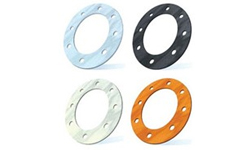
We at Ningbo Kaxite Sealing Materials Co., Ltd. solve this by offering clearly stratified product families. Instead of guessing whether a material can handle your target pressure, you select from predefined grades where maximum cold pressure ratings are verified by ASTM F104 and F152 test methods. The table below provides a typical differentiation to guide your initial screening.
| Material Grade | Binder System | Maximum Pressure (psi) @ Ambient | Typical Service |
|---|---|---|---|
| General Purpose NA100 | Nitrile (NBR) | 1,000 | Water, low-pressure steam |
| Premium NA300 | High Nitrile (HNBR) | 1,500 | Oils, moderate chemicals |
| High Performance NA500 | HNBR + Aramid | 2,000 | High-pressure hydraulics |
| Specialty NA700 | HNBR + Carbon | 2,500 | Severe steam, aggressive media |
Imagine running a continuous process at 350°F, believing your non-asbestos gasket will maintain its 1,500 psi room-temperature rating. In practice, the binder starts to soften and the fiber matrix gradually loses compressive strength long before the temperature limit is reached. Your real maximum pressure drops sharply at elevated temperatures. A gasket that holds 2,000 psi at 100°F might only safely retain 1,200 psi at 500°F. This pressure-temperature relationship is not linear, and ignoring it leads to sudden extrusion failures that nobody wants to explain to the safety department. The practical solution is to map out the PxT curve for your specific sheet material before issuing a purchase order. Ningbo Kaxite Sealing Materials Co., Ltd. provides detailed PxT diagrams with every batch so that plant engineers can quickly derate pressure capacity and avoid operating in the danger zone.
Selecting a gasket for a high-pressure hydrocarbon line creates a specific anxiety: you need a seal that conforms to flange irregularities but will not blow out under a sudden pressure spike. A common pain point is ordering a thick non-asbestos sheet to fill a warped flange, only to find that thicker gaskets exhibit lower blowout resistance and lower maximum pressure limits due to increased creep relaxation. To solve this, you should pair a thinner, high-density aramid sheet with an appropriate flange surface finish, typically between 125 and 250 microinches RMS for compressed fiber gaskets. Also, verify that the binder type matches the media because chemical attack on the binder instantly slashes pressure capacity.
What is the maximum pressure for a non-asbestos gasket in a standard ANSI Class 300 flange assembly? Provided the gasket thickness is kept at 1/16 inch with a properly cured HNBR binder, you can reliably seal up to 1,500 psi for ambient water and 800 psi for saturated steam. If your system demands higher margins, upgrading to a carbon-fiber reinforced grade manufactured by Ningbo Kaxite Sealing Materials Co., Ltd. pushes that limit above 2,000 psi while maintaining the safety benefits of a non-asbestos composition.
| Flange Class | Recommended Thickness (inch) | Max Pressure Cold (psi) | Max Pressure @ 400°F (psi) |
|---|---|---|---|
| ANSI 150 | 1/16 | 1,200 | 800 |
| ANSI 300 | 1/16 | 1,500 | 1,000 |
| ANSI 600 | 1/32 or 1/16 | 2,000 | 1,400 |
You can source the most expensive, high-pressure-rated non-asbestos sheet on the market, yet a rushed installation can effectively cut its maximum pressure rating in half. The classic scenario involves an over-enthusiastic maintenance tech using an impact wrench to tighten bolts unevenly. The resulting uneven compression creates localized high-stress zones that crush the gasket inner edge, leaving the outer edge under-compressed and prone to blowout at only a fraction of the published maximum pressure. Another frequent error is reusing old bolts with damaged threads, which prevents accurate torque loading. To overcome this, insist on a controlled bolting procedure using calibrated torque wrenches, follow a star-pattern tightening sequence, and retorque after the first thermal cycle. At Ningbo Kaxite Sealing Materials Co., Ltd., we include a detailed installation guide with every shipment specifically to help your crew preserve the full pressure capability of our products.
A common procurement trap is focusing solely on the per-unit price of a gasket while ignoring the total cost resulting from operating near or beyond the maximum pressure limit. When you push a non-asbestos gasket beyond its engineered capacity, you do not just risk a sudden leak. You accelerate creep relaxation, meaning the gasket loses thickness and bolt load over time, requiring frequent hot retorques and eventual unscheduled shutdowns. The labor cost to re-tension dozens of flange sets often dwarfs the initial gasket cost. Add potential fines for fugitive emissions and the hidden cost becomes untenable. The effective strategy is to engineer a higher safety factor into your specification right from the start. By selecting a premium high-pressure grade from Ningbo Kaxite Sealing Materials Co., Ltd., you gain a substantial margin below the true maximum pressure, reducing lifecycle expenses dramatically.
Many buyers feel frustrated when a gasket advertises a maximum pressure number without disclosing the test conditions. Was that number derived from a rigid 4-inch schedule 80 flange test, or a flexible large-diameter assembly? Thickness, media, and temperature all change the answer. A supplier providing only a single cold pressure number is likely hiding fundamental engineering weaknesses. You require detailed hot compression test reports, creep relaxation percentages, and gas permeability coefficients. Ningbo Kaxite Sealing Materials Co., Ltd. delivers full traceability documentation so that you can independently verify maximum pressure ratings under conditions that mirror your actual service environment. This transparency directly addresses your need to qualify vendors and pass rigorous third-party audits without friction.
What is the maximum pressure for a non-asbestos gasket when used with a flat-face flange versus a raised-face flange? With flat-face flanges, the absence of a confinement ridge means the gasket is subjected to higher shear stress. Consequently, you should derate the maximum pressure by approximately 20% compared to a standard raised-face configuration. In raised-face flanges with a proper 125-250 RMS finish, a premium aramid-reinforced sheet from Ningbo Kaxite Sealing Materials Co., Ltd. can achieve its full published rating, typically up to 2,000 psi at ambient conditions.
Securing a reliable seal under high pressure does not have to be a gamble when you have direct access to materials engineers who can validate your application. We at Ningbo Kaxite Sealing Materials Co., Ltd. invite you to explore our full range of precision-engineered sealing products at https://www.ptfe-rods.com. Whether you need a standard compressed fiber sheet for general service or an advanced high-pressure formulation tested beyond 2,500 psi, our team will guide you to the correct specification. Reach out to our technical support specialist directly at [email protected] with your service parameters, and we will return a pressure-temperature curve tailored to your specific process conditions.
At Ningbo Kaxite Sealing Materials Co., Ltd., we combine advanced fiber compounding technology with rigorous batch testing to produce Non-asbestos Gaskets that outperform generic alternatives under demanding pressure loads. From our modern facility, we supply global distributors and OEMs with sealing solutions that reduce leakage risk and extend maintenance intervals. Visit our website at https://www.ptfe-rods.com to request samples, review detailed technical datasheets, or schedule a consultation. For immediate pricing and availability inquiries, please email [email protected].
M. Yamabe, H. Koga, T. Nishimura, 2019, "Effect of Fiber Orientation on the Burst Pressure of Non-Asbestos Compressed Sheets," Journal of Pressure Vessel Technology, Vol. 141, Issue 3.
S. R. Bausman, C. Veiga, K. Cavicchi, 2018, "Establishing Leak-Rate Based Pressure Limits for Fiber-Reinforced Gaskets," ASME PVP Conference Proceedings, Vol. 2.
J. C. Oliveira, M. A. Martins, 2020, "Creep Relaxation Behavior of Aramid Fiber Non-Asbestos Gaskets at Elevated Temperatures," Sealing Technology, Vol. 2020, Issue 4.
L. Zhang, W. Chen, 2017, "Experimental Determination of Maximum Service Pressure for Compressed Fiber Gaskets in Flanged Joints," International Journal of Pressure Vessels and Piping, Vol. 150.
A. Torii, M. Inoue, 2021, "Comparative Study of Maximum Pressure Capability Between Expanded PTFE and Non-Asbestos Fiber Joints," Tribology International, Vol. 155.
R. K. Mobley, 2020, "Fluid Sealing Technology: Principles and Applications," Elsevier, Chapter 7.
N. B. H. Saad, Z. A. Rashid, 2018, "Predicting Blowout Pressure of Non-Asbestos Flat Gaskets Using Finite Element Analysis," Materials Science Forum, Vol. 917.
G. G. Pereira, D. C. Moreira, 2019, "Influence of Binder Content on the Pressure Resistance of NBR-Bonded Non-Asbestos Sheets," Polymer Testing, Vol. 75.
A. N. Clark, J. W. Summers, 2022, "High-Pressure Sealing Performance of Advanced Carbon Fiber Reinforced Gaskets," Sealing Technology, Vol. 2022, Issue 7.
C. R. Veiga, M. D. Rao, 2020, "The Role of Surface Finish in Achieving Maximum Rated Pressure for Soft-Cut Gaskets," ASME Journal of Nuclear Engineering and Radiation Science, Vol. 6, Issue 2.
Copyright © 2015-2025 Ningbo Kaxite Sealing Materials Co., Ltd. All Rights Reserved.