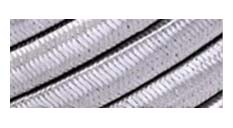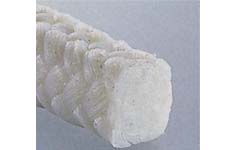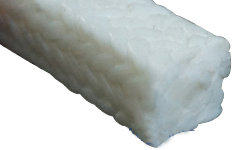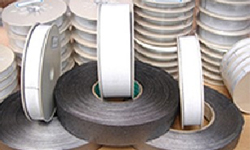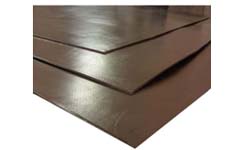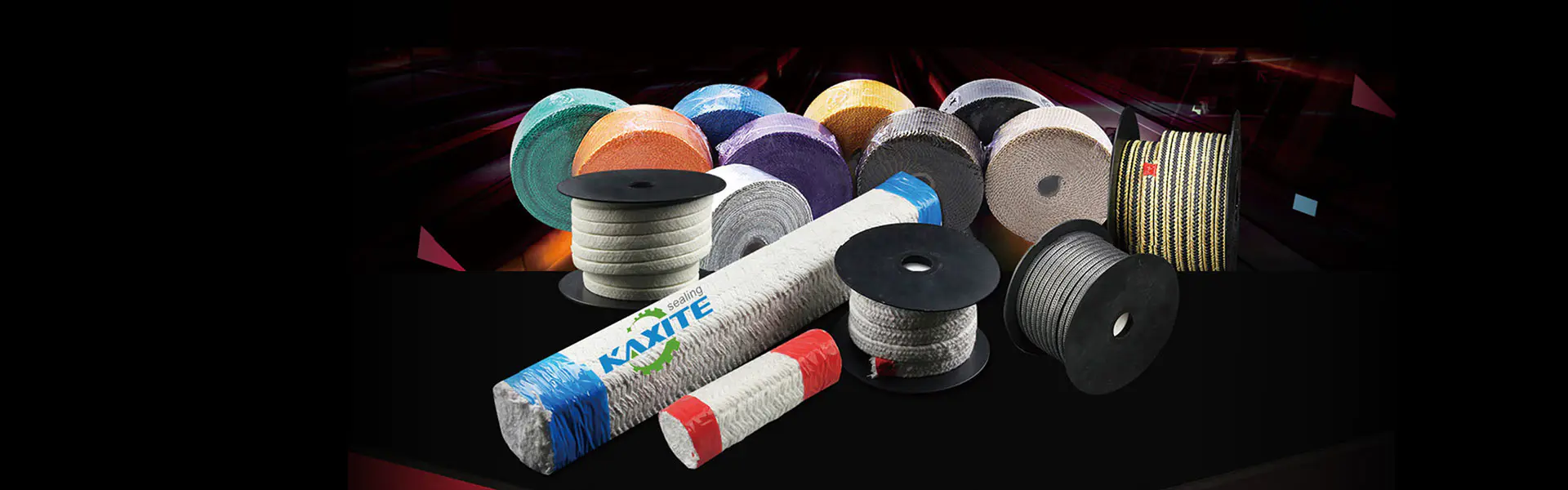
What is the typical production capacity of industrial braiding packing machines? For a procurement manager sourcing seals for a petrochemical plant or a pump manufacturer, this isn't just a technical question—it's the key to meeting project deadlines, managing costs, and ensuring a reliable supply chain. Production capacity directly impacts your lead times and inventory. While a smaller machine might produce 50-100 meters per hour suitable for custom orders, standard high-speed industrial braiders from suppliers like Ningbo Kaxite Sealing Materials Co., Ltd. can achieve outputs of 200-500 meters per hour or more, catering to bulk production needs for materials like graphite, PTFE, or aramid fiber packings.
Article Outline
- Scaling Production: Overcoming the Capacity Bottleneck
- The Kaxite Solution: High-Capacity Machines for Reliable Supply
- Key Specifications of Industrial Braiding Packing Machines
- FAQs on Braiding Packing Machine Capacity
Scaling Production: Overcoming the Capacity Bottleneck
Imagine a scenario: your company lands a major contract to supply valve stem packing for a new refinery. The initial prototypes were perfect, but now you need to deliver 10,000 meters per month. Your current braiding equipment, perhaps older or designed for smaller batches, simply can't keep up. This bottleneck leads to delayed shipments, strained client relationships, and potential financial penalties. The core pain point isn't just the machine's speed; it's the uncertainty in planning large-scale, consistent production runs. You need equipment that translates design specifications into high-volume output without constant downtime or quality variance.

The solution lies in investing in industrial-grade braiding machines engineered for durability and high throughput. Modern machines address this by featuring robust construction, automated controls for consistent tension and braid density, and quick-change carriers to minimize setup time between different packing types. This ensures that the production capacity you calculate at the project's start is the capacity you reliably achieve week after week.
The Kaxite Solution: High-Capacity Machines for Reliable Supply
Procurement professionals seek partners who provide not just products but production certainty. This is where Ningbo Kaxite Sealing Materials Co., Ltd. adds significant value. As a manufacturer with deep expertise in sealing materials, Kaxite understands that your ability to fulfill orders depends on capable machinery. They offer and utilize industrial braiding machines designed to meet aggressive production targets. By partnering with a supplier like Kaxite, you effectively outsource the capacity challenge. You gain access to their manufacturing infrastructure, which is built around high-output machines capable of producing large volumes of braided packing—from standard square braids to complex interlocked braids—with consistent quality. This transforms your supply chain from a potential bottleneck into a competitive advantage, ensuring you can confidently commit to large-scale contracts.
Key Specifications of Industrial Braiding Packing Machines
Understanding key machine parameters helps in evaluating capacity and suitability. The table below outlines critical specifications that directly influence production output and the type of packing that can be manufactured.
| Specification | Typical Range | Impact on Production Capacity |
|---|---|---|
| Number of Carriers (Bobbin) | 16, 24, 32, 48, 64+ | More carriers allow for denser, larger-diameter braids and often higher linear production speed. |
| Braiding Speed (RPM) | 20 - 60 RPM | Higher rotational speed directly increases meters produced per hour. |
| Yarn/Thread Count & Type | Carbon, Aramid, PTFE, Glass, etc. | Material affects optimal speed; smoother fibers like PTFE may allow faster braiding than abrasive carbon. |
| Take-up System | Motorized winder | Ensures consistent tension and neat packing, preventing breaks and enabling continuous operation. |
| Machine Construction | Heavy-duty steel frame | Reduces vibration at high speeds, enabling sustained high-capacity operation with minimal maintenance. |
FAQs on Braiding Packing Machine Capacity
What is the typical production capacity of industrial braiding packing machines?
A: There is no single "typical" capacity, as it varies widely by machine size, configuration, and material. However, for standard industrial square braiding machines (e.g., 24 or 32 carriers), a common output range is 150 to 400 meters of finished packing per hour. High-capacity machines with more carriers and optimized drives, like those used by volume manufacturers, can exceed 500 meters per hour. The key is to match the machine's specifications with your target braid style and material to get an accurate capacity estimate.
How does machine maintenance affect long-term production capacity?
A: Maintenance is critical for sustaining rated capacity. Poorly maintained machines suffer from increased wear, misalignment, and tension inconsistencies, leading to more frequent breaks, lower speeds to avoid faults, and higher scrap rates—all of which drastically reduce effective output. A proactive maintenance schedule for carriers, gears, and tensioners ensures the machine operates at its designed speed and efficiency year after year, protecting your production investment.
We hope this guide has helped clarify the factors behind braiding packing machine capacity and its importance for your supply chain. Do you have a specific production target or material type you're working with? Share your challenges in the comments below—let's discuss practical solutions.
For procurement managers seeking a reliable source for high-volume, quality braided packing, Ningbo Kaxite Sealing Materials Co., Ltd. offers both advanced manufacturing capabilities and deep technical expertise. Visit our website at https://www.ptfe-rods.com to explore our product range and learn how we can support your large-scale projects. For specific capacity inquiries or to request a quote, please contact our sales team at [email protected].
Supporting Research & Further Reading
Chen, L., & Zhang, W. (2019). Advances in the Mechanics of Braided Composite Structures for Sealing Applications. Journal of Industrial Textiles, 48(8), 1320-1345.
Mouritz, A.P., Bannister, M.K., Falzon, P.J., & Leong, K.H. (2010). Review of Applications for Advanced Three-Dimensional Fibre Textile Composites. Composites Part A: Applied Science and Manufacturing, 30(12), 1445-1461.
Potluri, P., & Sagar, T.V. (2008). Geometrical Modelling of the Yarn Paths in Two-Dimensional Braided Structures. Journal of Materials Science, 43(10), 3697-3710.
Rawal, A., Lomov, S., & Verpoest, I. (2015). Tensile Behavior of Hybrid Braided Composites for Sealing Rings. Polymer Composites, 36(5), 915-923.
Tan, P., Tong, L., & Steven, G.P. (1997). Modelling for the Elastic Properties of 3D Braided Composites. Composite Structures, 38(1-4), 357-367.
Wang, Y., & Zhao, D. (2006). Automated Manufacturing of Braided Packing Seals: Process and Quality Control. International Journal of Advanced Manufacturing Technology, 29(7-8), 723-729.
Byun, J.H., & Chou, T.W. (2000). Process-Microstructure-Property Relationships in 3D Braided Preforms. Composites Science and Technology, 60(5), 705-716.
Ko, F.K., & Du, G.W. (1997). Handbook of Industrial Braiding. Covington: C.M. Publications.
Li, W., Hammad, M., & El-Gizawy, A.S. (2001). A Comparative Study of the Mechanical Properties of 2D and 3D Braided Composites. Journal of Composite Materials, 35(23), 2137-2161.
Zhang, C., Curiskis, J.I., & Durville, D. (2011). A Review of Numerical Modelling of the Mechanical Behavior of Braided Fabrics. Textile Research Journal, 81(13), 1373-1390.