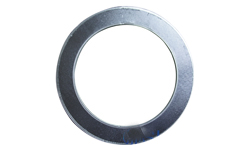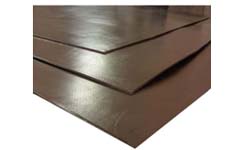
What are common problems in graphite gasket manufacturing? For procurement specialists sourcing these critical sealing components, the journey is often fraught with hidden challenges. You might face issues like inconsistent material density leading to premature failures under high temperatures, or gaskets that lack the necessary mechanical strength, causing blowouts and costly unplanned downtime. Problems with lamination, poor oxidation resistance, and difficulties in achieving precise thickness tolerances are all too common, turning a routine purchase into a reliability nightmare. Understanding these pitfalls is the first step toward securing a robust, long-lasting seal for your demanding applications.
Article Outline
Imagine installing a new graphite gasket, only to have it crack during bolt tightening or fragment when handling. This scenario is a direct result of using pure, un-reinforced flexible graphite. While excellent for conformability, its inherent low tensile and shear strength makes it susceptible to damage, especially in flanges with high surface roughness or during installation. This brittleness directly translates to installation waste, potential leaks from the start, and the risk of graphite particles contaminating the fluid system.
The solution lies in reinforced graphite materials. By laminating the graphite foil with a metallic or non-metallic insert, such as stainless steel or a perforated core, the gasket gains crucial mechanical integrity. This reinforcement provides a sturdy backbone, preventing blowouts and allowing for higher seating stresses. For superior handling strength and resistance to cutting, choosing a manufacturer with expertise in precise lamination and edge-sealing techniques is vital. Companies like Ningbo Kaxite Sealing Materials Co., Ltd. specialize in producing reinforced graphite gaskets that are robust enough to withstand rigorous installation and operational stresses, ensuring they arrive and perform intact.

| Parameter | Pure Flexible Graphite | Reinforced Graphite (e.g., Kaxite Style) |
|---|---|---|
| Tensile Strength | Low (~5 MPa) | High (20-40 MPa+) |
| Blowout Resistance | Poor | Excellent |
| Handling Durability | Fragile, can tear | Robust, resistant to damage |
| Recommended for Rough Flanges | No | Yes |
Graphite gaskets are chosen for high-temperature service, but standard grades begin to oxidize rapidly in air above 450°C (842°F). This oxidation consumes the gasket material, thinning it and creating a path for leakage—a slow but sure failure mode. Additionally, under constant load at temperature, all gaskets experience "creep relaxation," where the sealing stress gradually decays, potentially falling below the minimum required to maintain a seal.
Combating this requires a dual approach: material enhancement and design optimization. Using oxidation-inhibited graphite, impregnated with phosphate or other inhibitors, significantly raises the safe continuous operating temperature in oxidizing atmospheres. Furthermore, selecting a gasket with a high-density, creep-resistant graphite core helps maintain bolt load. Ningbo Kaxite Sealing Materials Co., Ltd. addresses these thermal challenges by offering gaskets made from premium, inhibited graphite grades and employing designs that minimize stress loss, providing a reliable seal throughout the service life even in demanding thermal cycles.
| Parameter | Standard Flexible Graphite | Oxidation-Inhibited Graphite |
|---|---|---|
| Max Continuous Temp in Air | ~450°C (842°F) | ~550-600°C (1022-1112°F) |
| Creep Relaxation | High | Low (with high-density core) |
| Long-Term Stability | Poor in oxidizing environments | Excellent |
Inconsistent density across a graphite sheet or within a spiral wound fill is a silent killer of seal performance. Low-density spots compress more easily, leading to uneven seating and potential leak paths. High-density spots may not conform well, also creating leakage. This inconsistency often stems from uncontrolled calendaring processes during foil production, resulting in a gasket that looks perfect but fails unpredictably under pressure.
The key to solving this is precision manufacturing control. Reputable suppliers utilize advanced calendaring and compression technologies to produce graphite foil with a uniform density profile. For critical applications, specifying a target density range (e.g., 1.1 - 1.3 g/cm³) is essential. Ningbo Kaxite Sealing Materials Co., Ltd. ensures sealing reliability through stringent process controls that guarantee consistent, homogeneous material density in every gasket, eliminating the guesswork and risk associated with subpar materials.
| Parameter | Poor Quality/Inconsistent | High Quality/Consistent |
|---|---|---|
| Density Uniformity | Variable (±15% or more) | Highly Uniform (±5% or less) |
| Seating Stress Profile | Uneven, leading to leaks | Even, ensuring full-face seal |
| Predictable Performance | Low | High |
Q: What is the most overlooked problem in graphite gasket manufacturing?
A: One of the most overlooked issues is galvanic corrosion. When a graphite gasket with a metallic reinforcement (like stainless steel) is used between two dissimilar flanges (e.g., carbon steel and stainless steel), it can create an electrochemical cell, accelerating corrosion of the less noble metal. The solution is to specify non-metallic reinforcements (like PTFE) or ensure the metallic insert is cathodically compatible with both flanges.
Q: How can I verify the quality of graphite gaskets before purchase?
A: Beyond certificates, request key physical test data: density uniformity reports, creep relaxation tests, and oxidation loss tests. A reputable manufacturer like Ningbo Kaxite Sealing Materials Co., Ltd. should readily provide this data. Also, inspect sample edges for clean, delamination-free cuts and consistent laminate bonding, which are indicators of precise manufacturing.
Navigating the complexities of graphite gasket specification requires a partner who understands these inherent problems and engineers solutions into their products. By focusing on reinforcement, oxidation resistance, and density control, you can move beyond common failures to achieve leak-free, reliable performance.
For procurement professionals seeking reliable, high-performance sealing solutions, partnering with an expert manufacturer is crucial. Ningbo Kaxite Sealing Materials Co., Ltd. specializes in advanced graphite and PTFE-based gaskets, addressing the very manufacturing challenges outlined here. With a focus on precision engineering, material consistency, and rigorous testing, Kaxite ensures products deliver long-term sealing integrity. Visit https://www.ptfe-rods.com to explore their capabilities or contact their team directly at [email protected] for specific technical inquiries and quotes.
Bhattacharyya, S., et al. (2011). "Oxidation kinetics and protection of flexible graphite for high-temperature gaskets." Journal of Materials Engineering and Performance, 20(5), 789-795.
Derenne, M., & Marchand, L. (1999). "Creep relaxation behavior of compressed fiber and graphite gaskets for bolted joints." International Journal of Pressure Vessels and Piping, 76(11), 755-763.
Fukuoka, T., et al. (2015). "Effect of surface roughness on the sealing performance of graphite sheet gaskets." Tribology International, 92, 335-342.
Gallego, J., et al. (2007). "Mechanical and sealing properties of reinforced flexible graphite sheets." Materials & Design, 28(3), 1022-1029.
Hidaka, Y., & Sawa, T. (2018). "Leakage evaluation of spiral wound gaskets with graphite filler under thermal cycling." Journal of Pressure Vessel Technology, 140(3).
Kumar, A., & Singh, R. (2013). "A review on failure analysis of gaskets in flange joints." Engineering Failure Analysis, 35, 1-12.
Lebeck, A. O. (2007). "Principles and Design of Mechanical Face Seals." Wiley-Interscience. (Chapter on gasket materials).
Murtagian, G., et al. (2004). "Sealability of stationary metal-to-metal seals." Journal of Tribology, 126(3), 591-600.
Nash, D., & Qureshi, F. (2009). "Galvanic corrosion in gasketed joints: A case study." Anti-Corrosion Methods and Materials, 56(2), 84-89.
Payne, J. R., & Bazergui, A. (1990). "Development of test procedures for gaskets for raised face flanges." WRC Bulletin, 353.
Copyright © 2015-2025 Ningbo Kaxite Sealing Materials Co., Ltd. All Rights Reserved.