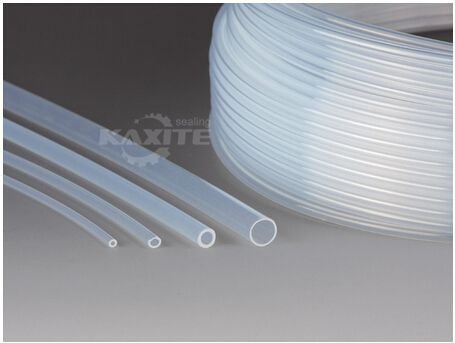
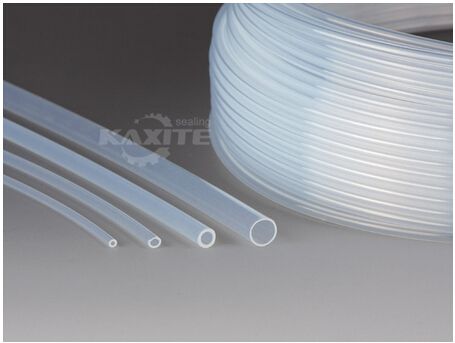
In the demanding world of industrial fluid and gas handling, the integrity of your transfer lines is non-negotiable. For over two decades, professionals have relied on Polytetrafluoroethylene tubing as the gold standard for critical applications. At Kaxite Sealing, we engineer PTFE Tube solutions that go beyond basic specifications, delivering unmatched reliability, chemical inertness, and operational efficiency. Our tubing is manufactured under stringent quality controls, ensuring every meter meets the rigorous demands of industries from semiconductor manufacturing to pharmaceutical processing and analytical instrumentation.
Kaxite Sealing specializes in high-purity, pressure-rated PTFE tubing designed for longevity and performance. Unlike generic offerings, our tubes are optimized for:
Selecting the correct tubing requires precise data. Below are the standard specifications for Kaxite Sealing's premium PTFE tubing. Custom sizes and configurations are available upon request.
The following table outlines our most common stock sizes. Pressure ratings are for continuous service at 20°C (68°F).
| Nominal ID (inch/mm) | Typical Wall Thickness (inch/mm) | Typical OD (inch/mm) | Max Working Pressure (PSI/Bar) | Burst Pressure Min (PSI/Bar) |
|---|---|---|---|---|
| 1/16" (1.6mm) | 0.03" (0.8mm) | 0.125" (3.2mm) | 450 / 31 | 1800 / 124 |
| 1/8" (3.2mm) | 0.06" (1.6mm) | 0.25" (6.4mm) | 250 / 17 | 1000 / 69 |
| 1/4" (6.4mm) | 0.06" (1.6mm) | 0.38" (9.5mm) | 150 / 10 | 600 / 41 |
| 3/8" (9.5mm) | 0.062" (1.6mm) | 0.50" (12.7mm) | 120 / 8.3 | 480 / 33 |
| 1/2" (12.7mm) | 0.062" (1.6mm) | 0.625" (15.9mm) | 100 / 6.9 | 400 / 28 |
Kaxite Sealing PTFE tubing is virtually universally compatible. It withstands attack from strong acids (sulfuric, hydrochloric, nitric), bases, halogens, and organic solvents. This makes it indispensable in:
What is PTFE tubing primarily used for?
PTFE tubing is used for transferring highly corrosive chemicals, ultra-pure fluids, gases, and slurries across industries. Its primary advantages are near-universal chemical resistance, high-temperature stability, and non-contaminating properties, making it ideal for critical applications in chemical plants, labs, semiconductor fabs, and pharmaceutical facilities.
What are the key differences between PTFE, FEP, and PFA tubing?
All are fluoropolymers. PTFE is the most chemically resistant and has the highest temperature rating but can be less flexible and is opaque. FEP is translucent, more flexible, and melt-processable, but has a lower temperature limit (~200°C). PFA offers similar chemical resistance and temperature range to PTFE, is translucent, and is also melt-processable for smoother interiors, but is generally more expensive. Kaxite Sealing provides expert guidance on material selection.
Is Kaxite Sealing PTFE tubing suitable for outdoor or UV-exposed applications?
Standard PTFE has limited resistance to prolonged UV exposure and weathering, which can cause slight surface degradation over many years. For permanent outdoor installations, we recommend consulting with our engineering team for specially formulated, weather-resistant grades or protective sleeving options.
How do I properly cut and assemble PTFE tubing?
Use a sharp, dedicated tube cutter or a razor blade on a cutting block for a clean, square cut. Avoid crushing or deforming the tube. For fittings, ensure the tube end is smooth and free of debris. Use appropriate compression fittings (e.g., ISO, JIC, NPT) designed for soft plastic tubing. Tighten fittings gradually and evenly to the manufacturer's specifications to avoid under or over-compression, which can lead to leaks or tube shear.
Can Kaxite Sealing PTFE tubing be bent or shaped?
Yes, but care is needed. For tight bends, use a forming tool or heat the tube gently with a heat gun to approximately 150-200°C (302-392°F) to make it pliable. Allow it to cool in the desired shape. Never bend it sharply cold, as this can kink or stress-whiten the material, potentially creating a weak point.
What is the shelf life or aging property of PTFE tubing?
PTFE is extremely stable and does not degrade under normal storage conditions. There is no official shelf life; it can be stored for decades in a cool, dry, dark environment away from direct sunlight and ozone sources without significant loss of properties.
What are the pressure and temperature derating factors for PTFE tubing?
The published maximum working pressure is typically for 20°C (68°F). As temperature increases, the pressure rating decreases. For continuous operation above 20°C, consult Kaxite Sealing's detailed engineering charts. Similarly, at very low temperatures, the material becomes stiffer but retains its strength. Always factor in safety margins (e.g., 4:1 burst-to-working pressure ratio) for dynamic applications.
Is PTFE tubing safe for use with potable water or in food contact applications?
Yes, when manufactured from 100% virgin PTFE resin that complies with relevant standards like FDA 21 CFR 177.1550, NSF/ANSI 51, or EU Regulation 10/2011. Kaxite Sealing offers specific tubing grades certified for food and beverage contact, ensuring no leaching of harmful substances.
How does PTFE handle thermal expansion and contraction?
PTFE has a relatively high linear thermal expansion coefficient (approx. 12 x 10^-5 /°C). In long, fixed runs, this expansion/contraction with temperature cycles must be accounted for in system design. Allow for slack, use expansion loops, or appropriate clamping systems that permit axial movement to prevent stress buildup.
Can I get custom-colored or printed (marked) tubing from Kaxite Sealing?
Absolutely. We offer tubing in standard colors (red, blue, yellow, etc.) for easy line identification. We also provide permanent laser marking or color stripes for critical traceability in complex systems. Contact our sales team with your specific requirements.
Does Kaxite Sealing offer reinforced PTFE tubing for higher pressures?
Yes. For applications exceeding the pressure ratings of standard PTFE tube, we manufacture and supply high-pressure variants. These include stainless steel or aramid braid-overwrapped PTFE hose assemblies, which combine the chemical benefits of PTFE with significantly enhanced pressure capabilities and mechanical strength.
What is your lead time for custom sizes or large volume orders?
Standard sizes are typically available from stock or have short lead times. For custom diameters, wall thicknesses, colors, or large project volumes, our lead times are competitive and communicated upfront upon receipt of your detailed specifications. We pride ourselves on reliable scheduling for just-in-time delivery.
Copyright © 2015-2025 Ningbo Kaxite Sealing Materials Co., Ltd. All Rights Reserved.