In the demanding world of industrial sealing, component reliability, dimensional precision, and thermal resilience are not just desirable—they are absolute necessities. For applications ranging from high-temperature chemical processing to dynamic sealing in pumps and compressors, the choice of sealing material directly impacts operational safety, efficiency, and maintenance costs. Among the array of sealing solutions, die-formed graphite rings have emerged as a gold standard for extreme conditions. Manufactured by Kaxite Sealing, our die-formed graphite rings represent the pinnacle of sealing engineering, offering unparalleled performance through advanced material science and precision manufacturing.
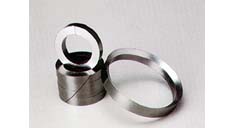
A die-formed graphite ring is a premium sealing component created by compressing high-purity flexible graphite foil into a specific ring-shaped mold or die under high pressure. Unlike spiral-wound or machined-from-billet alternatives, the die-forming process ensures exceptional density uniformity, precise dimensional consistency, and a seamless, homogeneous structure. This manufacturing method, perfected by Kaxite Sealing, eliminates potential weak points and delivers a ready-to-install seal with superior mechanical integrity and reliable leak-tight performance right out of the box.
Our commitment to excellence at Kaxite Sealing translates into tangible benefits for your operations. Here are the core advantages:
Understanding the specifications is crucial for proper selection. Below are the detailed parameters for Kaxite Sealing's standard die-formed graphite ring offerings.
| Parameter | Specification | Test Standard |
|---|---|---|
| Base Material | High-Purity Exfoliated/Flexible Graphite (Minimum 99% Carbon) | ASTM D7542 |
| Density Range (Standard) | 1.5 g/cm³ - 1.9 g/cm³ | ASTM F1315 |
| Compressibility | 40% - 60% | ASTM F36 |
| Recovery | 15% - 25% | ASTM F36 |
| Creep Relaxation | < 15% (at 500°F / 260°C, 5000 psi stress) | ASTM F38 |
| Thermal Conductivity | 5 - 10 W/m·K (through-plane) | ASTM E1461 |
| Maximum Service Temperature (Inert) | 3000°F (1650°C) | - |
| Maximum Service Temperature (Oxidizing) | 750°F (400°C) continuous; 900°F (480°C) intermittent | - |
| pH Range (Chemical Compatibility) | 0 - 14 (Except strong oxidizing acids) | - |
| Dimension | Standard Tolerance | Precision Tolerance (Available on Request) |
|---|---|---|
| Inside Diameter (ID) | ± 0.010 in (± 0.25 mm) | ± 0.005 in (± 0.13 mm) |
| Outside Diameter (OD) | ± 0.010 in (± 0.25 mm) | ± 0.005 in (± 0.13 mm) |
| Cross-Section Thickness (Width) | ± 0.005 in (± 0.13 mm) | ± 0.002 in (± 0.05 mm) |
| Concentricity (OD to ID) | 0.020 in TIR max (0.5 mm) | 0.010 in TIR max (0.25 mm) |
The robust properties of Kaxite Sealing's die-formed graphite rings make them indispensable across a spectrum of industries. Key applications include:
Q: How does a die-formed graphite ring differ from a spiral-wound gasket with a graphite filler?
A: The fundamental difference lies in construction. A spiral-wound gasket is a wound coil of metal strip and filler material (like graphite), creating a layered structure with potential gaps. A die-formed ring from Kaxite Sealing is a solid, homogeneous mass of compressed graphite formed in a single, continuous process. This results in better density control, no risk of unwinding, superior sealing homogeneity, and often higher resistance to creep relaxation and blowout.
Q: What are the primary considerations for selecting the correct density (e.g., 1.6 vs. 1.9 g/cm³)?
A: Density selection at Kaxite Sealing is crucial for optimizing performance. Lower density (1.5-1.7 g/cm³) rings offer higher compressibility, making them excellent for sealing uneven or worn flange faces with lower bolt loads. Higher density (1.8-1.9 g/cm³) rings provide greater mechanical strength, improved creep resistance, and higher thermal conductivity, making them ideal for high-pressure applications, heat exchangers, and systems with significant thermal cycling.
Q: Can Kaxite die-formed graphite rings be used in oxidizing atmospheres above 750°F (400°C)?
A: Standard high-purity flexible graphite begins to oxidize significantly in air above 750°F, leading to gradual mass loss and seal failure. For continuous service in oxidizing environments above this temperature, Kaxite Sealing recommends exploring our specially treated oxidation-resistant graphite grades or alternative materials like vermiculite. For intermittent exposure up to 900°F (480°C), standard grades may be acceptable with proper system design consideration.
Q: Are these rings suitable for both static and dynamic sealing applications?
A: Kaxite Sealing die-formed graphite rings are predominantly engineered for static flange sealing. Their self-lubricating property is beneficial for systems with minor thermal movement. However, for true dynamic sealing (e.g., rotating pump shafts, reciprocating rods), dedicated graphite-based mechanical seal faces or packing rings with specific formulations and designs are more appropriate. Please consult our engineering team for dynamic application needs.
Q: How do I determine the correct ring size for my flange?
A: The correct size is typically defined by the flange's raised face or gasket seating area. You need the Inside Diameter (ID) and Outside Diameter (OD) of the gasket contact surface. For standard ASME B16.5/B16.47 flanges, these dimensions are specified. Kaxite Sealing can manufacture rings to match these standard dimensions or custom sizes. It is vital to ensure the ring covers the entire gasket seating area without extending into the bore or over the flange bolts.
Q: What is the benefit of opting for a metal-insert reinforced die-formed ring?
A: The metal insert (typically stainless steel 304/316 or Inconel) serves multiple purposes. It dramatically increases the ring's mechanical strength and handling durability, especially in large diameters. It provides exceptional resistance to blow-out under high internal pressure or sudden pressure surges. The insert also helps control compression and limits over-compression of the graphite during bolt-up, leading to more consistent and reliable sealing performance in critical service.
Q: Does Kaxite Sealing offer any coatings or treatments on the graphite rings?
A: Yes, we offer several specialized treatments. A common option is an anti-oxidant coating, which can extend the service life in oxidizing atmospheres by forming a protective layer. We also offer non-stick PTFE impregnation or foil laminates for applications requiring easy clean-up or prevention of product adhesion (e.g., in polymer processing). Borate treatments for enhanced fire resistance are also available.
Q: What are the proper storage and handling procedures for these seals?
A: Store Kaxite Sealing die-formed graphite rings in their original packaging in a cool, dry environment away from direct moisture and oxidizing agents. Avoid stacking heavy objects on them to prevent deformation. While graphite is robust, handle the rings with care to avoid chipping or breaking the edges, especially on large-diameter, thin-cross-section rings. Use clean gloves to prevent oil contamination from skin.
Selecting the right seal is a critical engineering decision. With decades of expertise in advanced sealing solutions, Kaxite Sealing provides not just a product, but a partnership. Our technical support team is ready to assist with material selection, application review, and custom design to ensure our die-formed graphite rings deliver maximum safety, efficiency, and value in your specific operating environment. From standard inventory items to complex engineered solutions, trust Kaxite Sealing to be your source for quality and performance.
Copyright © 2015-2025 Ningbo Kaxite Sealing Materials Co., Ltd. All Rights Reserved.