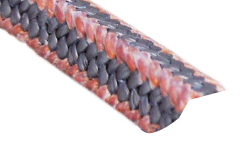
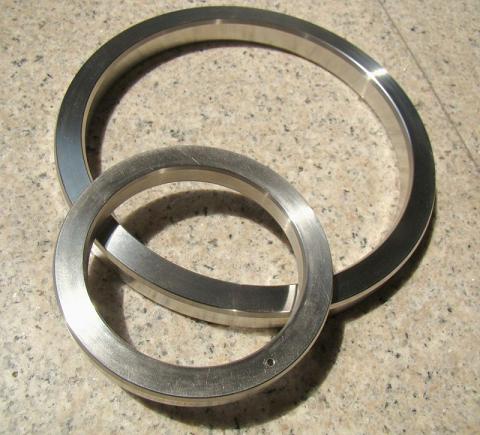
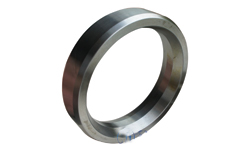
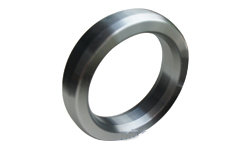
In the demanding world of industrial sealing, particularly within high-pressure and high-temperature applications, the integrity of connections is non-negotiable. This is where Ring Joint Gaskets (RJ gaskets) become a critical component. Engineered for reliability, these metallic gaskets are designed to create a robust, leak-proof seal in flanged connections by deforming into precisely machined grooves on the flange faces. The sealing action is achieved through initial bolt-up force, which causes the gasket to yield and flow into the imperfections of the sealing surfaces, forming an effective metal-to-metal seal. At Kaxite Sealing, we specialize in manufacturing premium-quality Ring Joint Gaskets that meet and exceed the stringent requirements of global standards, ensuring safety, durability, and performance in the most extreme operating conditions, from oil and gas exploration to chemical processing and power generation.
Selecting the correct Ring Joint Gasket is paramount for a successful seal. Our products at Kaxite Sealing are meticulously manufactured to exact specifications. Here are the primary parameters that define our RJ gaskets:
For engineering and procurement teams, precise dimensional data is essential. Below are reference tables for standard Ring Joint Gasket dimensions according to ASME B16.20. Please note these are for reference; actual specifications must be confirmed against project requirements and flange standards.
| Ring Number | Nominal Pipe Size (NPS) | Outside Diameter (O.D.) | Inside Diameter (I.D.) | Width (P) | Approx. Cross-Section (H) |
|---|---|---|---|---|---|
| R11 | 1/2 | 1.781 | 1.219 | 0.281 | 0.344 |
| R23 | 4 | 6.250 | 4.750 | 0.750 | 0.656 |
| R45 | 12 | 16.250 | 13.250 | 1.500 | 0.938 |
| R72 | 30 | 37.000 | 32.000 | 2.500 | 1.438 |
All dimensions are in inches. Tolerances are per ASME B16.20.
| Ring Number | For Flange Class | Width (P) | Approx. Cross-Section (H) | Sealing Angle |
|---|---|---|---|---|
| RX-21 | 150 to 600 | 0.344 | 0.438 | 23° |
| RX-44 | 900 to 1500 | 0.625 | 0.719 | 23° |
| RX-66 | 2500 | 0.875 | 1.000 | 23° |
Note: RX gaskets are interchangeable with R gaskets of the same number but provide enhanced sealing.
Q: What is the fundamental difference between R-Style (Oval) and RX-Style (Octagonal) Ring Joint Gaskets?
A: The primary difference lies in their geometry and sealing mechanism. R-style gaskets have an oval cross-section and seal by line contact on the curved surfaces. RX-style gaskets have an octagonal cross-section with flat, angled sealing surfaces. This design allows the RX gasket to seal on both the top and bottom of the groove, creating a more effective pressure-energized seal. Under internal pressure, the RX gasket is designed to flex slightly, increasing the sealing force. RX gaskets can be used in grooves designed for R gaskets (but not vice-versa), often providing a tighter seal, especially in higher-pressure classes and for flanges that have experienced slight distortion or wear.
Q: Can a Ring Joint Gasket be reused after it has been installed and pressurized?
A: It is generally not recommended to reuse a Ring Joint Gasket. The sealing action relies on the plastic deformation (yielding) of the gasket material into the microscopic imperfections of the flange groove. Once disassembled, the gasket has been "set" to the specific groove condition of that joint. Reusing it in a different joint or even the same joint after re-machining can compromise the seal integrity because the gasket will not deform correctly a second time. Kaxite Sealing always advises using a new, certified gasket for each make-up to ensure a leak-proof connection and eliminate the risk of failure.
Q: How do I select the correct material grade for my RJ gasket application?
A: Material selection is based on three main factors: pressure-temperature rating, corrosion resistance, and compatibility with the flange material to prevent galvanic corrosion. For standard hydrocarbon services, Soft Iron (AISI 1010) or Low Carbon Steel is common. For corrosive services containing chlorides, acids, or sour gas (H2S), austenitic stainless steels (316/316L) or nickel-based alloys (Inconel, Monel) are required. The operating temperature also dictates material choice; carbon steel may be suitable for high temperatures, while certain alloys retain strength. It is crucial to consult the ASME Boiler and Pressure Vessel Code, Section II for material properties and your process engineering specifications. Kaxite Sealing's technical team can assist in selecting the optimal material based on your detailed service conditions.
Q: What is the purpose of silver plating or anti-galling coatings on Ring Joint Gaskets?
A: Coatings serve multiple critical functions. Silver plating acts as a lubricant during bolt-up, allowing the gasket to seat properly with lower torque and reducing the risk of flange rotation. It also fills minor surface imperfections, aiding the initial seal. Most importantly, it acts as a barrier to prevent galling (cold welding) between the gasket and the flange groove, especially when both are made of similar, hard materials like stainless steel. Anti-galling coatings, such as specialized dry film lubricants, offer similar benefits and are often specified for sour service where silver might not be suitable. These coatings from Kaxite Sealing enhance sealability, extend flange life, and make future disassembly safer and easier.
Q: How critical is flange groove inspection before installing a new RJ gasket?
A: Flange groove inspection is absolutely critical and is often the most overlooked step. Even a brand-new, perfectly manufactured Kaxite Sealing gasket will fail if installed in a damaged or out-of-specification groove. Before installation, the groove must be thoroughly cleaned of all old gasket material, scale, and debris using non-metallic brushes or tools to avoid scratching. The groove dimensions, surface finish (typically 63 µin Ra or better), and angularity must be verified with calibrated groove gauges. Any nicks, pitting, or radial scratches can create a leak path. If the groove is damaged beyond acceptable limits, the flange face must be re-machined or the flange replaced.
Partnering with Kaxite Sealing means investing in uncompromised safety and operational reliability. Our dedication to precision manufacturing ensures every RJ gasket delivers consistent performance. We utilize certified raw materials and employ rigorous quality control processes, including dimensional verification, material chemical and mechanical testing, and thorough visual inspection. Our technical support team provides expert guidance on selection, installation, and troubleshooting. With a global supply chain and the ability to cater to both standard and custom specifications, Kaxite Sealing is the trusted partner for industries where sealing failure is not an option. Our commitment is to provide sealing solutions that uphold the highest standards of integrity, ensuring your operations run smoothly and safely.

Copyright © 2015-2025 Ningbo Kaxite Sealing Materials Co., Ltd. All Rights Reserved.