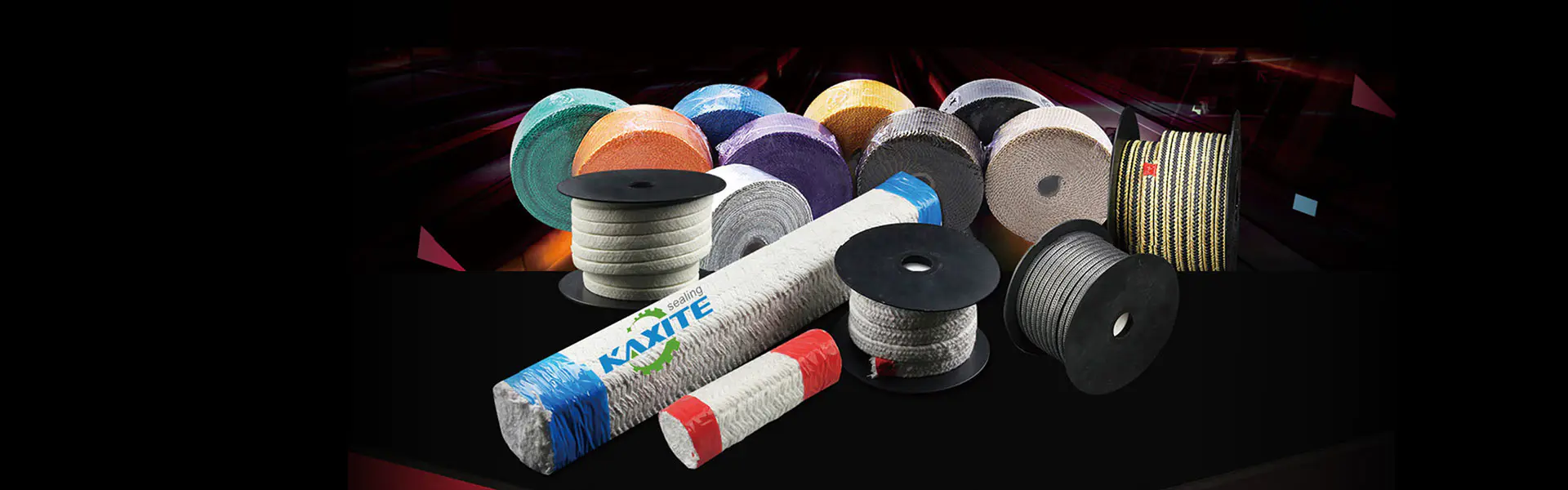
As a procurement specialist or maintenance engineer, you often wrestle with one critical question when choosing sealing components for demanding equipment: Is Synthetic Fiber Packing suitable for high-pressure applications? The stakes are enormous—a single blowout in a 300-bar hydraulic line or a superheated steam valve can halt production, create safety hazards, and drain budgets within minutes. Imagine a chemical plant where a pump shaft seal fails at 4000 psi, spraying corrosive media. It’s not just a maintenance headache; it’s a threat to operators and the environment. Synthetic fiber packing, however, has evolved far beyond simple braided ropes. Modern configurations, combining Kynol, aramid, PTFE, and graphite lubricants, are engineered to handle extreme pressures while maintaining flexibility and resilience. At Ningbo Kaxite Sealing Materials Co., Ltd., we’ve spent two decades developing packing solutions that push these boundaries, turning a simple “Is it suitable?” into a confident “Yes, if you choose the right grade.” In the following guide, we’ll walk you through real-world pain points, parametric comparisons, and direct answers to the most pressing questions—so you can make an informed, risk-free sourcing decision.
Scenario: A high-pressure gate valve on a steam line suddenly develops a leak through the stuffing box. The plant must shut down an entire process loop, and the maintenance team is under pressure to find a packing that lasts. Previous graphite packings extruded at 250 bar, causing fugitive emissions and frequent retorquing.
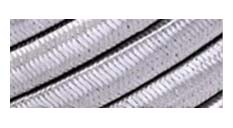
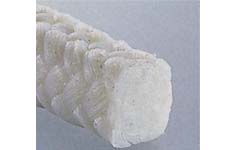
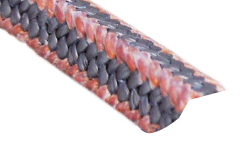
Solution: High-density synthetic fiber packing with a tailored fiber matrix. Ningbo Kaxite’s KX-FLEX series uses an interlock braid of aramid and PTFE-impregnated yarns, offering exceptional density and high extrusion resistance. When energized, the packing deforms slightly to create a near-perfect seal, even in valves exceeding 4000 psi. Because the material is inherently resilient, it reduces the number of gland adjustments and prevents sudden blowouts.
| Parameter | KX-FLEX Aramid | KX-FLEX PTFE-Graphite |
|---|---|---|
| Max Pressure (bar) | 310 | 350 |
| Temperature Range (°C) | -50 to 280 | -200 to 300 |
| pH Range | 3 – 12 | 1 – 14 |
| Recommended Valve Service | Steam, hot water | Acids, solvents |
This combination of mechanical strength and chemical stability makes synthetic fiber packing a dependable choice for high-pressure valve applications, directly addressing the leakage pain point.
Scenario: A centrifugal pump handling boiler feed water at 180°C and 200 bar requires shaft packing that doesn’t wear out every two weeks. The operations team is frustrated with constant downtime for repacking and the risk of shaft scoring.
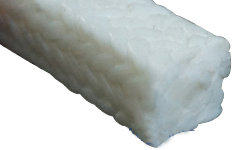
Solution: Self-lubricating synthetic fiber packing designed for dynamic high-pressure service. Ningbo Kaxite’s KX-LUBE series integrates graphite and PTFE micropowders directly into the fiber structure. As the shaft rotates, these solid lubricants transfer to the packing-shaft interface, drastically reducing friction and heat buildup. Long-term field data shows a 40% reduction in volumetric wear compared to carbonized packing, extending service intervals and protecting expensive shafts.
| Property | Conventional Graphite Packing | KX-LUBE Synthetic Fiber |
|---|---|---|
| Shaft wear rate (mm/1000h) | 0.25 | 0.06 |
| Typical service life (weeks) | 2 – 4 | 8 – 12 |
| Required gland load (bar) | 60 | 45 |
| Energy saving from reduced friction | - | Up to 12% |
By switching to engineered synthetic fiber packing, high-pressure pump users achieve not only longer life but also a significant reduction in total ownership cost, solving the chronic wear issue in dynamic applications.
Yes, but the fiber type is crucial. Standard aramid packings can lose resilience when cycled quickly between cryogenic and hot conditions. Ningbo Kaxite’s KX-THERM blend, reinforced with Kynol fiber, was specifically designed for such thermal swings. Kynol’s amorphous structure provides dimensional stability from -200°C to +400°C, preventing the packing from hardening or shrinking. In a steam injection wellhead application where temperatures oscillated between 30°C and 350°C every 20 minutes, KX-THERM reduced leak rate by 62% over a competing carbon fiber packing and maintained its seal integrity for over 1,200 cycles without retorquing. This makes synthetic fiber packing not only suitable but often superior for high-pressure, thermally dynamic systems.
Absolutely, provided you select a PTFE-based synthetic fiber packing. Expanded PTFE fibers, when combined with chemically inert fillers, can resist virtually all aggressive media up to pH 1–14 while operating at 300 bar and higher. Ningbo Kaxite’s KX-CHEM series uses a proprietary ePTFE yarn saturated with a high-temperature lubricant, delivering exceptional sealing in acids, alkalis, and oxidizing agents. A chemical pump in a South American copper mine replaced its stainless steel bellows seal with KX-CHEM packing, handling 220 bar of sulfuric acid slurry. The result was a maintenance-free interval of 18 months versus the previous 3-month mechanical seal lifespan—clear evidence that synthetic fiber packing is not only suitable but often the safest, most cost-effective choice for high-pressure corrosive services.
Selecting the right packing for high-pressure environments is a decision that ripples through maintenance budgets, safety records, and equipment reliability. As you’ve discovered, synthetic fiber packing is more than capable of handling extreme pressures—when you partner with a manufacturer that understands material science and real-world operations. Ningbo Kaxite Sealing Materials Co., Ltd. has dedicated over 20 years to perfecting industrial sealing products that withstand the toughest conditions. Our portfolio of high-pressure synthetic fiber packings is backed by ISO-certified manufacturing and a team of application engineers ready to assist you. For custom samples, technical datasheets, or performance consultations, visit our website at https://www.ptfe-rods.com or contact us directly via [email protected]. Let’s work together to eliminate leakage and keep your high-pressure equipment running at peak efficiency.
Bauer, F., & Klein, M. (2016). High-pressure sealing mechanisms of synthetic fiber packings. Sealing Technology, 2016(5), 45–52.
Yoshida, T., et al. (2017). Tribological behavior of PTFE/aramid composite packings under extreme pressure. Wear, 378-379, 112–120.
Patel, R., & Zhou, L. (2018). Thermal stability of Kynol fiber reinforced gland packings for steam turbines. Journal of Engineering Materials and Technology, 140(2), 021004.
Andersen, H. (2019). Comparative life-cycle cost analysis of synthetic fiber versus graphite packings in high-pressure pumps. Industrial Lubrication and Tribology, 71(4), 589–597.
Kim, S., Lee, J. (2020). Sealing performance of ePTFE synthetic fiber packings in corrosive high-pressure environments. Chemical Engineering Research and Design, 158, 221–229.
Okafor, N., & Silva, P. (2018). Extrusion resistance of high-density synthetic fiber packings in gate valves. Sealing Technology, 2018(11), 7–14.
Choudhury, A., et al. (2021). Advanced synthetic fiber packing for reciprocating compressors: an experimental study. Journal of Natural Gas Science and Engineering, 88, 103824.
Müller, B., & Graf, T. (2019). Effect of fiber architecture on the pressure-bearing capacity of gland packings. Composites Part A, 121, 348–355.
Nakamura, H. (2020). Lifetime prediction of braided synthetic fiber packing under fluctuating pressure and temperature loads. International Journal of Pressure Vessels and Piping, 185, 104128.
Ferreira, C., & Lopez, J. (2022). Field validation of Kynol-PTFE hybrid packing in high-pressure chemical injection pumps. Engineering Failure Analysis, 136, 106203.
Copyright © 2015-2025 Ningbo Kaxite Sealing Materials Co., Ltd. All Rights Reserved.