In industrial, commercial, and residential applications, the integrity of structures and systems is paramount. This is where Sealing Materials come into play. These are specialized substances or components designed to close gaps, joints, or openings between surfaces. Their primary functions are to prevent the passage of fluids (liquids and gases), dust, dirt, and noise, while also providing thermal insulation, fire resistance, and sometimes even structural bonding. From the silicone around your bathtub to the massive gaskets in a jet engine, sealing materials are unsung heroes of modern engineering, ensuring safety, efficiency, and longevity.
At Kaxite Sealing, we have dedicated decades to mastering the science and application of these critical materials. Our expertise lies not just in supplying products, but in providing engineered sealing solutions that meet the precise demands of pressure, temperature, chemical exposure, and mechanical stress.
Choosing the wrong sealant or gasket can lead to catastrophic failure. Professionals evaluate materials based on a rigorous set of parameters. Below is a detailed breakdown of the most critical factors.
The core polymer defines the fundamental properties. Here are the most common types:
These parameters should be matched to the specific operating environment.
| Parameter | Description | Why It Matters | Typical Range (Kaxite Examples) |
|---|---|---|---|
| Temperature Range | The minimum and maximum continuous operating temperatures the material can withstand without degrading. | Prevents cracking in cold or melting/softening in heat. | -100°F to +600°F (-73°C to +315°C) depending on compound. |
| Pressure Rating | The maximum differential pressure the seal can contain without extrusion or failure. | Ensures system integrity in hydraulic, pneumatic, or process applications. | Vacuum to 10,000+ PSI (690+ bar). |
| Chemical Compatibility | Resistance to degradation from exposure to specific chemicals, solvents, oils, or acids. | Extends seal life and prevents contamination of the medium. | Rated per ASTM standards against specific fluid classes (e.g., ASTM Oil, Jet Fuel, Acids). |
| Hardness (Durometer) | Measured on the Shore A or Shore D scale. Indicates material softness or rigidity. | Softer seals conform better to uneven surfaces; harder seals resist extrusion. | Shore A 20 (very soft) to Shore D 80 (rigid). |
| Tensile Strength & Elongation | Tensile strength is the stress at break. Elongation is the % stretch at break. | Indicates durability and ability to withstand movement without tearing. | Tensile: 200 - 3000 PSI; Elongation: 100% - 800%. |
| Compression Set | The material's ability to recover to its original thickness after prolonged compression. | A low set is critical for gaskets and O-rings to maintain sealing force over time. | 10% - 40% (Lower is better). |
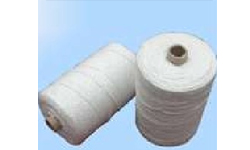
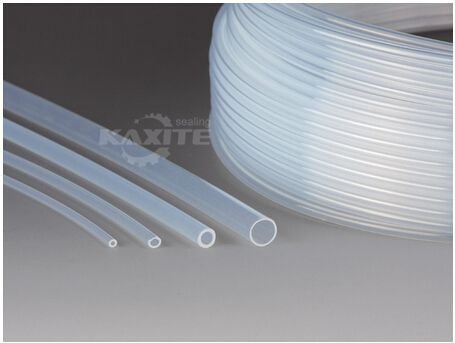
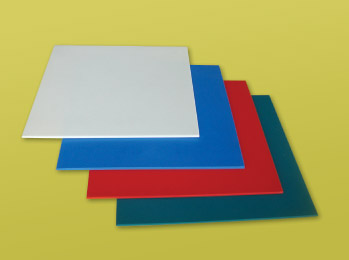
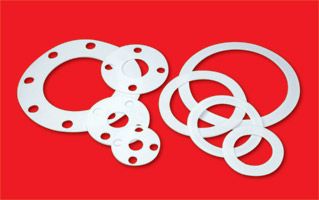
Sealing materials are supplied in various forms for different applications:
Kaxite Sealing offers a comprehensive range of high-performance sealing materials engineered for reliability. Our products are developed in state-of-the-art facilities and tested to international standards.
| Product Series | Base Material | Key Features & Advantages | Primary Applications | Standard Specifications |
|---|---|---|---|---|
| Kaxite-Sil™ HT Series | High-Temp Silicone | Continuous service up to 260°C (500°F). Excellent flexibility, non-corrosive, FDA compliant grades available. | Ovens, automotive gaskets, lighting, food processing equipment, electrical enclosures. | ASTM D2000, FDA CFR 177.2600, UL 94 HB |
| Kaxite-NBR™ Pro Series | Nitrile Rubber (NBR) | Superior resistance to oils, fuels, and abrasion. Excellent compression set resistance. | Hydraulic & pneumatic systems, fuel handling, oil & gas, automotive engines. | ASTM D2000 SAE J200, ISO 3601, NACE MR0175 |
| Kaxite-FKM™ Ultra Series | Fluoroelastomer | Exceptional resistance to harsh chemicals, acids, and high temperatures. Low gas permeability. | Chemical processing, semiconductor, aerospace, oil & gas downhole, emissions control. | ASTM D2000, AMS 7258, ISO 3601 |
| Kaxite-PTFE™ Precision Series | Virgin & Filled PTFE | Chemically inert, wide temp range (-200°C to +260°C), very low friction. Can be filled for improved wear. | Chemical pipe gaskets, semiconductor, pharmaceutical, food & beverage, expansion joints. | FDA CFR 177.1550, USP Class VI, ASTM D4894 |
| Kaxite-EPDM™ WeatherSeal Series | EPDM Rubber | Outstanding ozone, UV, and weather resistance. Excellent for steam and hot water. | Cooling systems, HVAC, roofing membranes, automotive weatherstrips, outdoor enclosures. | ASTM D4637, ROHS, REACH compliant |
| Kaxite-PUR™ Sealant Line | Polyurethane & Hybrid Sealants | High movement capability (±50%), paintable, excellent adhesion to most substrates. | Construction joints, concrete sealing, transportation infrastructure, marine decks. | ASTM C920, TT-S-00230C, AAMA 812.1 |
Q: What is the main difference between a gasket and a sealant?
A: A gasket is a pre-formed, solid component (cut from sheet or molded) that is placed between two flanges or surfaces. It compresses to create a seal. A sealant is typically a liquid or paste applied to a joint or gap that then cures or remains pliable to form the seal. Gaskets are ideal for defined, bolted flanges, while sealants are better for irregular gaps or bonded seams.
Q: How do I determine the correct O-ring size for my application?
A: You need three dimensions: Inner Diameter (ID), Outer Diameter (OD), and Cross-Sectional Diameter (CS). The gland (groove) design is critical. Standard sizes follow AS568 or ISO 3601-1 specifications. At Kaxite Sealing, our engineering support team can help you calculate the optimal size based on your gland dimensions, stretch, and squeeze requirements to ensure proper sealing and longevity.
Q: Why does hardness (durometer) matter in a sealing material?
A: Hardness affects sealability and resistance. A softer material (e.g., Shore A 50-70) conforms more easily to surface imperfections, providing a better seal on rough or uneven flanges. A harder material (e.g., Shore A 80-90) offers greater resistance to extrusion under high pressure and is more durable in dynamic applications. Selecting the wrong hardness can lead to leakage or premature failure.
Q: What does "compression set" mean, and why is a low value important?
A: Compression set is a measure of a material's permanent deformation after being compressed for an extended period at a specific temperature. A high compression set means the seal has lost its elasticity and "spring-back," leading to a loss of sealing force and eventual leakage. For static gaskets and O-rings that must maintain sealing pressure for years, a low compression set (e.g., <20%) is a critical indicator of long-term performance.
Q: Can Kaxite Sealing materials be used in food contact or potable water applications?
A: Yes. Kaxite Sealing offers specific product lines, such as our Kaxite-Sil™ FDA and Kaxite-EPDM™ WRAS series, that are formulated to comply with stringent regulations like FDA CFR 177.2600 (USA), EC 1935/2004 (EU), and WRAS (UK Water Regulations). These materials are non-toxic, non-leaching, and designed for safe, repeated contact with food or drinking water.
Q: How does temperature affect the choice of sealing material?
A: Temperature is perhaps the most critical factor. High temperatures can cause elastomers to harden, crack, or lose elasticity (thermal aging). Low temperatures can make them brittle and lose flexibility. The operating temperature must fall within the material's rated continuous service range. For cyclic applications, the material's ability to withstand thermal cycling without fatigue is key. Kaxite Sealing provides detailed temperature performance graphs for all our materials.
Q: What is the lead time for custom-molded sealing parts?
A: Lead times for custom molds and production vary based on part complexity, material, and quantity. For standard materials, prototype lead times can be as short as 2-3 weeks, with production runs typically requiring 4-8 weeks. Kaxite Sealing maintains a large inventory of common tooling and raw materials to expedite the process for our clients. We recommend consulting with our sales engineering team for a precise project timeline.


Copyright © 2015-2025 Ningbo Kaxite Sealing Materials Co., Ltd. All Rights Reserved.