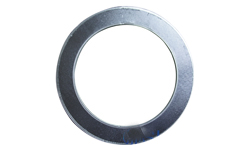
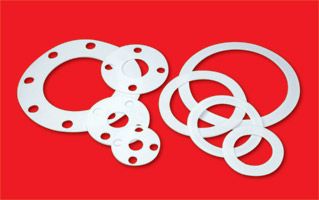
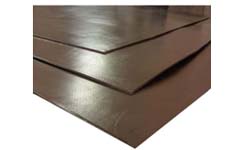
In the realm of high-performance industrial components, few materials command as much respect and find such widespread utility as Polytetrafluoroethylene, universally known as PTFE or Teflon®. As a cornerstone of modern engineering, PTFE parts offer an almost unparalleled combination of properties that solve complex challenges across countless industries. From ensuring leak-free operations in aggressive chemical environments to facilitating smooth motion in sensitive equipment, the right PTFE component is often the difference between system failure and flawless, long-term performance. At Kaxite Sealing, with two decades of specialization in advanced polymer solutions, we engineer and manufacture PTFE parts that are not just components but critical assets for your operational integrity. This guide delves deep into the specifications, benefits, and applications of our precision-grade PTFE offerings.
The exceptional performance of PTFE stems from its unique molecular structure, characterized by strong carbon-fluorine bonds. This structure grants it a set of inherent properties that are difficult to find combined in any other single material. Understanding these is key to specifying the correct part.
At Kaxite Sealing, we transform raw PTFE into precision-engineered components. Our manufacturing processes—including compression molding, isostatic molding, CNC machining, and skiving—ensure each part meets exact dimensional tolerances and performance criteria. Below is a detailed breakdown of our standard and enhanced PTFE material grades and their specifications.
| Grade Designation | Description & Primary Fillers | Key Enhanced Properties | Typical Applications | Continuous Service Temp. Range |
|---|---|---|---|---|
| KX-PTFE-V | Virgin, 100% Pure PTFE | Maximum chemical resistance, high purity, excellent dielectric strength. | Semiconductor seals, pharmaceutical liners, food-grade gaskets, labware. | -260°C to 260°C |
| KX-PTFE-G | 15-25% Glass Fiber Filled | Improved compressive strength, reduced cold flow, enhanced wear resistance. | Heavy-duty bushings, thrust washers, bearing pads, valve seats. | -200°C to 260°C |
| KX-PTFE-C | 15-20% Carbon Filled | Superior wear resistance, excellent thermal conductivity, added stiffness. | Piston rings, compressor rings, dynamic seals in dry running conditions. | -200°C to 260°C |
| KX-PTFE-B | 20-25% Bronze Filled | Exceptional thermal conductivity, high load-bearing capacity, excellent wear life. | Bearings for high PV values, wear plates, backup rings for high-pressure systems. | -200°C to 250°C |
| KX-PTFE-M | Molybdenum Disulfide (MoS2) Filled | Lower coefficient of friction, improved pressure-velocity (PV) capability. | Gears, slide plates, low-friction bearings in non-lubricated service. | -200°C to 260°C |
| KX-PTFE-S | Stainless Steel Filled | High compressive strength, excellent creep resistance, good wear properties. | Heavy compression seals, load distribution plates, structural components. | -200°C to 260°C |
Selecting the correct PTFE part requires a clear understanding of its physical and mechanical parameters. The following tables provide detailed data for our standard grades, aiding engineers and procurement specialists in making informed decisions.
| Property (ASTM Test Method) | KX-PTFE-V | KX-PTFE-G | KX-PTFE-C | KX-PTFE-B |
|---|---|---|---|---|
| Tensile Strength (D-638) | 25 - 35 MPa | 17 - 24 MPa | 14 - 20 MPa | 12 - 17 MPa |
| Elongation at Break (D-638) | 300 - 500% | 200 - 350% | 150 - 300% | 100 - 250% |
| Compressive Strength (D-695) | 12 MPa | 45 MPa | 40 MPa | 60 MPa |
| Compressive Modulus (D-695) | 500 MPa | 1500 MPa | 1300 MPa | 2000 MPa |
| Deformation Under Load (24h @ 14MPa) (D-621) | 8 - 12% | 2 - 4% | 2.5 - 4.5% | 1.5 - 3% |
| Coefficient of Friction (Dynamic, vs Steel) | 0.04 - 0.10 | 0.10 - 0.20 | 0.08 - 0.15 | 0.12 - 0.22 |
| Wear Factor (K) x 10-10 (mm3/N·m) | 4000 | 15 - 30 | 5 - 20 | 2 - 10 |
| Thermal Conductivity (W/m·K) | 0.25 | 0.40 - 0.50 | 0.45 - 0.55 | 0.70 - 0.90 |
| Property (ASTM Test Method) | KX-PTFE-V | KX-PTFE-G | KX-PTFE-C | KX-PTFE-B |
|---|---|---|---|---|
| Chemical Resistance | Excellent (to virtually all) | Very Good* | Good* | Fair* (Check acid resistance) |
| Dielectric Strength (kV/mm) (D-149) | > 60 | 40 - 55 | 35 - 50 | 30 - 45 |
| Volume Resistivity (Ohm·cm) (D-257) | > 1018 | 1016 - 1017 | 103 - 106 | 104 - 107 |
| Water Absorption (%) (D-570) | < 0.01 | < 0.02 | < 0.03 | < 0.04 |
*Filled grades retain excellent resistance to most chemicals but may be affected by media that attack the specific filler (e.g., hydrofluoric acid attacks glass). Consult Kaxite Sealing engineering for specific media compatibility.
What is the main difference between virgin PTFE and filled PTFE grades?
Virgin PTFE offers the highest level of chemical resistance, purity, and electrical properties but is relatively soft and prone to cold flow (creep) under sustained load. Filled PTFE grades incorporate materials like glass, carbon, or bronze to significantly improve mechanical properties such as compressive strength, wear resistance, and dimensional stability under load, while slightly compromising the absolute chemical inertness or dielectric properties of the base polymer.
How do I select the right filler for my PTFE part application?
Selection depends on the primary performance requirement. For improved wear resistance and low friction, consider carbon or molybdenum disulfide fills. For high compressive strength and reduced creep, glass or stainless steel fills are ideal. For applications requiring excellent thermal conductivity to dissipate heat, bronze or carbon fills are the best choice. The Kaxite Sealing engineering team can provide specific recommendations based on your operating conditions.
Can PTFE parts be used for food and pharmaceutical applications?
Yes, virgin PTFE (like our KX-PTFE-V grade) is compliant with FDA regulations (21 CFR 177.1550) for food contact and meets USP Class VI requirements for biocompatibility, making it suitable for pharmaceutical processing. It is critical to specify virgin, unpigmented, and additive-free PTFE for these sensitive applications.
What is "cold flow" or "creep" in PTFE, and how is it managed?
Cold flow refers to the tendency of PTFE to deform slowly under a continuous mechanical load, even at room temperature. This can cause seals to lose sealing force or bushings to lose their fit. It is managed by using filled PTFE grades (which dramatically reduce creep), proper design with adequate support, limiting stress levels, and using configurations like backup rings in sealing systems.
What are the machining tolerances achievable for custom PTFE parts from Kaxite Sealing?
Kaxite Sealing specializes in precision CNC machining of PTFE. Standard machining tolerances typically adhere to ISO 2768-mK. For critical dimensions, we can achieve tolerances as tight as ±0.01mm (±0.0004") depending on part geometry and size. Detailed drawings allow us to provide the most accurate quotation and final product.
How does temperature affect the performance of PTFE parts?
PTFE retains its remarkable properties across an extremely wide temperature range. Its mechanical strength decreases as temperature increases, and it becomes more prone to creep. At very low temperatures, it remains flexible and does not become brittle. It is crucial to consider the specific mechanical and thermal expansion properties at your application's operating temperature when designing with PTFE.
Can Kaxite Sealing manufacture PTFE parts to custom specifications and drawings?
Absolutely. While we stock a wide range of standard seals and profiles, a core strength of Kaxite Sealing is our ability to produce fully custom PTFE components from your drawings or samples. Our process includes material grade selection, prototyping, precision manufacturing, and quality inspection to meet your exact requirements.

Copyright © 2015-2025 Ningbo Kaxite Sealing Materials Co., Ltd. All Rights Reserved.