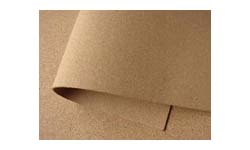
At Kaxite Sealing, we specialize in manufacturing premium cork sheet materials for a vast array of industrial, commercial, and DIY applications. Our cork sheets are crafted from the bark of the cork oak tree (Quercus suber), a 100% natural, renewable, and biodegradable resource. This versatile material is renowned for its unique combination of properties, including exceptional compressibility, resilience, thermal and acoustic insulation, and natural friction. Whether you require a gasket for an engine, an insulator for flooring, a bulletin board for your office, or a craft material, our engineered cork sheets provide a reliable, sustainable, and high-performance solution.
Kaxite Sealing offers a comprehensive range of cork sheet products tailored to meet specific application requirements. Below are our standard product specifications. Custom formulations, densities, thicknesses, and backing materials (such as rubber, foam, or adhesive) are available upon request.
| Parameter | Standard Range | Description & Application Notes |
|---|---|---|
| Density | 120 kg/m³ - 550 kg/m³ | Lower density (120-220 kg/m³) for insulation and cushioning. Higher density (350-550 kg/m³) for heavy-duty gasketing and industrial seals. |
| Thickness | 0.8 mm (1/32") - 50 mm (2") | Available in rolls (thin gauges) and sheets. Common thicknesses for gaskets: 1.5mm, 3mm, 6mm. For insulation: 10mm, 20mm, 25mm. |
| Sheet Size | Standard: 915mm x 610mm (36" x 24") Custom: Up to 1500mm x 3000mm |
Large sheets minimize waste for big projects. We can die-cut or kiss-cut to specific shapes and sizes. |
| Temperature Range | -40°C to 120°C (-40°F to 250°F) | Suitable for most indoor and protected outdoor applications. For higher temperatures, our impregnated or composite grades are recommended. |
| Compression Set | < 15% (ASTM D395) | Indicates excellent recovery after prolonged compression, critical for flange gaskets and long-term seals. |
| Thermal Conductivity (k-value) | 0.036 - 0.042 W/m·K | Outstanding insulating properties, comparable to many synthetic foams, for energy efficiency. |
| Flame Rating | Class 1 (ASTM E84), B-s1,d0 (EN 13501-1) | Many standard sheets meet low flame spread and smoke development ratings. Special fire-retardant treatments available. |
| Common Grades | Natural, Impregnated, Composite, Self-Adhesive | Natural: Pure cork. Impregnated: Treated for enhanced oil/fuel resistance. Composite: Cork-rubber blends for extreme conditions. Self-Adhesive: Backed with high-tack adhesive. |
The versatility of Kaxite Sealing cork sheet makes it indispensable across numerous industries:
Q: What is the main difference between natural and impregnated cork sheets?
A: Natural cork sheets are made from granulated cork bound with a natural resin, offering good general-purpose performance. Impregnated cork sheets undergo an additional process where the cork granules are treated with special compounds (like waxes or polymers) before binding. This significantly enhances their resistance to oils, fuels, solvents, and moisture, making them ideal for automotive and heavy industrial gasketing applications where exposure to fluids is common.
Q: How do I select the correct density for my application?
A: Density is a critical factor. For sealing and gasketing, where compression and recovery are key, a medium to high density (280-550 kg/m³) is required to withstand bolt load and internal pressure. For thermal or acoustic insulation, cushioning, or bulletin boards, a lower density (120-220 kg/m³) is perfectly adequate and more cost-effective. Our Kaxite Sealing technical team can help you specify the optimal density based on pressure, temperature, and media.
Q: Can cork sheets be used for outdoor applications?
A: Yes, but with considerations. Pure cork is naturally resistant to moisture and rot, but prolonged, direct exposure to UV radiation and extreme weathering can cause surface degradation over time. For permanent outdoor use, we recommend our composite cork sheets (cork-rubber blends) or specifying a protective coating or paint. Using cork as an expansion joint filler or behind siding/facades is a common and successful outdoor application.
Q: What is the best way to cut and fabricate cork sheet material?
A: Cork is remarkably easy to work with. For thin sheets (<3mm), a sharp utility knife, scalpel, or heavy-duty scissors work well. For thicker sheets, a band saw, jigsaw, or hole saw is recommended. For precise, high-volume production of gaskets, die-cutting or laser cutting yields the best results. Always cut on a stable surface and ensure blades are sharp to achieve clean edges without tearing.
Q: Are Kaxite Sealing cork sheets environmentally friendly?
A: Absolutely. Sustainability is core to our philosophy at Kaxite Sealing. Cork oak trees are not cut down; only the bark is harvested every 9-12 years, allowing the tree to regenerate. This process supports forest ecosystems and biodiversity. Our cork sheets are biodegradable at the end of their long life cycle, and our manufacturing processes prioritize waste reduction and energy efficiency. Choosing cork is a positive environmental choice.
Q: How do I install a cork sheet gasket effectively?
A: For an effective seal, ensure both flange surfaces are clean, dry, and free of old gasket material. Cut the cork sheet to the exact shape, ensuring bolt holes align perfectly. Do not use sealants unless specified for a composite material. Hand-tighten bolts in a criss-cross pattern to compress the gasket evenly, then torque to the manufacturer's specification in the same pattern. This ensures uniform compression and prevents leaks.
Q: Can cork sheets be combined with other materials?
A: Yes, and this is a major strength. Kaxite Sealing produces composite sheets where cork is combined with materials like nitrile rubber, EPDM, or silicone. These composites inherit cork's compressibility with the enhanced chemical, temperature, or weathering resistance of the elastomer. We also supply sheets laminated with adhesives, foils, or facers for specific functional or aesthetic requirements.
Q: What is the typical lead time for custom cork sheet orders?
A: For standard grades and sizes from the Kaxite Sealing inventory, lead time is typically 3-5 business days. For custom formulations, densities, thicknesses, sheet sizes, or die-cut parts, lead times can range from 2 to 4 weeks depending on the complexity and order volume. We always provide a clear timeline upon receipt of your detailed specifications.
With decades of experience in engineering and supplying sealing solutions, Kaxite Sealing stands apart in the cork sheet market. We are not just suppliers; we are material experts and problem-solvers. Our commitment to quality begins with sourcing the finest raw cork and continues through our controlled manufacturing processes, resulting in consistent, reliable, and high-performance sheets every time. We offer unparalleled technical support to help you select, test, and apply the perfect cork material for your project, ensuring optimal performance and value. Trust Kaxite Sealing for all your natural and composite cork sheet requirements.
Copyright © 2015-2025 Ningbo Kaxite Sealing Materials Co., Ltd. All Rights Reserved.