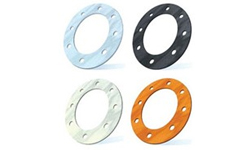
Spiral wound gaskets are a fundamental sealing component used in a vast array of industrial piping and pressure vessel applications. Engineered for reliability under demanding conditions, they are constructed by winding a pre-formed metal strip and a filler material in a V-shaped formation around a center ring. This unique spiral construction creates a resilient, yet highly load-bearing, seal that compensates for flange irregularities, thermal expansion, and vibrations. As a premier supplier, Kaxite Sealing specializes in manufacturing high-performance spiral wound gaskets tailored to meet the rigorous standards of industries such as oil & gas, chemical processing, petrochemical, power generation, and marine.
Kaxite Sealing spiral wound gaskets are meticulously produced to ensure precision, consistency, and performance. Below are the critical parameters that define our product range.
| Component | Common Materials | Temperature Range (Approx.) | Typical Applications |
|---|---|---|---|
| Outer Ring (Centering Ring) | Carbon Steel, 304/316 Stainless Steel | Depends on material | Provides centering, handling protection, and limits compression. |
| Inner Ring (Optional) | 304/316 Stainless Steel, Carbon Steel | Depends on material | Prevents erosion of the winding, protects against turbulence in high-velocity flows. |
| Metal Windings | 304/316 SS, 321 SS, 347 SS, Inconel 600/625, Monel, Titanium | -200°C to +1000°C+ (varies by alloy) | Provides the structural strength and spring-back characteristic. |
| Filler Material | Graphite, PTFE, Ceramic, Mica, Non-Asbestos (e.g., Aramid) | PTFE: -200°C to +260°C Graphite: Inert up to 500°C+ in non-oxidizing |
Provides the primary sealing element, chosen for chemical compatibility and temperature. |
| Parameter | Specification Details |
|---|---|
| Standards Compliance | ASME B16.20, API 601, DIN EN 1514-2, JIS B 2404 |
| Pressure Classes | 150#, 300#, 600#, 900#, 1500#, 2500# and special classes. |
| Size Range | From ½" NB to 60" NB and larger for custom orders. Metric sizes readily available. |
| Gasket Density | Controlled winding process ensures consistent density for uniform sealing performance. |
| Thickness | Standard thicknesses: 3.2 mm (1/8"), 4.5 mm (3/16"). Other thicknesses available. |
| Identification Marking | Per ASME B16.20: Clearly stamped on the outer ring for full traceability (Material, Size, Class, Brand). |
Choosing the correct material combination is critical for gasket performance and safety. Here is a guide based on service conditions.
| Service Condition | Recommended Metal Winding | Recommended Filler | Notes |
|---|---|---|---|
| General Purpose, High Temp (Steam, Hydrocarbons) |
304 Stainless Steel | Flexible Graphite | Excellent for a wide range of chemical services and high temperatures. |
| Corrosive Chemicals, Acids | 316 Stainless Steel, Inconel 625 | PTFE, Flexible Graphite | Superior corrosion resistance. PTFE for lower temps, Graphite for higher. |
| High Temperature Oxidizing Atmosphere | 321 SS, 347 SS, Inconel 600 | Graphite (with caution) or Ceramic/Mica | Special grades for oxidation resistance. Consult Kaxite for specific media. |
| Cryogenic Services | 304/316 SS | PTFE | Retains flexibility and sealing force at extremely low temperatures. |
| Strong Alkalis, Salt Water | Monel, Titanium | PTFE, Flexible Graphite | Excellent resistance to chlorides and caustic environments. |
Q: What are the main factors to consider when selecting a spiral wound gasket?
A: The primary selection factors are: 1) Fluid Media: Chemical compatibility with both the metal winding and filler material is paramount to prevent corrosion and deterioration. 2) Operating Temperature: The materials must withstand the entire temperature range, including excursions. 3) Pressure: The gasket must be rated for the flange class and system pressure. 4) Flange Type & Surface Finish: Ensure the gasket style (with/without inner ring) suits your flange face (e.g., raised face, ring-type joint groove).
Q: Why is an inner ring sometimes used on a spiral wound gasket?
A: An inner ring serves several key purposes. It provides additional radial stability to prevent the spiral winding from buckling inward under high pressure or during installation. It acts as a barrier to protect the soft filler material from being eroded by high-velocity or turbulent flow inside the pipe. It also helps guide the gasket during installation and can act as a compression stop to prevent over-compression of the winding.
Q: How does the spiral wound design handle temperature and pressure cycling better than solid gaskets?
A: The spiral wound structure is inherently resilient. When compressed between flanges, the V-shaped metal winding acts like a series of small springs. During thermal cycling, as the flanges expand and contract, this "spring" effect allows the gasket to maintain a constant seating stress on the sealing faces. This compensates for the relaxation of bolt stress and differential thermal expansion, maintaining a tight seal where a solid gasket might relax and leak.
Q: Can Kaxite Sealing provide gaskets for non-standard or special applications?
A: Absolutely. While we stock a comprehensive range of standard sizes compliant with international standards, Kaxite Sealing's engineering team specializes in custom solutions. We can manufacture gaskets for oversized or odd-sized flanges, extreme pressure/temperature conditions, and for highly aggressive or unique chemical media. Consultation with our technical team is recommended for such applications.
Q: What is the proper installation procedure for a spiral wound gasket?
A: Correct installation is critical. 1) Inspection: Ensure flanges, bolts, and the new gasket are clean, undamaged, and the gasket is the correct size and material. 2) Alignment: Align the flanges properly without using the bolts to force alignment. 3) Positioning: Center the gasket carefully on the flange face. 4) Bolting: Use a calibrated torque wrench. Follow a cross-pattern bolting sequence (star pattern) in multiple stages (e.g., 30%, 60%, 100% of final torque) to ensure even compression. Always refer to the specific equipment or industry standard procedures.
Q: How can I identify the specifications of a Kaxite spiral wound gasket?
A> All Kaxite Sealing spiral wound gaskets conform to ASME B16.20 marking requirements. The details are permanently stamped on the outer centering ring and include: The manufacturer's name (Kaxite), the size, the pressure class, the material of the winding metal (e.g., 304), and the filler material (e.g., GR for Graphite). This provides full traceability and ensures you are installing the correct component.



Copyright © 2015-2025 Ningbo Kaxite Sealing Materials Co., Ltd. All Rights Reserved.