**Mastering High-Performance Sealing and Insulation: The Ultimate Guide to
PTFE Sheet by Kaxite Sealing**
In the demanding world of industrial sealing, lining, and insulation, few materials offer the unparalleled combination of properties found in Polytetrafluoroethylene (PTFE). Known universally for its exceptional chemical resistance, wide temperature tolerance, and non-stick characteristics, PTFE has become a cornerstone material across countless industries. As a dedicated manufacturer with decades of expertise, Kaxite Sealing is committed to producing premium-grade PTFE sheets that meet the most rigorous application standards. This comprehensive guide delves into the specifications, benefits, and applications of our PTFE sheets, providing you with the detailed information needed to specify the right material for your project.
**Understanding PTFE and Its Inherent Advantages**
PTFE, a fully fluorinated polymer, is a synthetic fluoropolymer renowned for its inertness. Its molecular structure, a carbon chain fully shielded by fluorine atoms, grants it a unique set of properties that are difficult to match with other polymers or metals.
**Key Properties of Kaxite Sealing PTFE Sheets:**
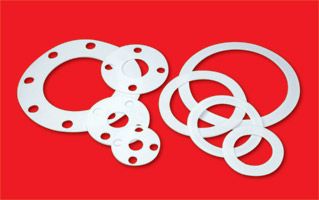
* **Exceptional Chemical Resistance:** Virtually inert, PTFE sheets resist attack by nearly all industrial chemicals, solvents, and acids, including strong oxidizers like aqua regia. This makes them ideal for gaskets, seals, and linings in aggressive chemical processing environments.
* **Wide Operating Temperature Range:** Kaxite PTFE sheets perform consistently across an extreme temperature spectrum, from as low as -268°C (-450°F) up to +260°C (+500°F) continuously, with short-term peaks even higher. This stability prevents brittle failure at cryogenic levels and maintains integrity at high heat.
* **Outstanding Electrical Properties:** With an extremely high dielectric strength and a low dissipation factor, PTFE is an excellent insulator for high-frequency and high-voltage applications, commonly used in wire insulation and circuit boards.
* **Low Coefficient of Friction:** PTFE possesses one of the lowest coefficients of friction of any solid material. This self-lubricating property is perfect for bearing pads, slide plates, and applications requiring non-stick surfaces, reducing wear and energy consumption.
* **Excellent Weatherability and UV Resistance:** PTFE is inherently resistant to sunlight, ozone, and weathering, ensuring long-term performance in outdoor applications without degradation.
* **Non-Toxic and FDA Compliant Grades Available:** Certain grades of PTFE are approved for use in food and pharmaceutical processing equipment, valued for their purity and non-contaminating nature.
* **Zero Moisture Absorption:** PTFE does not absorb water, making it dimensionally stable in humid or wet environments, unlike many other polymers.
**Detailed Product Specifications of Kaxite Sealing PTFE Sheets**
Our PTFE sheets are manufactured under strict quality controls to ensure consistency, purity, and performance. Below are the detailed parameters for our standard virgin PTFE sheet offerings.
**Standard Material Properties Table:**
| Property | Test Method | Typical Value | Units |
| :--- | :--- | :--- | :--- |
| **Density** | ASTM D792 | 2.15 - 2.20 | g/cm³ |
| **Tensile Strength** | ASTM D638 | 25 - 35 | MPa |
| **Elongation at Break** | ASTM D638 | 300 - 500 | % |
| **Compressive Strength** | ASTM D695 | 12 | MPa |
| **Hardness (Shore D)** | ASTM D2240 | 50 - 65 | - |
| **Continuous Service Temperature** | - | -260 to +260 | °C |
| **Melting Point** | - | 327 | °C |
| **Thermal Conductivity** | ASTM C177 | 0.25 | W/(m·K) |
| **Coefficient of Linear Thermal Expansion** | ASTM D696 | 12 x 10⁻⁵ | /°C |
| **Dielectric Strength** | ASTM D149 | 20 | kV/mm |
| **Volume Resistivity** | ASTM D257 | >10¹⁸ | Ohm·cm |
| **Coefficient of Friction (Dynamic)** | ASTM D1894 | 0.05 - 0.10 | - |
**Available Sizes and Forms:**
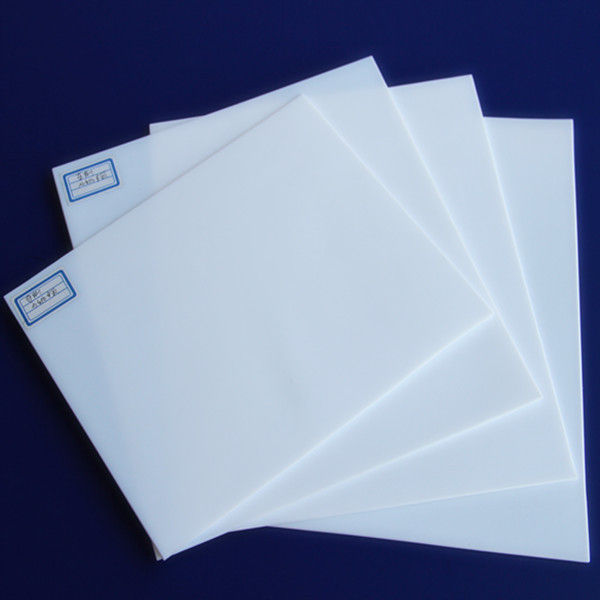
Kaxite Sealing offers PTFE sheets in a variety of configurations to suit different fabrication needs.
* **Standard Sheet Sizes:**
* 1000mm x 1000mm (39.4" x 39.4")
* 1200mm x 1200mm (47.2" x 47.2")
* 1500mm x 1500mm (59" x 59")
* Custom sizes available upon request.
* **Thickness Range:**
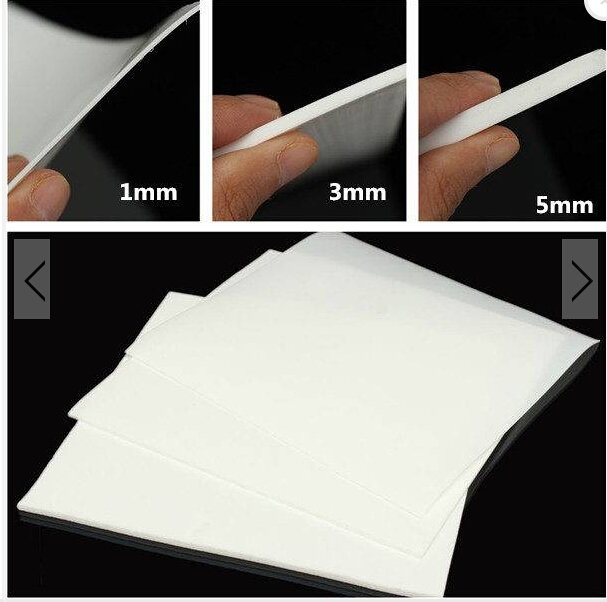
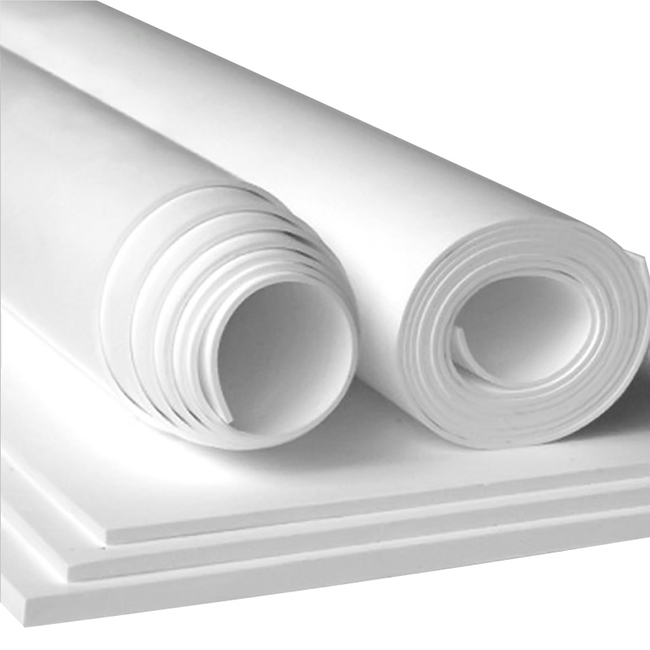
* **Skived Sheets:** 0.1mm (0.004") up to 5mm (0.2"). Ideal for precise, thin gaskets, diaphragms, and liners.
* **Molded Sheets:** 1mm (0.04") up to 50mm (2") and beyond. Used for machined parts, heavy-duty gaskets, and bearing pads.
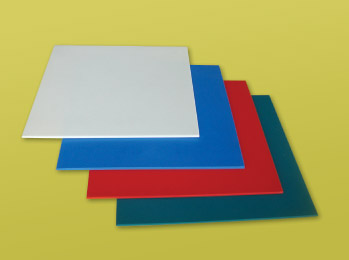
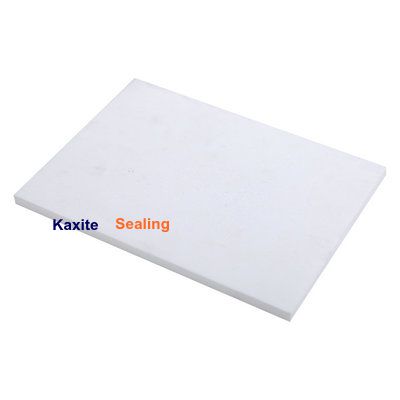
* **Colors:** Standard is natural white (virgin). We also offer compounded sheets with fillers (e.g., glass, carbon, bronze, graphite) for enhanced mechanical properties, which may alter the color.
**Fillers and Enhanced Grades:**
For applications requiring improved wear resistance, reduced creep (cold flow), better thermal conductivity, or increased stiffness, Kaxite Sealing provides filled PTFE compounds.
**Common Filler Types and Their Benefits:**
| Filler Type | Key Benefits | Typical Applications |
| :--- | :--- | :--- |
| **Glass Fiber** | Increased stiffness, reduced creep, improved wear resistance. | Bushings, thrust washers, seals in rotating equipment. |
| **Carbon/Graphite** | Enhanced wear resistance, improved thermal conductivity, inherent lubrication. | Piston rings, compressor rings, bearings. |
| **Bronze** | Superior thermal conductivity, high load-bearing capacity, reduced wear. | Bearings for high PV values, wear plates. |
| **Molybdenum Disulfide** | Lower friction, improved compression resistance. | Gaskets for high bolt load, packing rings. |
| **Carbon & Graphite Blend** | Excellent wear and PV characteristics, good chemical resistance. | Complex seal geometries, dynamic applications. |
**PTFE Sheet Frequently Asked Questions (FAQ)**
**Q: What is the main difference between PTFE sheet and other plastic sheets like polyethylene or PVC?**
A: The primary differences lie in temperature resistance and chemical inertness. PTFE can handle temperatures far beyond the limits of polyethylene or PVC (which soften or degrade above ~80°C). Chemically, PTFE is vastly more resistant, especially to strong solvents and oxidizing acids that would quickly damage PVC or PE. Its non-stick and ultra-low friction properties are also unique.
**Q: Can Kaxite Sealing PTFE sheets be easily machined or fabricated?**
A: Yes, PTFE is known for its excellent machinability. It can be cleanly cut, skived, punched, turned, milled, and drilled using standard workshop tools. Sharp tools and proper clamping are recommended to accommodate its relatively soft nature. Kaxite Sealing provides sheets with consistent grain structure to ensure predictable and smooth machining results.
**Q: How do I choose between a virgin PTFE sheet and a filled compound?**
A: Choose virgin PTFE when maximum chemical purity, excellent dielectric properties, or FDA compliance is required. Opt for a filled PTFE compound (like glass or carbon-filled) when your application involves continuous high loads, requires improved resistance to deformation under load (creep), or needs enhanced wear resistance for dynamic parts like bearings or seals.
**Q: Are there any chemicals that can damage PTFE sheets?**
A: PTFE is attacked by only a few very specific substances under extreme conditions. These include molten alkali metals (e.g., sodium), certain fluorine compounds (like chlorine trifluoride), and fluorinated solvents at high temperature and pressure. For virtually all other industrial chemicals, PTFE remains unaffected.
**Q: What are the best methods for bonding or joining PTFE sheets?**
A: Bonding PTFE is challenging due to its non-stick surface. Standard adhesives do not work. Effective methods include: 1) **Surface etching** using a sodium-naphthalene process to make it bondable with epoxies. 2) **Thermal welding** (heating adjacent surfaces to the melt point and pressing them together). 3) **Mechanical fastening** with bolts, rivets, or pins. For sealing applications, it's often best to machine the part from a single sheet or use filled grades designed for better creep resistance to maintain bolt load.
**Q: What industries commonly use PTFE sheets from Kaxite Sealing?**
A: Our PTFE sheets serve a vast array of sectors: Chemical Processing (for gaskets, linings, bellows), Semiconductor Manufacturing (for high-purity liners and components), Food & Beverage (for conveyor belts, wear plates), Pharmaceutical (for seals in sterile equipment), Electrical & Aerospace (for insulators, wire wraps), and Industrial Machinery (for bearings, slide plates, piston rings).
**Q: How should PTFE sheets be stored and handled before use?**
A: Store sheets in a cool, dry place away from direct sunlight and heat sources. Keep them flat or rolled (for thin skived sheets) to prevent permanent bending or deformation. While PTFE is chemically resistant, it's good practice to keep it clean from surface contamination like grease or dirt before fabrication. Use standard workshop safety practices when cutting or machining to avoid inhalation of fine particles.
**Q: Does Kaxite Sealing offer custom formulations or colors?**
A: Yes. While we stock a wide range of standard virgin and filled PTFE sheets, our engineering team can work with you to develop custom compounds tailored to specific requirements, such as unique filler percentages, special colors for coding, or sheets with specific regulatory certifications.