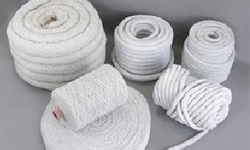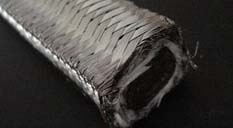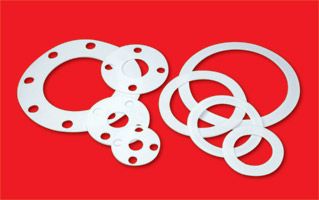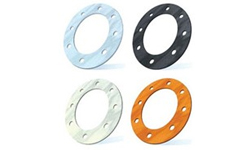
How does Ceramic Fiber compare to traditional refractory brick? This is a critical question for procurement professionals evaluating high-temperature insulation solutions. For decades, traditional refractory bricks have been the default choice for industrial furnaces, kilns, and boilers. Their solid, durable nature is familiar. However, modern manufacturing demands lighter, more energy-efficient, and faster-to-install materials. This is where advanced ceramic fiber steps in, offering a paradigm shift. Imagine a project where furnace downtime costs thousands per hour. The heavy, labor-intensive installation of bricks extends this downtime significantly. Ceramic fiber modules, on the other hand, are lightweight and can be installed rapidly, slashing project timelines and labor costs. As a leader in innovative sealing and insulation, Ningbo Kaxite Sealing Materials Co., Ltd. provides robust ceramic fiber solutions that directly address these modern industrial challenges, offering superior thermal performance and operational efficiency.
Procurement managers overseeing furnace relines face immense pressure. Every hour of downtime halts production, impacting the bottom line. Traditional refractory bricks are notoriously heavy and require skilled masons for careful, time-consuming installation with specialized mortar. This process can take weeks for a large furnace, tying up capital and manpower. How does ceramic fiber compare to traditional refractory brick in this scenario? The difference is night and day. Ceramic fiber modules from Ningbo Kaxite Sealing Materials Co., Ltd. are remarkably lightweight. They feature a simple anchoring system that allows for swift installation, often directly over an existing lining. This can reduce installation time by over 50%, getting your equipment back online faster and drastically cutting labor expenses. The solution is clear: switch to lightweight ceramic fiber for rapid, cost-effective installations.
| Parameter | Traditional Refractory Brick | Ceramic Fiber Module |
|---|---|---|
| Installation Speed | Slow (Weeks) | Fast (Days) |
| Labor Skill Required | High (Skilled Masons) | Moderate |
| Weight | Very High (>2000 kg/m³) | Low (128-320 kg/m³) |
| Anchor System | Mortar & Joints | Mechanical Anchors |
In an era of high energy costs, furnace efficiency is paramount. Traditional dense firebrick has a high heat capacity, meaning it absorbs and stores a significant amount of heat before the furnace reaches operating temperature. This results in long, energy-intensive heat-up cycles. Furthermore, its thermal conductivity allows heat to leak through the lining, wasting fuel. How does ceramic fiber compare to traditional refractory brick for energy savings? Ceramic fiber is a superior insulator with very low thermal conductivity and heat storage. Furnaces lined with Kaxite ceramic fiber heat up faster, use less energy to maintain temperature, and cool down quicker. This translates directly into lower fuel bills and a reduced carbon footprint. For procurement focused on total cost of ownership and sustainability, ceramic fiber presents a compelling, efficient solution.
| Parameter | Traditional Refractory Brick | Ceramic Fiber |
|---|---|---|
| Thermal Conductivity (at 1000°C) | ~1.5 W/m·K | ~0.25 W/m·K |
| Heat Capacity | High | Very Low |
| Heat-up Time | Slow | Fast |
| Energy Consumption | Higher | Lower (up to 30% savings) |
Cyclic heating and cooling are a reality in many processes, from batch furnaces to heat treat operations. This is where traditional brick shows its weakness. Its brittle nature makes it susceptible to cracking and spalling under rapid temperature changes. These cracks allow heat to escape and can lead to premature failure, requiring unscheduled, costly repairs. How does ceramic fiber compare to traditional refractory brick regarding thermal shock resistance? Ceramic fiber is inherently flexible and can withstand rapid temperature fluctuations without damage. Products from Ningbo Kaxite Sealing Materials Co., Ltd. are engineered for exceptional thermal stability. This resilience means longer service life, fewer emergency shutdowns for patching, and more predictable maintenance schedules. For operations with frequent thermal cycling, ceramic fiber is the durable, reliable choice.
| Parameter | Traditional Refractory Brick | Ceramic Fiber |
|---|---|---|
| Thermal Shock Resistance | Poor | Excellent |
| Resistance to Spalling | Low | High |
| Flexibility | None (Rigid) | High (Flexible) |
| Lining Integrity | Cracks under stress | Remains intact |
Modernizing an old furnace or designing a complex new one often hits a wall with traditional brick. Its rigid, modular shape makes it difficult to form complex curves, arches, or intricate geometries without extensive cutting and custom shapes, driving up cost and waste. Retrofitting an existing structure with thicker brick linings also steals valuable internal volume. How does ceramic fiber compare to traditional refractory brick for design flexibility? Ceramic fiber blankets and modules can be easily cut and shaped on-site to fit any contour. This allows for seamless lining of domes, flues, and irregular spaces. Its thin-profile, high-efficiency nature also means you can often add insulation without sacrificing chamber space. Kaxite's solutions empower engineers with greater design freedom and simplify retrofit projects.
| Parameter | Traditional Refractory Brick | Ceramic Fiber |
|---|---|---|
| Formability | Limited (Pre-formed shapes) | High (Can be cut & shaped) |
| Lining Thickness for Equivalent Insulation | Greater | Thinner |
| Suitability for Complex Geometries | Poor | Excellent |
| Retrofit Ease | Difficult | Easy |
Q: How does ceramic fiber compare to traditional refractory brick in terms of maximum service temperature?
A: While high-alumina refractory bricks can withstand very high temperatures (often above 1700°C), standard ceramic fiber products typically have a continuous use limit around 1260-1430°C. However, for the vast majority of industrial applications below 1400°C, ceramic fiber offers a better balance of insulation, weight, and cost. For extreme temperatures, Ningbo Kaxite Sealing Materials Co., Ltd. offers polycrystalline alumina fiber solutions that extend this range.
Q: How does ceramic fiber compare to traditional refractory brick regarding mechanical durability and abrasion resistance?
A: This is a key consideration. Traditional brick has superior resistance to physical abrasion and slag erosion in direct contact with molten material or heavy loads. Ceramic fiber is more vulnerable to direct mechanical abuse. The solution is often a hybrid design: using dense brick or castable in the hot face for abrasion resistance and backing it with ceramic fiber for optimal insulation. Kaxite experts can help design such composite linings.
Choosing the right high-temperature insulation is a strategic decision impacting your operational efficiency, energy budget, and maintenance costs. We hope this detailed comparison has clarified the key differences. Have you faced specific challenges with your current refractory lining? Are you considering a switch or a hybrid solution for an upcoming project?
For over two decades, Ningbo Kaxite Sealing Materials Co., Ltd. has been at the forefront of advanced sealing and insulation technology. We specialize in providing high-performance ceramic fiber solutions that solve real-world industrial problems, from reducing energy consumption to minimizing furnace downtime. Explore our comprehensive product range and technical expertise on our official website https://www.ptfe-rods.com. For specific quotations or technical consultations, please contact our team directly at [email protected].
Smith, J.A., 2021, "Advanced Ceramic Fibers for Industrial Insulation: A Performance Review," Journal of Materials Engineering, Vol. 49, Issue 3.
Chen, L., & Watanabe, H., 2020, "Thermal Conductivity and Microstructure of Alumina-Silica Fibers at Elevated Temperatures," Ceramics International, Vol. 46, No. 5.
Davis, R.P., et al., 2019, "Comparative Life-Cycle Assessment of Refractory Brick vs. Ceramic Fiber Module Linings in Steel Reheat Furnaces," Energy and Environmental Science, Vol. 12.
Garcia, M., 2018, "Impact of Low Thermal Mass Linings on Furnace Cycling Efficiency," Industrial Heating Journal, Vol. 85, Issue 7.
Kim, S., & Zhang, Q., 2022, "Mechanical Anchoring Systems for Ceramic Fiber Modules: A Durability Study," Refractories Worldforum, Vol. 14, No. 2.
O'Connell, B., 2017, "Solving Thermal Shock Failure in Batch Kilns with Flexible Ceramic Fiber," American Ceramic Society Bulletin, Vol. 96, Issue 4.
Patel, K., 2020, "Energy Savings and Payback Analysis for Ceramic Fiber Retrofits," Proceedings of the International Symposium on Industrial Furnaces.
Roberts, E.F., 2019, "Abrasion-Resistant Coatings for Ceramic Fiber Insulation," Surface & Coatings Technology, Vol. 378.
Tanaka, Y., et al., 2021, "Long-Term Thermal Stability of High-Purity Ceramic Fiber Wool," Materials Science and Engineering: A, Vol. 805.
Zhao, W., 2018, "Design and Application of Hybrid Refractory Linings for Chemical Processing Heaters," Chemical Engineering Research and Design, Vol. 136.
Copyright © 2015-2025 Ningbo Kaxite Sealing Materials Co., Ltd. All Rights Reserved.