What Are the Main Applications of Basalt Fiber? Imagine you're sourcing materials for a high-stakes infrastructure project. You need something stronger than steel, lighter than aluminum, resistant to extreme heat and corrosion, and cost-effective. That's not a fantasy material; it's basalt fiber. This remarkable material, born from molten volcanic rock, is revolutionizing industries from construction to automotive. Its unique properties solve some of the most persistent engineering challenges, offering superior performance where traditional materials fall short. For global procurement specialists, understanding these applications is key to specifying smarter, more durable, and efficient solutions. This guide will explore the core uses of this versatile material and how it can become a secret weapon in your supply chain.
Article Outline:
Procurement managers for large-scale civil projects constantly battle against corrosion, maintenance costs, and structural longevity. Traditional steel rebar, while strong, succumbs to rust in harsh environments like marine settings or areas using de-icing salts, leading to concrete spalling and costly repairs. The solution lies in advanced composite materials like Basalt Fiber rebar (BFRP). BFRP offers exceptional tensile strength, is completely non-corrosive, and is electromagnetically transparent, making it ideal for sensitive structures. It significantly extends the service life of bridges, tunnels, and coastal structures, reducing total lifecycle cost.
Key Parameter Comparison: Basalt Fiber Rebar vs. Steel Rebar
| Parameter | Basalt Fiber Rebar (BFRP) | Steel Rebar |
|---|---|---|
| Tensile Strength | ≥ 1000 MPa | 400 - 550 MPa |
| Density | ~2.7 g/cm³ | ~7.85 g/cm³ |
| Corrosion Resistance | Excellent (Non-metallic) | Poor (Requires coating) |
| Thermal Conductivity | Low | High |
| Electromagnetic Transparency | Yes | No |
In the automotive and aerospace sectors, the pressure to reduce weight for better fuel efficiency and lower emissions is immense. Sourcing lightweight yet strong components is a top priority. Traditional metals add unnecessary mass. Basalt fiber composites present a compelling alternative. They offer a high strength-to-weight ratio, excellent vibration damping, and good thermal stability. Components like interior panels, battery casings for EVs, underbody shields, and even structural parts can be manufactured lighter and stronger, directly contributing to vehicle performance and sustainability goals. What Are the Main Applications of Basalt Fiber? In this sector, it's all about intelligent light weighting.
Q: Is basalt fiber environmentally friendly?
A: Yes, it is considered a green material. Its production requires less energy than fiberglass or carbon fiber, generates no harmful waste, and the raw material (basalt rock) is abundant. Products like those from Ningbo Kaxite Sealing Materials Co., Ltd. support sustainable sourcing initiatives.
Q: How does basalt fiber compare to fiberglass in cost and performance?
A: Basalt fiber generally offers higher tensile strength, better temperature resistance, and superior chemical stability than E-glass fiber, often at a competitive cost point. It fills the performance gap between standard fiberglass and premium carbon fiber, providing excellent value.
Procuring fire protection materials for buildings, ships, or industrial plants demands absolute certainty. Materials must not only resist fire but also maintain structural integrity under extreme heat to allow for safe evacuation. Standard insulation can fail or produce toxic smoke. Basalt fiber textiles, fabrics, and boards are inherently non-combustible, with a melting point exceeding 1400°C. They provide excellent thermal insulation, contain no binders that could smoke, and offer superior durability. This makes them perfect for fire curtains, welding blankets, pipe insulation, and protective sleeves for critical cables.
Fire Performance Parameters of Basalt Fiber Fabric
| Parameter | Typical Value / Property |
|---|---|
| Continuous Service Temperature | -260°C to +700°C |
| Melting Point | ~1450°C |
| Flammability | Non-combustible (Class A1) |
| Thermal Conductivity | 0.031 - 0.038 W/(m·K) |
| Toxic Fumes Emission | None |
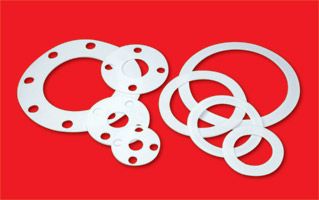
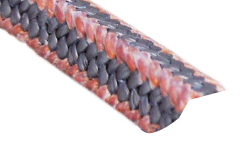
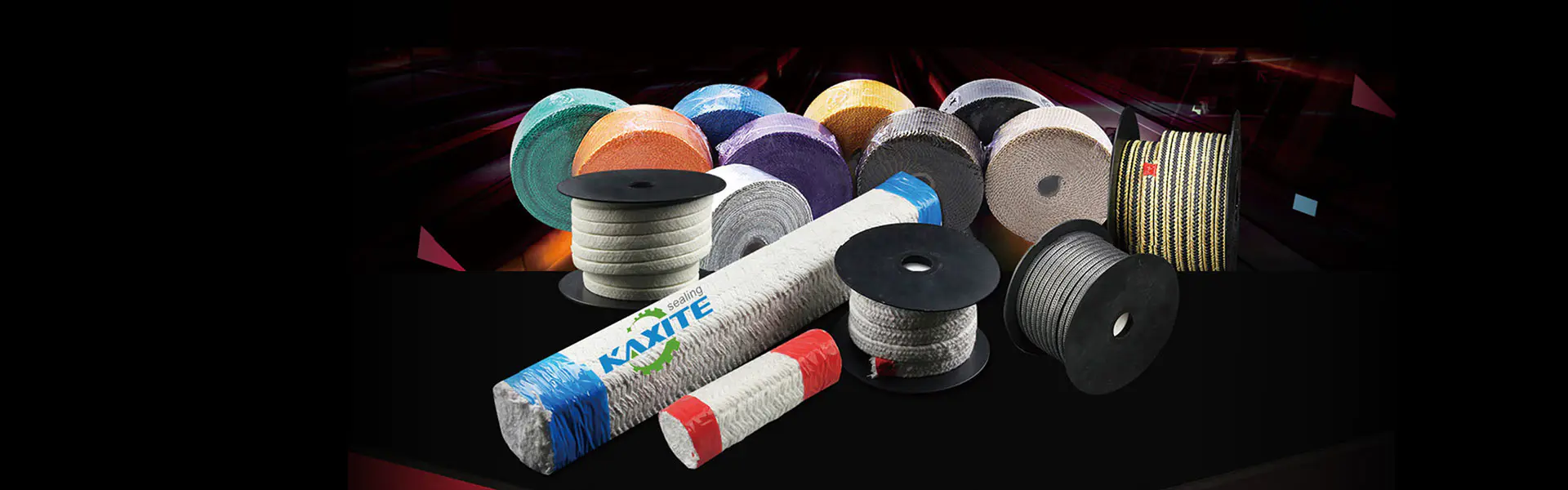
Industrial plants face constant challenges with sealing hot, corrosive pipelines and filtering aggressive chemicals. Standard gaskets, packings, and filter media degrade quickly, leading to leaks, downtime, and safety hazards. Sourcing durable alternatives is critical. Basalt fiber-based sealing products, such as braided sleeving and packing, offer outstanding resistance to acids, alkalis, and high temperatures. Similarly, basalt fiber filter fabrics provide excellent filtration efficiency and longevity in demanding environments like metallurgy or chemical processing. This translates to reduced maintenance intervals, lower operational costs, and improved plant safety.
What Are the Main Applications of Basalt Fiber? For industrial maintenance and operations procurement, it's a game-changer for reliability in aggressive service conditions. Companies like Ningbo Kaxite Sealing Materials Co., Ltd. specialize in engineering these high-performance basalt fiber sealing solutions to solve such persistent operational headaches.
We hope this guide has illuminated the powerful and diverse applications of basalt fiber for your procurement needs. Are you currently evaluating materials for a project involving high temperatures, corrosion, or weight reduction? Share your challenge in the comments, or reach out directly to explore specific solutions.
For expert material solutions, consider Ningbo Kaxite Sealing Materials Co., Ltd., a specialist in high-performance sealing and engineering materials, including advanced basalt fiber products. Contact their team at [email protected] for technical specifications and sourcing inquiries.
Supporting Research:
Sim, J., Park, C., & Moon, D.Y. (2005). Characteristics of basalt fiber as a strengthening material for concrete structures. Composites Part B: Engineering, 36(6-7), 504-512.
Deák, T., & Czigány, T. (2009). Chemical composition and mechanical properties of basalt and glass fibers: A comparison. Textile Research Journal, 79(7), 645-651.
Fiore, V., Scalici, T., Di Bella, G., & Valenza, A. (2015). A review on basalt fiber and its composites. Composites Part B: Engineering, 74, 74-94.
Lopresto, V., Leone, C., & De Iorio, I. (2011). Mechanical characterisation of basalt fibre reinforced plastic. Composites Part B: Engineering, 42(4), 717-723.
Dhand, V., Mittal, G., Rhee, K.Y., Park, S.J., & Hui, D. (2015). A short review on basalt fiber reinforced polymer composites. Composites Part B: Engineering, 73, 166-180.
Jamshaid, H., & Mishra, R. (2016). A green material from rock: basalt fiber – a review. The Journal of The Textile Institute, 107(7), 923-937.
Wei, B., Cao, H., & Song, S. (2010). Environmental resistance and mechanical performance of basalt and glass fibers. Materials Science and Engineering: A, 527(18-19), 4708-4715.
Kumar, D.S., Shukla, M.J., Mahato, K.K., Rathore, D.K., Prusty, R.K., & Ray, B.C. (2015). Effect of post-curing on thermal and mechanical behavior of GFRP composites. International Journal of Mechanical Sciences, 101-102, 142-152.
Artemenko, S.E., & Kadykova, Y.A. (2008). Polymer composite materials based on basalt fibers. Fibre Chemistry, 40(1), 37-39.
Militký, J., Kovačič, V., & Rubnerova, J. (2002). Influence of thermal treatment on tensile failure of basalt fibers. Engineering Fracture Mechanics, 69(9), 1025-1033.
Copyright © 2015-2025 Ningbo Kaxite Sealing Materials Co., Ltd. All Rights Reserved.