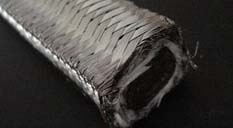
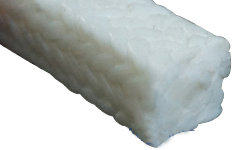
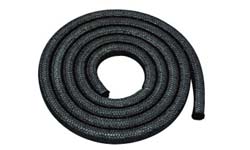
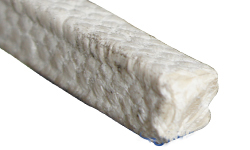
In the demanding world of industrial sealing, efficiency, durability, and cost-effectiveness are paramount. Synthetic fiber packing has emerged as a superior solution, engineered to meet the rigorous challenges of pumps, valves, mixers, and other rotating or reciprocating equipment. Unlike traditional materials, modern synthetic fiber packings from leading manufacturers are designed with advanced polymers and precise constructions to deliver exceptional performance across a wide spectrum of media and operating conditions.
Kaxite Sealing, with decades of expertise in sealing technology, specializes in high-performance synthetic fiber packing solutions. Our products are meticulously crafted to reduce downtime, minimize maintenance costs, and extend equipment life, providing a reliable seal that operators can trust.
The primary benefits driving the adoption of synthetic fiber packing include:
Understanding the precise parameters of packing material is crucial for correct selection. Below are the detailed specifications for our flagship synthetic fiber packing series.
| Product Series | Core Fiber Material | Impregnation / Lubricant | Temperature Range (°C) | pH Range | Primary Applications |
|---|---|---|---|---|---|
| KX-SF Aramid | High-purity Aramid Fibers | PTFE & Specialized Grease | -100 to +300 | 2 - 12 | Hot water, steam, acids, alkalis in pumps and valves |
| KX-SF Carbon | Premium Carbon Filaments | Graphite & PTFE | -200 to +500 (Inert Atmos.) | 0 - 14 | Extreme temperature services, aggressive chemicals, high-speed equipment |
| KX-SF PTFE | 100% Pure PTFE Filaments | PTFE Dispersant | -260 to +260 | 0 - 14 | Food, pharmaceutical, ultra-pure chemical services, oxygen service |
| KX-SF Hybrid | Blend of Aramid, Carbon, Glass | High-Temp Synthetic Lubricant | -50 to +400 | 1 - 13 | General purpose, boiler feed pumps, refinery services |
| Parameter | Test Method | KX-SF Aramid | KX-SF Carbon | KX-SF PTFE | KX-SF Hybrid |
|---|---|---|---|---|---|
| Density (g/cm³) | ASTM D3800 | 1.25 - 1.35 | 1.40 - 1.50 | 1.60 - 1.70 | 1.30 - 1.45 |
| Tensile Strength (MPa) | ASTM D2256 | ≥ 450 | ≥ 550 | ≥ 300 | ≥ 400 |
| Compressibility (%) | ASTM F36 | 25 - 35 | 20 - 30 | 30 - 40 | 25 - 35 | Recovery (%) | ASTM F36 | ≥ 85 | ≥ 80 | ≥ 90 | ≥ 85 |
| Shaft Speed (m/s) | Practical Max. | 20 | 25 | 15 | 22 |
| Pressure Rating (Bar) | Practical Max. | 200 | 250 | 150 | 220 |
Correct selection involves evaluating your specific application against the packing's properties. Follow this decision matrix:
Q: What is the main difference between synthetic fiber packing and traditional asbestos or flax packing?
A: Synthetic fiber packings are manufactured from advanced man-made fibers like aramid, carbon, PTFE, or fiberglass, offering vastly superior chemical resistance, higher temperature limits, and more consistent performance. They are engineered to be non-asbestos, environmentally safer, and provide longer service life with less shaft wear compared to traditional materials which degrade faster, especially in harsh conditions.
Q: How do I properly install and run-in synthetic fiber packing?
A: Proper installation is critical. Clean the stuffing box thoroughly. Cut packing rings on a clean mandrel matching the shaft diameter, using a sharp knife. Stagger ring joints by 90 degrees. Install rings one at a time, seating each firmly with a split installation tool. For the run-in period, tighten the gland finger-tight only, then start the equipment. Allow it to warm up for 10-15 minutes, then tighten the gland nuts gradually—one flat of the nut at a time—until a slight leakage (a few drops per minute) is observed. This controlled run-in allows the packing to seat properly and form an effective seal.
Q: Can Kaxite Sealing synthetic fiber packing be used in food and pharmaceutical applications?
A: Yes, specifically our KX-SF PTFE series. It is manufactured from 100% virgin PTFE materials, compliant with FDA 21 CFR 177.1550 and other relevant global food-contact regulations. It is ideal for sealing pumps and valves handling edible oils, dairy products, pharmaceuticals, and ultra-pure water where contamination must be avoided.
Q: My application involves a highly abrasive slurry. Is synthetic fiber packing suitable?
A: Standard synthetic packings can be damaged by severe abrasion. For such applications, Kaxite Sealing offers specialized reinforced versions within our product lines. These incorporate additional wear-resistant materials or are designed in a configuration that minimizes direct fiber exposure to the abrasive stream. It is essential to consult our technical team with details of the slurry particle size and concentration for a precise recommendation.
Q: How often will I need to re-tighten or replace synthetic fiber packing?
A: A correctly selected and installed Kaxite Sealing packing in a well-aligned pump typically requires minimal adjustment after the initial run-in period. The frequency of re-tightening depends on the service conditions (temperature, pressure, cyclic duty). Under stable conditions, it may run for months without adjustment. Replacement is needed when allowable leakage can no longer be controlled by gentle gland adjustment, indicating the lubricant is depleted and the packing has served its full life. This lifespan is significantly longer than that of traditional packings.
Q: Does synthetic fiber packing damage my pump shaft or sleeve?
A: High-quality synthetic fiber packing from Kaxite Sealing is specifically engineered to be non-abrasive. The fibers are lubricated and braided to create a smooth sealing surface that minimizes friction and wear on the shaft. Proper installation, alignment, and the recommended run-in procedure are equally important to prevent any galling or excessive wear, ensuring your equipment is protected.
Copyright © 2015-2025 Ningbo Kaxite Sealing Materials Co., Ltd. All Rights Reserved.