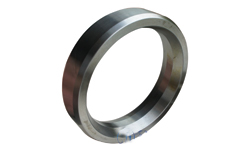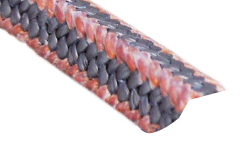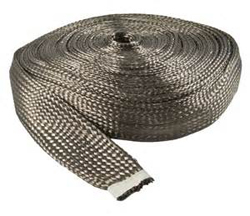
What are Serrated Gaskets and how do they work? Imagine a refinery shutdown because of a sudden flange leak — costs skyrocket, production halts, and safety risks multiply. This is where serrated gaskets, often called kammprofile gaskets, step in. A serrated gasket consists of a metal core with concentric serrations on both faces, overlaid with a soft sealing layer like PTFE, graphite, or mica. When you tighten the bolts, the serrations bite into the softer facing material, creating multiple high-pressure sealing zones that resist blowout even under extreme temperature and pressure fluctuations. Unlike spiral wound gaskets, they are resilient to compression set and can be reused in many cases. For procurement professionals, understanding this mechanism isn’t just technical — it’s the key to preventing costly downtime and ensuring plant safety. Below you’ll find a complete guide to serrated gaskets, from selection to real-world problem solving.

In essence, a serrated gasket is a semi-metallic sealing solution designed for flanged connections that demand exceptional reliability. The metal core — commonly stainless steel, carbon steel, or exotic alloys — is machined with a series of concentric grooves, producing a sharply serrated profile. On top of this, a deformable sealing material is bonded or layered. When the flange bolts are torqued, the soft layer flows into the flange surface imperfections, while the metal teeth concentrate stress, forming multiple independent seal rings. The result is a gasket that outperforms both non-metallic and spiral wound types in thermal cycling and high-pressure environments. This dual-action sealing principle is why refinery, chemical, and power generation engineers specify serrated gaskets for heat exchangers, boilers, and critical pipe joints.
Picture this: your maintenance team reports repeated leaks from a steam header flange. Every replacement means two hours of downtime, and the conventional PTFE envelope gasket just won’t hold under 450°C and 40 bar. This is a classic scenario where serrated gaskets turn the tables. By using a stainless steel core with a graphite facing, you gain thermal stability up to 550°C and blowout resistance. Similarly, in chemical plants handling aggressive acids, a serrated gasket with a PTFE sealing layer prevents chemical attack while maintaining low bolt loads. At Ningbo Kaxite Sealing Materials Co., Ltd., we’ve helped clients in over 40 countries upgrade from troublesome spiral wound gaskets to robust serrated designs, reducing unscheduled maintenance by up to 60%. We tailor the core material, facing, and serration pitch to your exact operating envelope — something standard off-the-shelf solutions rarely achieve.
Selecting the right serrated gasket requires matching its physical properties to your service conditions. Below is a concise comparison of common configurations offered by Ningbo Kaxite:
| Core Material | Facing Material | Temperature Range | Pressure Class | Typical Application |
|---|---|---|---|---|
| SS304 / SS316 | Graphite | -200°C to +550°C | Class 150 – 2500 | Steam, thermal oil, high-temp hydrocarbons |
| Carbon Steel | PTFE | -100°C to +260°C | Class 150 – 600 | Strong acids, food-grade processes |
| Duplex / Super Duplex | Mica or vermiculite | Cryogenic to +1000°C | Class 150 – 1500 | Fired heaters, exhaust systems, aggressive offshore |
| Inconel / Monel | Expanded PTFE | -200°C to +600°C | Class 300 – 2500 | Chlorine, seawater, special chemicals |
These parameters highlight why serrated gaskets are not a one-size-fits-all component. Our technical team at Ningbo Kaxite works with your specifications — flange type, media, temperature cycles — to engineer a gasket that installs fast and lasts longer.
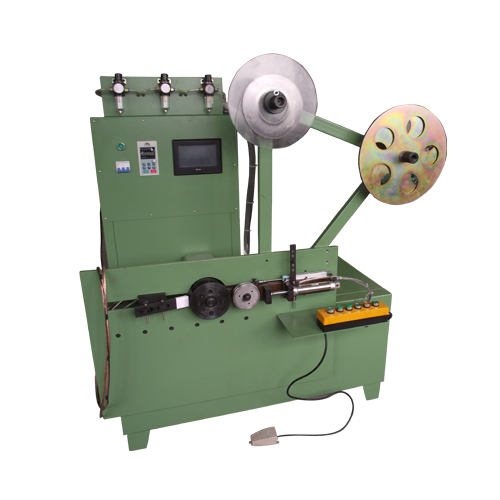
When you source serrated gaskets, you’re not just buying a product; you’re investing in uptime and safety. Ningbo Kaxite Sealing Materials Co., Ltd. bridges the gap between premium quality and competitive pricing through in-house CNC serration machining, strict raw material traceability, and ISO 9001-certified processes. We stock a wide range of profiles — serrated, kammprofile, double-jacketed — and can dispatch prototype gaskets within 72 hours. For buyers facing urgent shutdowns or complex media, we provide same-day engineering feedback. That’s the advantage of working directly with a manufacturer who understands sealing from the ground up.
What are serrated gaskets and how do they work in low-pressure applications?
Even in low-pressure systems, serrated gaskets excel thanks to the mechanical grip of the metal core. The soft facing conforms to minor flange irregularities without requiring high bolt loads, making them suitable for vacuum services and thin-walled flanges where spiral wound gaskets might spring back and leak. The serrations prevent creep, ensuring long-term seal integrity.
How do I select the right serrated gasket material for corrosive media?
Selection starts with compatibility tables: for acids, PTFE-faced gaskets with a stainless steel core are standard; for high-temperature oxidizing agents, graphite facing on an alloy core works best. As a purchasing manager, you can send your process data to [email protected] — our engineers will map every component of the gasket to your corrosion and pressure requirements, preventing expensive material mismatch.
Now that you understand what serrated gaskets are and how they can solve your toughest sealing challenges, the next step is to validate the design with a supplier who truly listens. At Ningbo Kaxite Sealing Materials Co., Ltd., we combine 20 years of sealing expertise with a customer-first approach: free technical consultation, rapid sampling, and global logistics support. Whether you’re standardizing gasket inventory across multiple plants or troubleshooting a recurring leak, our team is ready to help. Reach out or simply request a quote via our website and experience the difference between a commodity supplier and a sealing partner.
For inquiries and technical support, contact us at [email protected] or visit https://www.ptfe-rods.com to explore our full range of sealing solutions.
Chen, L., & Wang, H. (2020). Performance of Kammprofile Gaskets Under Thermal Cycling Conditions. Journal of Pressure Vessel Technology, 142(4).
Dubey, M. K., & Tiku, D. (2018). Comparative Leakage Analysis of Serrated Metal Gaskets and Spiral Wound Gaskets. International Journal of Engineering Research & Technology, 7(9).
Feng, Y., et al. (2019). Finite Element Analysis of Contact Stress Distribution in Serrated Gaskets. Journal of Mechanical Engineering Science, 233(15).
Jones, R. T. (2017). Guidelines for Selection of Semi-Metallic Gaskets in Refinery Services. ASME Conference Proceedings, PVP2017-66125.
Li, X., & Zhang, J. (2021). The Influence of Facing Material on Sealing Performance of Kammprofile Gaskets. Sealing Technology, 2021(10).
Miller, S. A. (2016). Leak Rate Prediction Models for Profiled Metal Gaskets. Tribology International, 98.
Nelson, D. R., & Parker, T. (2018). Long-Term Service Evaluation of Serrated Gaskets in High-Temperature Flanges. Energy Procedia, 142.
Sinha, P. K., & Patel, D. M. (2020). Optimal Design of Serrated Gasket Profile Using Response Surface Methodology. Materials Today: Proceedings, 28.
Yamamoto, K., et al. (2015). Stress Relaxation Behavior of Graphite-Faced Serrated Gaskets at Elevated Temperatures. JSME Mechanical Engineering Journal, 2(5).
Zhao, H., & Chen, G. (2019). Comparative Study on Blowout Resistance of Kammprofile and Spiral Wound Gaskets. International Journal of Pressure Vessels and Piping, 172.
Copyright © 2015-2025 Ningbo Kaxite Sealing Materials Co., Ltd. All Rights Reserved.