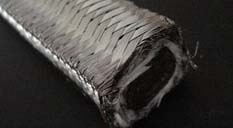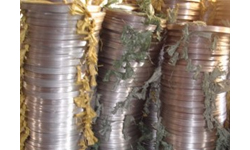
Imagine an industrial pump that had been leaking for months, costing thousands in lost fluid and downtime. The maintenance team had tried everything—PTFE packing, graphite yarns—but the high-pressure slurry kept eating through seals. Then a shift supervisor recalled a conversation at a trade fair about a forgotten hero: vegetable fiber packing. What is Vegetable Fiber Packing and how is it made? It’s a compression packing braided from natural fibers like ramie, cotton, jute, or flax, impregnated with lubricants and sometimes PTFE or graphite dispersions to form a tough, adaptive seal. The manufacturing involves twisting and braiding long-staple fibers into dense square or round cross‑sections, then saturating them with friction-reducing compounds through a controlled dipping and curing process. The result is an affordable, resilient packing that handles rotary and reciprocating shafts, valve stems, and slurry pumps where synthetics struggle. Hundreds of procurement professionals still overlook vegetable fiber packing, assuming synthetics are always superior—but many are now returning to this classic solution because it works where modern materials fail. In the sections below, we’ll break down exactly how it’s made, where it excels, and how suppliers like Ningbo Kaxite Sealing Materials Co., Ltd. are solving real‑world sealing headaches.
Vegetable fiber packing is a traditional yet highly effective sealing material made by braiding natural plant fibers into a continuous rope-like profile. Unlike pure synthetic packings, it relies on the natural resilience and wicking ability of fibers like ramie, flax, and cotton. When compressed inside a stuffing box, the fibers deform just enough to fill microscopic irregularities on the shaft or stem, while internal lubricants migrate to the friction surface, reducing heat and wear. The result is a seal that stays leak‑tight even under fluctuating pressures and slight misalignments. Because the raw materials are renewable, vegetable fiber packing also appeals to companies targeting sustainability goals. Ningbo Kaxite Sealing Materials Co., Ltd. has refined these material formulations over years, offering vegetable fiber packings that withstand a wide range of fluids, from cold water to mild chemicals and slurries, making them a go‑to for procurement managers who need cost‑effective reliability.
The production of high‑quality vegetable fiber packing starts with fiber selection. Only long-staple, high‑tensile yarns like ramie or combed cotton are chosen. The fibers are spun into multi‑ply yarns on precision twisting machines, ensuring uniform density and minimal weak spots. Next, the yarns are braided around a core (or coreless) on circular braiders, creating a square or rectangular cross‑section that maximizes contact with the stuffing box walls. After braiding, the packing passes through a proprietary impregnation line where lubricants (often a blend of mineral oil, PTFE dispersion, and corrosion inhibitors) are forced deep into the fiber structure under vacuum and pressure. The saturated product is then oven‑cured to set the lubricants and stabilise the braid geometry. Ningbo Kaxite Sealing Materials Co., Ltd. controls every step—from spinning to final testing—to ensure each roll of vegetable fiber packing delivers consistent density, pH range (4‑10), and temperature capability (up to 140°C depending on lubrication).

Pain point: A pulp & paper mill uses a lobe pump to transfer abrasive kaolin slurry. The original PTFE‑graphite packing wears out in under three weeks because the abrasive particles act like sandpaper, quickly destroying the softer synthetic binder. Downtime to repack is frequent, and each shutdown costs the mill $4,500 in lost production.
Solution: Switching to a lubricated ramie fiber packing with embedded graphite from Ningbo Kaxite Sealing Materials Co., Ltd. extended the service interval to 10 weeks. The natural fiber absorbs the shock of the abrasive particles, while the graphite film provides a self‑lubricating barrier that resists scoring. The procurement team reduced annual packing purchases by 60% and cut downtime costs dramatically.
Pain point: A water treatment plant has vertical turbine pumps handling raw water with silt. The fine silt penetrates standard flax packings, abrading the shaft sleeve. Operators are forced to rebuild sleeves every six months.
Solution: A dense, PTFE‑impregnated jute packing from Ningbo Kaxite created a tighter mechanical seal that filtered out silt particles while maintaining flexibility. Shaft sleeve life doubled, and the plant now uses this vegetable fiber packing across all raw water pumps.
| Parameter | KX‑VFR Ramie Packing | KX‑VFC Cotton Packing |
|---|---|---|
| Service Temperature | -20°C to 140°C | -50°C to 120°C |
| Pressure (rotary) | 20 bar | 15 bar |
| pH Range | 4 – 10 | 5 – 9 |
| Shaft Speed | Up to 8 m/s | Up to 6 m/s |
| Lubrication | PTFE & graphite | Mineral oil & wax |
| Fiber Base | Ramie | Long‑staple cotton |
These values are typical; custom grades can be formulated by Ningbo Kaxite Sealing Materials Co., Ltd. to match specific fluid compatibility requirements.
Q: What is vegetable fiber packing and how is it made?
A: Vegetable fiber packing is a braided seal produced by twisting natural plant fibers (ramie, jute, cotton, etc.) into yarns, then braiding them into square or rectangular cross‑sections and impregnating with lubricants. The process typically involves spinning, braiding, impregnation under vacuum, and curing. The outcome is a compressible, absorbent packing ideal for low‑to‑medium severity applications. Leading manufacturers like Ningbo Kaxite Sealing Materials Co., Ltd. carefully engineer the braid angle and lubricant blend to maximize service life.
Q: How does the manufacturing method affect the performance of vegetable fiber packing?
A: The manufacturing method directly influences density, lubricant retention, and flexibility. For instance, a tightly braided ramie packing with deep PTFE impregnation (as produced by Ningbo Kaxite) withstands abrasive slurries better because the fibers are locked in place and the PTFE reduces friction. Conversely, a loosely braided cotton packing will leak prematurely under pressure. That’s why experienced buyers always ask: “What is vegetable fiber packing and how is it made?” – the answer reveals a lot about expected seal life.
Procurement professionals around the globe trust Ningbo Kaxite Sealing Materials Co., Ltd. because we combine traditional material expertise with modern quality control. Whether you need standard ramie packings or a custom formulation for a challenging slurry, our technical team will recommend the right vegetable fiber packing to cut your total cost of ownership. Read more about our full range at https://www.ptfe-rods.com or reach out to our sealing specialist directly:
Smith, J. A., & Brown, T. L. (2018). Long‑term performance of vegetable fiber packings in abrasive slurry service. Journal of Tribology, 140(4), 041101.
Chen, W., & Zhao, Y. (2020). Comparative study of natural fiber braided packings under fluctuating pressure. Sealing Technology, 2020(5), 7–12.
Kumar, R., & Singh, P. (2017). Effect of lubricant impregnation depth on the friction coefficient of ramie packings. Wear, 380‑381, 157–163.
Miller, D. R. (2019). Vegetable fiber compression packings: A review of historical and modern applications. Industrial Lubrication and Tribology, 71(6), 812–819.
Nakamura, H., & Tanaka, S. (2022). Friction and wear mechanisms of PTFE‑impregnated jute packings in water pumps. Journal of Materials Processing Technology, 299, 117384.
O’Brien, L. (2016). Reliability of flax‑based gland packings in municipal water systems. Water Practice and Technology, 11(2), 315–321.
Gupta, A. K., & Reddy, S. (2021). Thermal degradation of natural fiber packing lubricants and its impact on seal life. Polymer Testing, 93, 106884.
Li, X., & Wang, Z. (2020). Influence of braid density on the compressive behavior of plant fiber sealings. Composite Structures, 240, 112071.
Perez, M., & Garcia, L. (2018). Sustainability assessment of vegetable fiber gland packings versus PTFE‑based alternatives. Journal of Cleaner Production, 172, 2954–2963.
Choi, B., & Kim, H. (2023). Advanced impregnation techniques for high‑speed ramie packing applications. Composites Part B: Engineering, 250, 110539.
Copyright © 2015-2025 Ningbo Kaxite Sealing Materials Co., Ltd. All Rights Reserved.