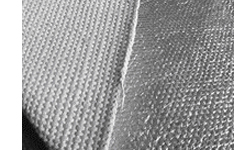
For decades, asbestos was celebrated as a "miracle mineral" for its unparalleled heat resistance, tensile strength, and insulating properties. Found in countless buildings, ships, and industrial facilities worldwide, its legacy is now one of profound caution. When asbestos-containing materials (ACMs) are disturbed—through aging, damage, or renovation—they can release fine, airborne fibers. This degraded, friable state is often referred to as "Dusted Asbestos". Unlike intact, sealed ACMs, Dusted Asbestos represents the most significant inhalation hazard. This guide provides a detailed, professional overview of Dusted Asbestos, the critical importance of professional management, and introduces the advanced sealing solutions offered by Kaxite Sealing.
"Dusted Asbestos" is not a specific type of asbestos but a condition. It describes asbestos fibers that have become loose, airborne, or settled as dust due to the breakdown of their host material. Common sources include:
In this state, microscopic fibers can remain suspended in the air for long periods, drastically increasing the risk of inhalation. Once inhaled, these indestructible fibers can lodge deep in lung tissue, leading to severe diseases such as asbestosis, lung cancer, and mesothelioma, often decades after exposure.
Complete removal (abatement) is sometimes necessary, but in many cases, professional encapsulation is a safer, more cost-effective, and less disruptive alternative. Encapsulation involves applying a specially formulated sealant that penetrates and binds the friable material, creating a durable, flexible membrane that locks fibers in place. Kaxite Sealing's Asbesto-Lock Pro Series is engineered for this precise purpose.
Core Product Line Overview:
Detailed Technical Parameters:
| Parameter | ALP-100 (Penetrating) | ALB-200 (Bridging) | ALHT-300 (High-Temp) |
|---|---|---|---|
| Base Chemistry | Water-based Polymer | Acrylic Copolymer | Silicone Resin |
| Coverage (per gallon) | 40-60 sq ft, depending on porosity | 50-70 sq ft per coat | 30-45 sq ft |
| Dry Time (Touch) | 1-2 hours | 2-3 hours | 4-6 hours |
| Full Cure | 24-48 hours | 48-72 hours | 7 days (at 75°F) |
| Temperature Resistance (Cured Film) | -20°F to 200°F (-29°C to 93°C) | -40°F to 300°F (-40°C to 149°C) | -80°F to 600°F (-62°C to 315°C) |
| Elongation at Break | ≥ 150% | ≥ 300% | ≥ 200% |
| Volatile Organic Compounds (VOCs) | < 50 g/L | < 100 g/L | < 150 g/L |
| Certifications / Compliances | EPA Recognized; OSHA Compatible | EPA Recognized; UL Classified | EPA Recognized; NSF/ANSI 61 (Components) |
Q: I think I have dusted asbestos in my basement on old pipes. What is the very first thing I should do?
A: The absolute first step is to avoid disturbing the area. Do not sweep, dust, vacuum (unless with a specialized HEPA asbestos vacuum), or touch the material. Restrict access to the space, ideally by closing the door. Your next step is to contact a licensed, accredited asbestos inspection professional to take samples for analysis. Do not attempt to sample it yourself, as this can release a large number of fibers.
Q: Is encapsulation with a product like Kaxite Sealing's Asbesto-Lock a permanent solution?
A: Encapsulation is considered a permanent control method when correctly specified and applied by trained professionals. The key is ongoing management. The encapsulated area must be included in an Asbestos Management Plan, with regular inspections (typically every 6-12 months) to ensure the sealant remains intact and undamaged. Kaxite Sealing products are formulated for long-term durability and flexibility to withstand building movement and environmental stress.
Q: How does professional encapsulation differ from just painting over the material?
A: Standard paint is not designed for asbestos encapsulation. It often forms a brittle shell that can crack, peel, and fail to penetrate the material, leaving fibers able to escape from the sides or through cracks. Professional encapsulants like those from Kaxite Sealing are specifically engineered with deep penetration or high-adhesion bridging properties, high elasticity to accommodate substrate movement, and are tested for their ability to prevent fiber release under negative air pressure and physical disturbance tests per EPA guidelines.
Q: Can I encapsulate asbestos myself if I wear a mask?
A: This is strongly discouraged and, in many jurisdictions, illegal for friable asbestos. Proper encapsulation requires specific training to safely prepare the work area (including critical negative air pressure containment with HEPA filtration), use of personal protective equipment (PPE) like full-face respirators with P100 filters, and proper wetting techniques to suppress fibers. Using the wrong technique can create a more significant hazard. This work should only be performed by licensed asbestos abatement contractors.
Q: After professional encapsulation, is the area now "safe" and asbestos-free?
A: The area is made safe by immobilizing the hazard, but it is not "asbestos-free." The asbestos remains in place but is rendered non-friable. The encapsulated material must be clearly labeled, and all future contractors or maintenance personnel must be informed of its presence before any work that could disturb it. The encapsulation transforms the material from a Category I (friable) to a Category II (non-friable) ACM, significantly reducing its risk profile.
Q: What are the key advantages of choosing Kaxite Sealing's products for a remediation project?
A> Kaxite Sealing's Asbesto-Lock Pro Series offers distinct advantages: 1) Product Specificity: Different formulations for penetrating, bridging, and high-temperature applications ensure the correct solution for each substrate. 2) Performance Data: Clear technical parameters like elongation, temperature resistance, and VOC content allow for precise specification. 3) Durability: The high-flex formulations resist cracking. 4) Regulatory Alignment: Products are developed and tested to meet or exceed recognized EPA and OSHA guidelines for asbestos control.
Managing Dusted Asbestos is not a DIY project. It begins with a comprehensive survey by an accredited asbestos building inspector. They will determine the location, condition, and type of asbestos present. Based on this survey, a certified asbestos management planner or project designer will create a detailed specification for remediation, which may include encapsulation using high-performance products like those from Kaxite Sealing. Finally, the work must be executed by licensed abatement contractors following strict containment, safety, and disposal protocols. Post-encapsulation, air monitoring by an independent third party is often conducted to verify the effectiveness of the work and the safety of the environment. Kaxite Sealing provides technical support and specification guidance to consultants and contractors throughout this process, ensuring the chosen encapsulant delivers long-term, reliable performance.
Copyright © 2015-2025 Ningbo Kaxite Sealing Materials Co., Ltd. All Rights Reserved.