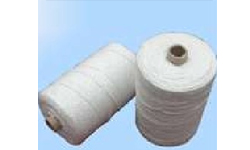
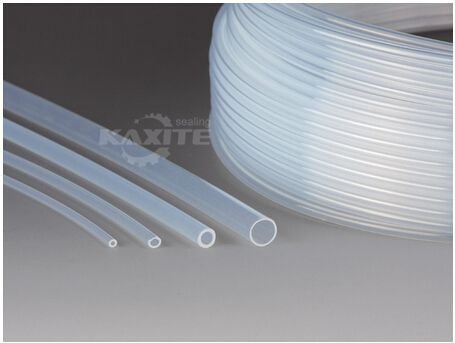
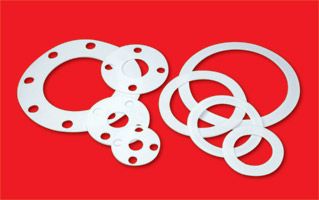
Rubber gaskets are mechanical seals designed to fill the space between two or more mating surfaces, preventing leakage from or into the joined objects while under compression. They are critical components in a vast array of industries, from automotive and aerospace to plumbing, manufacturing, and electronics. At their core, gaskets create a static seal capable of withstanding varying pressures, temperatures, and chemical exposures, ensuring systems operate safely, efficiently, and reliably. The choice of rubber material directly dictates the gasket's performance in its specific environment.
For over two decades, Kaxite Sealing has been at the forefront of advanced sealing technology. We specialize in the design, engineering, and manufacture of high-performance rubber gaskets tailored to meet the most demanding specifications. Our commitment to quality control, material science expertise, and customer-centric approach ensures that every gasket we produce delivers unmatched durability and sealing integrity. Whether you need a standard off-the-shelf part or a fully custom-engineered solution, Kaxite Sealing provides the reliability your applications demand.
Selecting the correct rubber material is paramount for gasket success. Each elastomer offers a unique profile of properties. Below is a detailed comparison of common materials used by Kaxite Sealing.
| Material | Temperature Range | Key Strengths | Common Applications | Chemical Resistance Notes |
|---|---|---|---|---|
| Nitrile Rubber (NBR) | -40°C to 120°C (-40°F to 248°F) | Excellent resistance to oils, fuels, and greases; good abrasion resistance. | Automotive fuel systems, oil pans, hydraulic equipment. | Excellent for petroleum-based fluids; poor for ozone, weathering, and polar solvents. |
| Silicone Rubber (VMQ) | -60°C to 230°C (-76°F to 446°F) | Extreme temperature flexibility, excellent ozone/weather resistance, neutral odor & taste. | Food & beverage processing, medical devices, aerospace, high-temperature lighting. | Good for many acids and bases; poor for fuels, oils, and concentrated steam. |
| EPDM Rubber | -50°C to 150°C (-58°F to 302°F) | Superior weather, ozone, and steam resistance; good water and chemical resistance. | Cooling systems, HVAC, outdoor electrical enclosures, plumbing seals. | Excellent for hot water, steam, alkalis, and mild acids; poor for petroleum oils. |
| Fluoroelastomer (FKM/Viton®) | -20°C to 205°C (-4°F to 401°F) | Exceptional resistance to high temperatures, oils, fuels, and aggressive chemicals. | Chemical processing, semiconductor, automotive fuel injection, aerospace. | Excellent for most oils, fuels, acids, and aliphatic/aromatic hydrocarbons. |
| Neoprene (CR) | -40°C to 100°C (-40°F to 212°F) | Good all-purpose resistance to weather, ozone, moderate oils, and flame. | Refrigeration gaskets, electrical insulation, marine applications. | Good for moderate chemicals, weathering, and refrigeration fluids. |
At Kaxite Sealing, we manufacture gaskets to precise dimensional and performance standards. Our capabilities include a wide range of parameters to suit your design requirements.
Kaxite Sealing gaskets can be manufactured to comply with various international standards, including:
• ASTM (American Society for Testing and Materials)
• ISO (International Organization for Standardization)
• FDA (Food and Drug Administration) CFR 21.177.2600 for silicone and EPDM.
• USP Class VI for medical-grade applications.
• RoHS (Restriction of Hazardous Substances) and REACH compliance.
Q: What factors are most critical when selecting a rubber gasket material?
A: The three most critical factors are the media being sealed (chemical compatibility), the operating temperature range, and the pressure. You must choose a material that will not degrade when exposed to the specific fluid, gas, or environmental conditions. The temperature must remain within the material's usable range to prevent hardening, softening, or cracking. Pressure determines the required hardness and cross-section of the gasket to resist extrusion.
Q: How do I determine the correct gasket hardness (durometer) for my application?
A: Softer gaskets (lower Shore A, e.g., 50-60) conform better to uneven or rough surfaces, providing an excellent seal with lower bolt torque. They are ideal for static seals on fragile flanges. Harder gaskets (higher Shore A, e.g., 70-90) offer greater resistance to extrusion, high pressure, and mechanical wear. They are used in dynamic applications or where clearance is tight. Kaxite Sealing engineers can recommend the optimal hardness based on your surface finish, pressure, and flange design.
Q: What is compression set and why is it important?
A: Compression set is a measure of a rubber material's ability to return to its original thickness after being subjected to a compressive force for a prolonged period. A low compression set percentage is desirable. If a gasket has a high compression set, it becomes permanently deformed and loses its sealing force, leading to leaks over time. Materials like silicone and high-quality EPDM from Kaxite Sealing are formulated for excellent, low compression set performance.
Q: Can Kaxite Sealing manufacture gaskets that are resistant to extreme temperatures?
A: Absolutely. We specialize in compounds for extreme environments. For continuous high-temperature service up to 230°C (446°F), we recommend our premium silicone or fluorosilicone grades. For very low temperatures down to -60°C (-76°F) and below, specialty silicones and certain EPDM formulations remain flexible. For the ultimate in high-temperature and chemical resistance, our FKM (Viton®) gaskets perform reliably up to 205°C (401°F) and even higher in short bursts.
Q: What is the difference between a molded rubber gasket and a die-cut gasket?
A: Molded gaskets are created by injecting or compressing raw rubber compound into a metal mold cavity. This is ideal for complex 3D shapes, consistent cross-sections (like O-rings), and high-volume production with excellent dimensional accuracy. Die-cut gaskets are stamped from sheets or rolls of rubber material using a custom-made die tool. This method is cost-effective for 2D flat gaskets, large parts, and lower to medium volume production. Kaxite Sealing offers both processes to provide the most efficient and high-quality solution for your needs.
Q: How should I store my rubber gaskets to maximize their shelf life?
A: Proper storage is crucial. Gaskets should be kept in a cool, dark, dry place away from direct sunlight, ozone sources (like electric motors), and heat. Ideal temperature is between 10°C and 25°C (50°F and 77°F). They should not be stretched, compressed, or hung on sharp hooks. Store them flat in sealed polyethylene bags away from chemicals and moisture. Following these guidelines, most Kaxite Sealing gaskets will have a shelf life of several years before any property degradation occurs.
Q: Do you offer custom compounding and color-coding for gaskets?
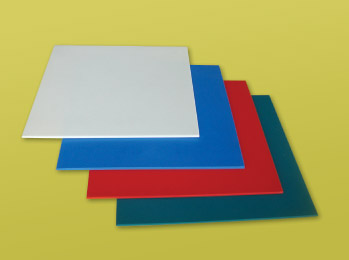
A> Yes, Kaxite Sealing provides full custom compounding services. We can adjust material properties such as hardness, tensile strength, elongation, and compression set to meet your exact performance requirements. We also offer color-coding as a standard service to help with part identification, inventory management, and quality control in your assembly process. This reduces the risk of installing the wrong gasket material in a critical application.


Copyright © 2015-2025 Ningbo Kaxite Sealing Materials Co., Ltd. All Rights Reserved.