In the demanding world of industrial sealing, selecting the right material is not just a choice—it's a critical engineering decision. Among the plethora of options available, PTFE Gaskets stand out as a benchmark for performance and reliability. PTFE, or Polytetrafluoroethylene, is a synthetic fluoropolymer renowned for its exceptional chemical resistance, wide temperature tolerance, and near-universal compatibility. At Kaxite Sealing, we engineer our PTFE gaskets to meet the highest standards, providing a secure, long-lasting seal in even the most aggressive environments where other materials would rapidly fail.
The superiority of PTFE stems from its unique molecular structure, which creates an almost non-reactive surface. This inertness is the key to its success. Whether facing strong acids, potent alkalis, volatile solvents, or high-purity processes, a Kaxite PTFE gasket maintains its integrity. Furthermore, its natural lubricity and anti-stick properties prevent adhesion to flanges, making installation and maintenance smoother and reducing downtime. For industries ranging from chemical processing and pharmaceuticals to food and beverage and semiconductor manufacturing, the reliability of a PTFE seal is non-negotiable.
Understanding the technical specifications is essential for proper gasket selection. Below is a detailed breakdown of the core properties that define our premium PTFE gasket material.
| Gasket Type | Description & Manufacturing | Key Advantages | Typical Applications |
|---|---|---|---|
| Virgin PTFE (Molded) | Manufactured from 100% pure PTFE resin using compression molding. Offers the highest purity and chemical resistance. | Maximum chemical inertness, FDA compliance, excellent electrical properties, white/translucent color. | Chemical processing, pharmaceutical pipelines, food & beverage, ultrapure water systems, semiconductor. |
| Skived PTFE Sheet Gaskets | Gaskets cut from sheets created by skiving (peeling) a block of sintered PTFE. Provides a flexible, uniform sheet. | Good conformability, can be made into large sheets, cost-effective for custom shapes, smooth surface. | Large tank lids, heat exchangers, pipe flanges (ANSI, DIN), expansion joints. |
| Filled PTFE Gaskets | PTFE compounded with materials like glass, graphite, or carbon to enhance specific properties. | Improved creep resistance, higher compressive strength, better thermal conductivity, reduced cold flow. | Heavy-duty flanges, high-load bolting, applications requiring minimal relaxation under stress. |
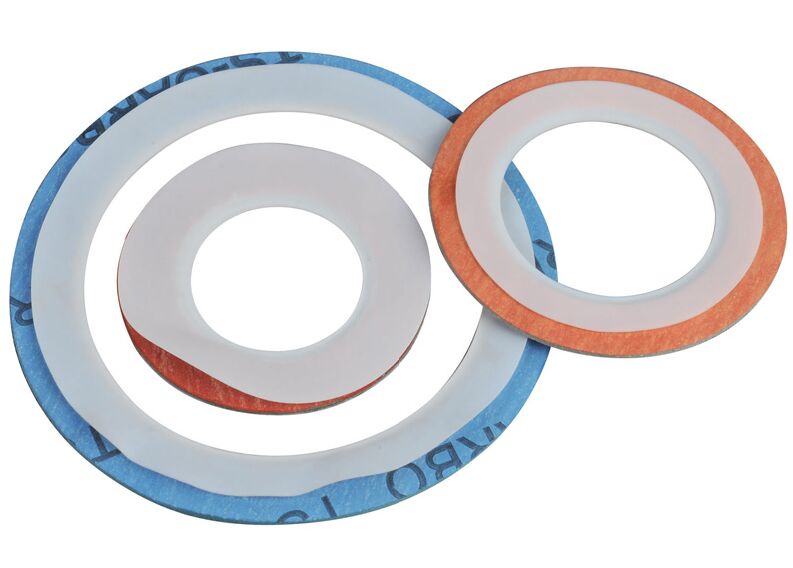
| PTFE Envelope Gaskets | A PTFE "envelope" or jacket filled with a soft material like compressed non-asbestos fiber (CNAF). | Excellent sealability on imperfect flange surfaces, high bolt load efficiency, combines chemical resistance with conformability. | Aggressive chemical services on raised face or flat face flanges, heat exchangers, reactors. |
| Kaxite PTFE Tape / Cord | Extruded PTFE in tape or cord form, used for thread sealing, packing, or creating custom gaskets on-site. | Extreme versatility, easy installation, can be used for repairs and irregular geometries. | Thread sealant for pipes and valves, pump packing, o-ring backup, temporary seals. |
Q: What is the main difference between Virgin PTFE and Filled PTFE gaskets?
A: Virgin PTFE is pure, unmodified PTFE, offering the ultimate in chemical resistance and purity but is more susceptible to "cold flow" or creep under sustained pressure. Filled PTFE incorporates additives like glass fiber, carbon, or graphite. These fillers significantly improve creep resistance, increase hardness and wear resistance, and enhance thermal conductivity, making filled grades better for high-stress, high-load applications, albeit with a slight trade-off in chemical inertness against certain media.
Q: Can PTFE gaskets be used for high-temperature steam applications?
A: PTFE gaskets have an upper continuous service temperature of around 500°F (260°C). For low-pressure saturated steam, they can be suitable. However, for high-pressure superheated steam services where temperatures routinely exceed this limit, alternative materials like flexible graphite or PTFE/graphite composites are often recommended. It is crucial to consult with Kaxite Sealing engineers to select the correct material for your specific steam pressure and temperature profile.
Q: How do I properly install and torque a PTFE flange gasket?
A: Correct installation is critical for performance. Ensure flanges are clean, aligned, and undamaged. Place the gasket centered on the flange. Follow a cross-bolting pattern (star pattern) to tighten bolts gradually and evenly. Use a calibrated torque wrench and adhere to recommended torque values, which depend on gasket type, size, bolt grade, and flange rating. Avoid over-torquing, as this can cause excessive cold flow and lead to seal failure. Re-torquing after a short heat cycle is often advised for critical applications.
Q: Are PTFE gaskets reusable?
A: Generally, PTFE gaskets are not designed to be reused. During installation and service, the material compresses and adapts to the flange surface imperfections to create a seal. Removing the gasket typically distorts this "set," and its ability to reliably re-seal is compromised. For safety, process integrity, and to prevent leaks, it is always best practice to use a new, fresh Kaxite PTFE gasket for each disassembly and reassembly.
Q: Do PTFE gaskets require a special surface finish on the flange?
A: PTFE is a relatively soft material and can seal effectively on a range of surface finishes. A typical recommended flange surface finish is between 125 and 250 microinches Ra (3.2 to 6.3 µm Ra). Excessively rough finishes can accelerate wear and cause embedding, while mirror-finish surfaces might not provide enough "bite" for the gasket. Standard machined finishes are usually perfectly adequate for a reliable seal with our gaskets.
Q: How does Kaxite Sealing ensure the quality and consistency of its PTFE gaskets?
A: At Kaxite Sealing, quality is engineered into every product. We start with premium-grade PTFE resins from certified suppliers. Our manufacturing processes, including molding, sintering, and skiving, are precisely controlled with automated equipment and rigorous SOPs. Every production batch undergoes stringent quality checks for dimensions, density, and visual integrity. We also perform batch testing for key properties like tensile strength and chemical purity. Our commitment to traceability and documentation ensures you receive a gasket that performs exactly as specified, every time.
The optimal performance of a sealing solution depends on a perfect match between the gasket properties and the service conditions. When specifying a PTFE gasket, engineers must consider a complete set of parameters. The chemical composition, concentration, and phase (liquid, gas, vapor) of the media are the primary drivers. This must be cross-referenced with the continuous operating temperature and any thermal cycling present. System pressure, including potential pressure spikes, defines the required mechanical strength.
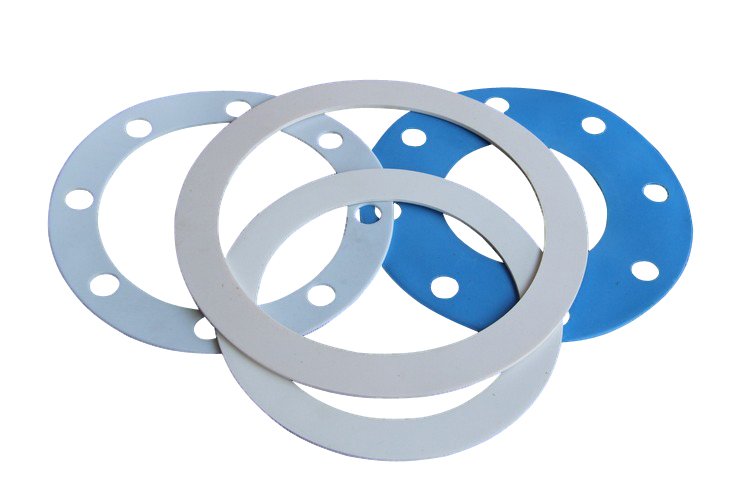
Flange design is equally critical: the flange type (e.g., raised face, flat face, tongue-and-groove), size, bolt load, and surface condition all influence gasket selection and performance. For example, a full-face gasket is used with flat face flanges, while a ring-type gasket is standard for raised face flanges. Environmental factors, such as exposure to UV radiation or ozone, and regulatory requirements for industries like food processing (FDA, 3-A) or pharmaceuticals (USP Class VI) further narrow the choices. Kaxite Sealing provides comprehensive technical support to navigate these variables, offering not just products but tailored sealing solutions that enhance operational safety and efficiency.


Copyright © 2015-2025 Ningbo Kaxite Sealing Materials Co., Ltd. All Rights Reserved.