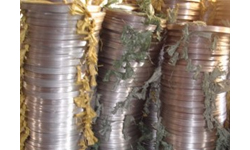
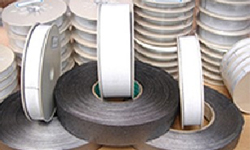
Basalt fiber is a remarkable inorganic fiber produced directly from molten basalt rock, a volcanic material abundant worldwide. The manufacturing process involves melting crushed basalt rock at approximately 1,400°C (2,550°F) and extruding it through specialized platinum-rhodium alloy bushings to form continuous filaments. The result is a high-performance material that bridges the gap between conventional E-glass fiber and more expensive carbon or aramid fibers. Unlike glass fibers, which require multiple raw materials, basalt fiber is made from a single, naturally occurring material, offering a simpler and often more eco-friendly production cycle. Its composition grants it a unique combination of properties ideal for demanding industrial, automotive, construction, and filtration applications.
At Kaxite Sealing, we have refined the production of basalt fiber to achieve unparalleled consistency and quality. Our proprietary technology ensures that every batch of Kaxite Sealing Basalt Fiber meets stringent performance criteria, offering superior tensile strength, exceptional thermal stability, and outstanding corrosion resistance. We control the entire process from raw material selection—sourcing specific basalt quarries known for optimal chemical composition—to precise melting and spinning. This vertical integration allows Kaxite Sealing to deliver a product that is not only high-performing but also reliable for critical sealing, reinforcement, and insulation tasks where failure is not an option. Our fibers are the foundation for composites that last longer, perform better, and reduce maintenance costs.
Kaxite Sealing Basalt Fiber is engineered to exacting standards. Below are the detailed technical parameters for our standard continuous filament product line. These specifications illustrate why our fiber is a preferred choice for engineers and designers.
Kaxite Sealing Basalt Fiber exhibits superior resistance in harsh environments, a critical factor for sealing applications.
| Exposure Medium | Concentration | Temperature | Strength Retention (After 24h) |
|---|---|---|---|
| Water | 100% | 20°C | > 99% |
| Sulfuric Acid (H₂SO₄) | 5% | 20°C | > 95% |
| Sodium Hydroxide (NaOH) | 2% | 20°C | > 80% |
| Salt Spray (NaCl) | 5% | 35°C | > 98% |
| Organic Solvents (Acetone, Toluene) | 100% | 20°C | > 99% |
| Product Form | Standard Weights/Dimensions | Tex / Yield | Primary Applications |
|---|---|---|---|
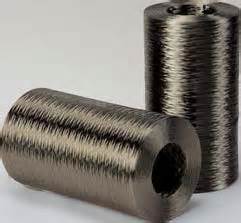
| Continuous Roving | 1kg, 5kg, 20kg per bobbin | 1200 tex, 2400 tex, 4800 tex | Pultrusion, filament winding, weaving |
| Chopped Strands | 25kg bags | 3mm, 6mm, 12mm, 24mm lengths | Reinforcement for plastics, brake pads, gaskets |
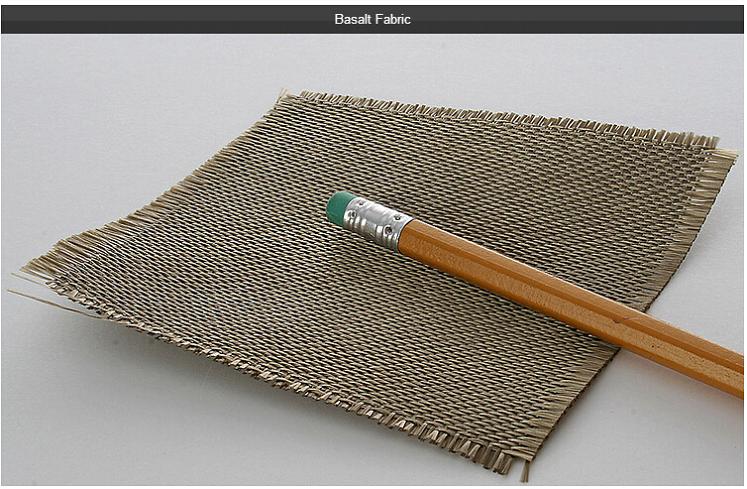
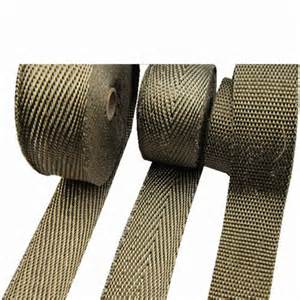
| Woven Fabrics (Plain, Twill, Satin) | Rolls: 100m x 1m width | 200 - 600 g/m² | Composite laminates, thermal insulation blankets |
| Needle Mat | Rolls: 50m x 1m or 2m width | 300 - 1200 g/m² | Thermal & acoustic insulation, molding compounds |
| Basalt Fiber Mesh/Scrim | Rolls: 100m x 1m, 2m width | 100 - 250 g/m² | Reinforcement for wall renders, stucco, road surfaces |
What exactly is basalt fiber made from?
Basalt fiber is made exclusively from molten basalt rock, a volcanic igneous rock. The rock is crushed, washed, and melted in a furnace. The molten lava is then extruded through small nozzles (bushings) to create continuous filaments, which are subsequently sized and wound onto bobbins. No other additives or raw materials are required in its basic form, making it a single-component material.
How does basalt fiber compare to fiberglass (E-glass)?
Basalt fiber generally offers 15-25% higher tensile strength and modulus than standard E-glass fiber. It has a higher operating temperature range (up to 700°C vs. 350-400°C for E-glass) and demonstrates significantly better resistance to alkaline environments, acids (except concentrated phosphoric and strong alkalis), and UV radiation. It is also denser, which can be a factor in weight-critical applications, but its specific strength (strength/density) remains superior.
Is basalt fiber considered an eco-friendly or "green" material?
Yes, it is often categorized as a green material. The production process is relatively simple and requires less energy than carbon fiber production. The raw material (basalt rock) is abundant and natural, with no hazardous by-products. Additionally, because it is essentially inert stone, the fiber itself is non-toxic and can contribute to longer-lasting, more durable products, reducing waste over time. Kaxite Sealing prioritizes energy-efficient melting technologies to further minimize the environmental footprint.
Can Kaxite Sealing Basalt Fiber be used for high-temperature gaskets and seals?
Absolutely. This is one of its flagship applications. Kaxite Sealing Basalt Fiber, when woven into cloth or combined with other high-temp materials like graphite, creates sealing products that withstand extreme thermal cycling, corrosive gases, and high pressure. Its resistance to oxidation and thermal shock makes it ideal for exhaust systems, industrial furnaces, and power generation equipment, outperforming many traditional materials like asbestos or aramid fibers.
How compatible is basalt fiber with different resin systems?
Kaxite Sealing Basalt Fiber features proprietary sizing (coating) tailored for optimal compatibility with various matrices. It demonstrates excellent adhesion with epoxy, vinyl ester, and polyester resins. For phenolic resins, specific sizings are applied to ensure strong interfacial bonding. We provide technical data sheets specifying the optimal resin pairings for each of our fiber product forms to guarantee maximum composite performance.
What are the primary advantages of using basalt fiber in concrete reinforcement?
Basalt fiber rebar and mesh offer a corrosion-proof alternative to steel. They are non-magnetic, have a similar thermal expansion coefficient to concrete (reducing cracking), and are highly resistant to the alkaline environment within concrete. This leads to structures with vastly extended service life, particularly in coastal areas, bridges, and roads where de-icing salts are used. Kaxite Sealing offers fibers specifically engineered for this purpose.
Is basalt fiber difficult to process or handle compared to other fibers?
Not at all. For processors familiar with fiberglass, the transition is seamless. Kaxite Sealing Basalt Fiber can be processed using standard equipment for weaving, pultrusion, filament winding, and chopping. Our rovings are designed for low fuzz and excellent strand integrity, ensuring smooth processing and minimal downtime. Standard safety gear (gloves, masks, goggles) should be used as with any fibrous material to prevent minor skin or respiratory irritation.
How does Kaxite Sealing ensure consistent quality in its basalt fiber?
Consistency is our cornerstone. We start with rigorous raw material selection from specific basalt deposits. Our fully automated, computer-controlled melting and fiber-drawing process maintains precise temperatures and drawing speeds. Every production batch undergoes comprehensive quality control, including tests for tensile strength, filament diameter, sizing content, and chemical resistance. This data-driven approach ensures you receive a product with reliable, repeatable properties.
Can you provide custom formulations or product forms?
Yes, Kaxite Sealing specializes in developing custom solutions. We can adjust filament diameter, roving tex, sizing chemistry, and produce custom weaves or non-woven structures to meet specific application requirements in aerospace, automotive, or specialized industrial sealing. Our engineering team works directly with clients to develop and test prototypes.
Copyright © 2015-2025 Ningbo Kaxite Sealing Materials Co., Ltd. All Rights Reserved.