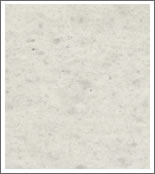
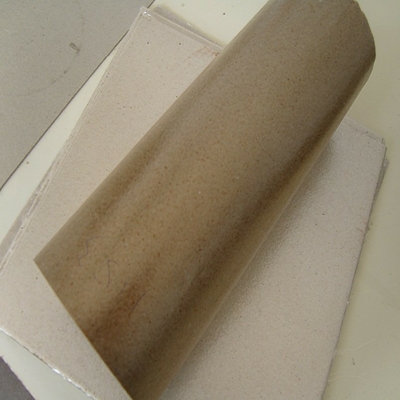
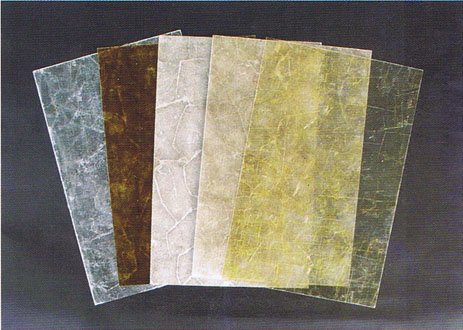
A Mica Sheet is a versatile insulating material manufactured from naturally occurring mica minerals, primarily muscovite or phlogopite. These minerals are split into thin layers, bonded with high-temperature resistant binders, and pressed into rigid or flexible sheets. Renowned for their exceptional dielectric strength, thermal stability, and mechanical durability, mica sheets are indispensable components in electrical, thermal, and industrial applications where reliability under extreme conditions is non-negotiable. From serving as insulation in electric motors and furnaces to acting as a viewing window in high-temperature equipment, the utility of mica sheets spans across numerous critical industries.
At Kaxite Sealing, we engineer our mica sheets to meet precise international standards and customer-specific requirements. The following tables detail the core parameters of our standard product range.
| Mica Sheet Type | Base Mica Mineral | Continuous Operating Temp. | Key Characteristics | Typical Binder |
|---|---|---|---|---|
| Muscovite Mica Sheet | Muscovite (Potassium Mica) | Up to 500 - 600°C | Superior dielectric strength, excellent clarity, high resistance to corona. | Silicone, Epoxy |
| Phlogopite Mica Sheet | Phlogopite (Amber Mica) | Up to 700 - 900°C | Higher thermal stability, good dielectric properties, excellent heat insulation. | Silicone, Inorganic |
| Flexible Mica Sheet | Muscovite or Phlogopite Splittings | Up to 500 - 700°C | Pliable, can be wound, bent, or formed. Used for wrapping and complex shapes. | Silicone |
| Rigid Mica Sheet (Plate) | Muscovite or Phlogopite Splittings | Up to 500 - 900°C | High mechanical rigidity, used for structural insulation, barriers, and washers. | Silicone, Inorganic |
| Property | Test Standard | Typical Value (Muscovite) | Typical Value (Phlogopite) |
|---|---|---|---|
| Thickness Range | N/A | 0.1mm - 50mm | 0.1mm - 50mm |
| Density | ASTM D792 | 1.8 - 2.2 g/cm³ | 2.0 - 2.4 g/cm³ |
| Dielectric Strength (kV/mm) | ASTM D149 | 15 - 40 kV/mm | 12 - 35 kV/mm |
| Volume Resistivity (Ω·cm) | ASTM D257 | 10^13 - 10^15 | 10^12 - 10^14 |
| Thermal Conductivity (W/m·K) | ASTM C518 | 0.3 - 0.6 | 0.4 - 0.7 |
| Flexural Strength (MPa) | ASTM D790 | 80 - 150 | 70 - 130 |
Q: What is the main difference between Muscovite and Phlogopite mica sheets?
A: The primary difference lies in their thermal and electrical properties. Muscovite mica sheet offers superior dielectric strength and is ideal for high-voltage electrical insulation where temperatures do not exceed 600°C. Phlogopite mica sheet can withstand much higher temperatures (up to 900°C) and is preferred for applications involving intense, continuous heat, though its electrical properties are slightly lower than muscovite.
Q: Can Kaxite Sealing mica sheets be machined or cut to custom shapes?
A: Yes, absolutely. Kaxite Sealing provides mica sheets in standard panels and rolls, but we offer comprehensive custom fabrication services. Our sheets can be precisely die-cut, punched, stamped, routed, or laser-cut to create complex geometries like washers, gaskets, tubes, and custom profiles to fit your specific assembly requirements.
Q: How do I select the right binder (silicone vs. inorganic) for my application?
A: The binder choice is critical for performance. Silicone-bonded mica sheets offer excellent flexibility, good moisture resistance, and operate well up to about 500-700°C. They are common for flexible sheets and many standard electrical applications. Inorganic-bonded sheets use a glass or ceramic binder, providing superior performance at extreme temperatures (up to 900°C+), with excellent flame resistance and minimal outgassing, making them ideal for high-temperature furnaces and aerospace applications.
Q: Are mica sheets from Kaxite Sealing safe and environmentally friendly?
A: Yes. Our mica sheets are manufactured from natural mica, which is non-toxic and non-hazardous. The binders we use, such as silicone and inorganic materials, are selected to comply with RoHS and REACH regulations where applicable. Mica is also a naturally occurring, abundant mineral, and our production processes are designed to minimize environmental impact.
Q: What are the key factors to consider when specifying a mica sheet for a design?
A: When specifying a mica sheet, engineers should define these key parameters: 1) Operating Temperature: Maximum and continuous temperature. 2) Electrical Requirements: Required dielectric strength and resistivity. 3) Mechanical Needs: Rigidity vs. flexibility, required tensile or flexural strength. 4) Environmental Conditions: Exposure to moisture, chemicals, or vibration. 5) Physical Dimensions: Thickness, shape, and any need for fabrication. Providing these details allows Kaxite Sealing to recommend the optimal grade.
Q: Can mica sheets be used as a gasket material?
A: Yes, mica sheets are excellent for high-temperature gasketing applications. Rigid mica plates are machined into flat gaskets for furnace flanges, boiler manways, and exhaust systems where temperatures would destroy organic gaskets. Their natural laminar structure provides good sealing under compression and exceptional resistance to heat, flame, and thermal cycling.
Q: How does the performance of a fabricated mica part from Kaxite Sealing compare to molded alternatives?
A: Fabricated parts from mica sheets often offer superior and more consistent mechanical and electrical properties compared to molded mica powder products. The aligned laminar structure of a sheet provides higher dielectric strength, better thermal conductivity along the plane, and greater structural integrity. For critical insulation components, sheet-based fabricated parts from Kaxite Sealing are the preferred choice for reliability.
Copyright © 2015-2025 Ningbo Kaxite Sealing Materials Co., Ltd. All Rights Reserved.