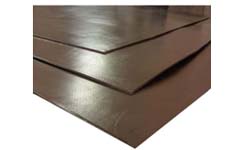
Carbon Fiber Products in China High-Quality Materials for Global Suppliers and Industrial Buyers
[Carbon Fiber](carbon-fiber) has revolutionized modern engineering, offering an unparalleled strength-to-weight ratio that makes it the material of choice for aerospace, automotive, sports equipment, and high-performance industrial applications. At Kaxite Sealing, we specialize in harnessing the exceptional properties of carbon fiber to create advanced sealing solutions and engineered components that meet the most demanding challenges. Our expertise lies in transforming this high-tech material into reliable, durable products that deliver performance under extreme pressure, temperature, and corrosive conditions. Understanding the specifications and capabilities of carbon fiber is crucial for selecting the right material for your application.
**Key Properties and Advantages of Carbon Fiber:**
* **Exceptional Strength & Stiffness:** Carbon fiber composites offer tensile strength superior to many metals at a fraction of the weight.
* **Low Density & Light Weight:** Its lightweight nature is critical for applications where reducing mass translates to increased efficiency and performance (e.g., aviation, racing).
* **Excellent Fatigue Resistance:** Carbon fiber components withstand repeated stress cycles far better than metals, leading to longer service life.
* **Low Thermal Expansion:** It demonstrates minimal expansion or contraction with temperature changes, ensuring dimensional stability.
* **Good Chemical Resistance:** Resistant to many corrosive agents, making it suitable for harsh chemical environments.
* **X-Ray Permeability:** Its radiolucency is valuable in medical imaging equipment.
* **Electrical Conductivity:** Can be engineered for conductivity or non-conductivity based on resin matrix and fiber treatment.
### Detailed Product Parameters of Kaxite Sealing Carbon Fiber Materials
Our carbon fiber products are engineered with precision. The parameters vary based on the fiber type, weave pattern, resin system, and manufacturing process. Below are detailed specifications for our standard composite offerings.
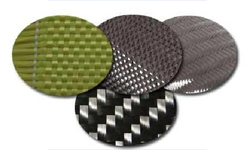
**Common Carbon Fiber Weave Patterns and Characteristics:**
| Weave Pattern | Description | Typical Areal Weight (g/m²) | Primary Characteristics | Best For |
| :--- | :--- | :--- | :--- | :--- |
| **Plain Weave** | Each fiber passes over and under one opposing fiber. | 200 - 400 | Most stable, balanced properties, good drapeability. | Flat panels, covers, basic structural parts. |
| **Twill Weave (2x2, 4x4)** | Fibers pass over and under two or more opposing fibers. | 200 - 600 | Excellent drapeability, smoother surface finish, high strength. | Complex contours, automotive body panels, sporting goods. |
| **Satin Weave (5-Harness, 8-Harness)** | Fibers pass over four or more and under one. | 200 - 600 | Superior surface finish, high fiber content, excellent conformability. | Aerospace components, high-quality molds, complex structures. |
| **Unidirectional (UD)** | All fibers run in a single direction, held by a light backing. | 100 - 300 | Maximum strength and stiffness in the primary fiber direction. | Spars, beams, parts designed for unidirectional load. |
**Standard Carbon Fiber Composite Laminate Properties (Epoxy Resin Matrix):**
| Property | Test Method | Unit | Standard Modulus CF | Intermediate Modulus CF | High Modulus CF |
| :--- | :--- | :--- | :--- | :--- | :--- |
| **Tensile Strength** | ASTM D3039 | MPa | 3,500 - 4,500 | 4,500 - 5,500 | 3,000 - 4,000 |
| **Tensile Modulus** | ASTM D3039 | GPa | 200 - 240 | 240 - 290 | 350 - 450 |
| **Flexural Strength** | ASTM D790 | MPa | 1,200 - 1,600 | 1,500 - 1,800 | 1,000 - 1,400 |
| **Flexural Modulus** | ASTM D790 | GPa | 100 - 130 | 130 - 160 | 180 - 250 |
| **Compressive Strength** | ASTM D6641 | MPa | 1,000 - 1,400 | 1,200 - 1,500 | 900 - 1,200 |
| **Density** | – | g/cm³ | 1.55 - 1.60 | 1.60 - 1.65 | 1.65 - 1.75 |
| **Fiber Volume Fraction** | – | % | 55 - 65 | 58 - 68 | 60 - 70 |
**Kaxite Sealing Custom Carbon Fiber Component Specifications:**
We fabricate parts to exact customer requirements. Key specification areas include:
* **Dimensions & Tolerances:** Machined to precise drawings, with standard tolerances of ±0.1mm or as specified.
* **Resin Systems:** Epoxy (standard), Polyimide (high temp), Cyanate Ester (space applications), Thermoplastic (recyclable/reformable).
* **Surface Finish:** As-molded, painted, clear-coated, or prepared for secondary bonding.
* **Quality Standards:** Manufacturing processes adhere to ISO 9001:2015, with testing per relevant ASTM and customer-specified standards.
* **Post-Curing:** Available for enhanced temperature resistance and mechanical properties.
### Carbon Fiber: Frequently Asked Questions (FAQ)
**What exactly is carbon fiber?**
Carbon fiber is a high-strength, lightweight material composed of thin, crystalline filaments of carbon. These filaments, about 5-10 microns in diameter, are bundled into "tows" and woven into fabrics or used in unidirectional tapes. They are then combined with a polymer resin (like epoxy) to form a rigid composite material, often called carbon fiber reinforced polymer (CFRP).
**How is carbon fiber different from fiberglass or Kevlar?**
While all are composite reinforcements, carbon fiber offers the highest stiffness and strength-to-weight ratio. Fiberglass is less stiff and strong but more impact-resistant and cost-effective. Kevlar (aramid) has excellent impact and abrasion resistance (used in bulletproof vests) but lower compressive strength compared to carbon fiber. The choice depends on the specific performance requirements.
**What are the main limitations or disadvantages of carbon fiber?**
Key limitations include its high cost relative to metals and fiberglass, brittleness under certain impact loads (can splinter), susceptibility to galvanic corrosion when in direct contact with certain metals (requiring isolation), and the complexity of repair. It also requires specialized design, manufacturing, and inspection techniques.
**Can carbon fiber be recycled or disposed of easily?**
Traditional thermoset carbon fiber composites (like epoxy-based) are difficult to recycle, as the cured resin cannot be easily melted. However, mechanical recycling (grinding) and thermal processes (pyrolysis) are being developed to recover the fibers. Thermoplastic matrix composites are more readily recyclable. Disposal often requires special handling due to the inert nature of the cured material.
**Why is carbon fiber so expensive?**
The cost stems from the energy-intensive production of the precursor (often polyacrylonitrile or PAN), the precise and controlled pyrolysis process to convert it to carbon, the specialized weaving and handling of the delicate fibers, and the labor-intensive composite manufacturing processes like lay-up and autoclave curing.
**How do I choose the right carbon fiber weave for my project?**
Selection depends on the part geometry and load case. Use plain weave for flat, stable panels. Choose twill or satin weaves for complex curved surfaces requiring good drape. For parts with highly directional loads (like a leaf spring), unidirectional tape is optimal to place strength exactly where needed. The engineers at Kaxite Sealing can assist with this critical selection.
**What maintenance does a carbon fiber component require?**
Carbon fiber itself does not corrode like metal. Maintenance primarily involves inspecting for surface damage (cracks, scratches that expose fibers), cleaning with mild soap and water, and avoiding prolonged UV exposure which can degrade the resin (a UV-protective gel coat or paint mitigates this). Check fastener torques periodically if applicable.
**Is carbon fiber electrically conductive?**
The carbon fibers themselves are highly conductive. In a standard epoxy composite, the conductivity is significant along the fiber direction but limited through the thickness due to the insulating resin. For applications requiring shielding or grounding, specific connections must be designed. Conversely, for insulation, a specialized barrier layer is needed.
**What temperature can carbon fiber withstand?**
The temperature resistance is defined by the resin matrix, not the fiber. Standard epoxy resins begin to soften around 120-180°C (250-350°F). High-temperature resins like polyimides or bismaleimides (BMI) can allow continuous use up to 250-320°C (480-600°F). The carbon fibers themselves are stable in inert atmospheres well over 2000°C.
**How does Kaxite Sealing ensure the quality of its carbon fiber parts?**
Kaxite Sealing employs a rigorous quality management system. We source certified raw materials, utilize controlled manufacturing processes (including autoclave curing for premium parts), and conduct in-process inspections. Final parts undergo dimensional checks, visual inspection, and non-destructive testing (like ultrasonic or tap testing) as required to verify integrity and compliance with specifications.