PTFE Hose: The Ultimate Guide for Demanding Fluid and Gas Transfer Applications
In the world of industrial fluid and gas transfer, few materials offer the unique combination of properties that Polytetrafluoroethylene (PTFE) does. As a seasoned professional with decades of experience specifying and implementing fluid handling solutions, I can attest that selecting the right hose is critical for operational safety, efficiency, and cost-effectiveness. A PTFE Hose is often the definitive answer when applications demand exceptional chemical resistance, high-temperature stability, and ultra-pure transfer. At Kaxite Sealing, we have dedicated ourselves to engineering PTFE hoses that not only meet but exceed the rigorous demands of modern industry. This comprehensive guide will delve into the specifics of PTFE hose technology, its parameters, and why Kaxite Sealing products stand out in a crowded marketplace.
What is a PTFE Hose and Why Choose It?
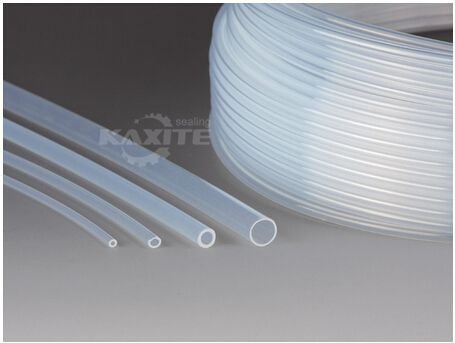
A PTFE hose is a flexible conduit whose core tube is constructed from Polytetrafluoroethylene, a fluoropolymer renowned for its inertness. Unlike traditional rubber or metal hoses, PTFE hoses provide a near-universal resistance to aggressive chemicals, solvents, and corrosive media. The inner surface is exceptionally smooth, minimizing friction, preventing buildup, and ensuring laminar flow with minimal pressure drop. This makes them indispensable across a vast spectrum of industries, from pharmaceuticals and food & beverage to chemical processing, semiconductor manufacturing, and automotive.
The primary advantages that drive the selection of a PTFE hose include:
- Unmatched Chemical Inertness: Resistant to virtually all industrial chemicals, acids, and bases.
- Extreme Temperature Range: Can typically operate continuously from -100°F (-73°C) to +450°F (+232°C), and even higher for short periods.
- Non-Stick & Ultra-Smooth Bore: Prevents material adhesion and ensures clean, uncontaminated transfer, which is crucial for sensitive processes.
- Excellent Dielectric Properties: A great electrical insulator.
- Low Permeability: Minimizes gas diffusion through the tube wall.
- Long Service Life: Exceptional resistance to aging, weathering, and UV radiation.
In-Depth Product Parameters: The Kaxite Sealing Difference
Understanding the technical specifications is key to proper hose selection. Kaxite Sealing manufactures a range of PTFE hoses, each designed with specific performance characteristics. Our standard constructions include convoluted (spiral) PTFE hose for maximum flexibility and smooth bore hose for applications requiring minimal turbulence.
Key Material and Construction Parameters:
- Inner Tube: 100% virgin, high-purity PTFE polymer, FDA-compliant grades available.
- Reinforcement: High-tensile stainless steel wire braid (304 or 316L) for pressure resistance. Multiple braid layers are available for higher working pressures.
- Cover: Optional PVC, PVDF, or stainless steel braid cover for external protection against abrasion, chemicals, and mechanical damage.
- End Fittings: Available in a wide variety of materials (stainless steel, brass, etc.) and connection types (JIC, NPT, BSP, flanges, sanitary fittings).
Detailed Performance Specifications Table:
| Parameter | Specification | Notes / Standard Range |
|---|---|---|
| Working Pressure | Up to 3000 PSI (207 bar) | Varies with hose I.D., number of braid layers, and temperature. |
| Burst Pressure | 4x Working Pressure (min) | Ensures a high safety factor. |
| Temperature Range (Continuous) | -100°F to +450°F (-73°C to +232°C) | Short-term peaks up to 500°F (260°C) possible. |
| Inner Diameter (I.D.) | 1/4" to 2" (6mm to 50mm) | Custom sizes can be engineered. |
| Vacuum Rating | Full vacuum (29.9 inHg) | Ideal for high-purity and semiconductor applications. |
| Minimum Bend Radius | Varies by I.D. & Construction | Typically 1.5x to 4x the hose outer diameter. |
| Chemical Compatibility | Excellent with nearly all media | Compatible with strong acids, bases, solvents, and aggressive chemicals. Specific media checks are recommended. |
Kaxite Sealing employs state-of-the-art manufacturing processes to ensure dimensional consistency, robust braid integration, and flawless PTFE tube integrity. Every hose is subject to rigorous quality control checks, including pressure testing, to guarantee it performs as specified from the moment it is installed.
PTFE Hose FAQ: Your Technical Questions Answered
Q: What is the main difference between convoluted (spiral) and smooth bore PTFE hose?
A: The core difference lies in the construction of the PTFE inner tube. A convoluted hose has a corrugated, helical structure, which gives it superior flexibility and the ability to absorb vibration and movement. A smooth bore hose has a plain, non-corrugated tube, offering an even smoother internal surface for less turbulent flow and easier cleaning, making it preferable for food, pharmaceutical, and high-purity applications where cleaning-in-place (CIP) is required.
Q: Can Kaxite Sealing PTFE hoses handle steam applications?
A: Yes, but with important considerations. PTFE itself can withstand the temperatures of saturated steam. However, for long-term, continuous steam service, it is crucial to select a hose with sufficient temperature and pressure ratings, often requiring multiple layers of stainless steel braid reinforcement. Always consult the specific pressure/temperature rating charts provided by Kaxite Sealing for steam service to ensure a safe and durable installation.
Q: How do I determine the correct hose size (I.D.) for my application?
A: Sizing is based on flow requirements and system pressure drop. A key rule is to select a hose with an inner diameter that maintains a fluid velocity within recommended limits (e.g., 5-15 ft/sec for liquids, depending on viscosity). Using a hose with too small an I.D. creates high velocity, increasing pressure drop, turbulence, and potential for hose damage. Kaxite Sealing's technical support team can assist with these calculations based on your flow rate, media, and line length.
Q: Are PTFE hoses suitable for food, beverage, or pharmaceutical use?
A: Absolutely. Kaxite Sealing offers specific hose lines manufactured with FDA-compliant, ultra-pure virgin PTFE resins. These hoses are designed with a smooth bore to meet strict sanitary standards, prevent bacterial growth, and allow for effective sterilization through SIP (Steam-in-Place) or CIP procedures. They are ideal for transferring ingredients, process fluids, and final products without risk of contamination.
Q: What are the signs that my PTFE hose needs to be replaced?
A: Regular inspection is vital. Key indicators include visible damage to the outer cover or braid (such as cuts, kinks, or corroded wires), swelling or deformation of the hose body, leakage at the fittings or through the hose wall, and a significant reduction in flexibility. For critical applications, Kaxite Sealing recommends establishing a preventive maintenance schedule based on operating hours, cycles, or the manufacturer's suggested service life.
Q: Can I install end fittings on a PTFE hose myself?
A: While it is technically possible with the right tools (a specialized crimping machine), it is strongly recommended to purchase the hose assembly pre-made from the manufacturer or an authorized distributor like Kaxite Sealing. Improper crimping can lead to fitting blow-off, leaks, or reduced pressure rating, creating a serious safety hazard. Our factory-assembled units ensure a perfect, leak-proof, and warrantied connection.
Q: How does the Kaxite Sealing PTFE hose compare to alternatives like thermoplastic or rubber hoses?
A: Kaxite Sealing PTFE hoses excel in environments where chemical resistance and temperature extremes rule out rubber or standard thermoplastics. While initial cost may be higher, the total cost of ownership is often lower due to vastly longer service life, reduced downtime from failures, and the ability to handle a wider range of media with a single hose type, simplifying inventory. For less demanding applications, other materials may be suitable, but for performance-critical, harsh-condition transfers, PTFE is the superior choice.
Applications and Industry Solutions
The versatility of the PTFE hose makes it a cornerstone technology in numerous sectors. Kaxite Sealing provides tailored solutions for each:
- Chemical & Industrial Processing: Transfer of aggressive acids, alkalis, solvents, and chemical intermediates. Resists corrosion and contamination.
- Pharmaceutical & Biotech: Process lines for APIs, sterile water, WFI (Water for Injection), and CIP/SIP systems. Meets stringent purity requirements.
- Food & Beverage: Conveying flavors, colors, oils, and ingredients. FDA-compliant, non-tainting, and easy to clean.
- Semiconductor Manufacturing: Handling ultra-pure chemicals, high-purity gases, and deionized water. Low particulate generation and outgassing.
- Analytical Instrumentation: Connecting sampling lines, chromatographs, and sensors where inertness and cleanliness are paramount.
- Automotive & Aerospace: Fuel, oil, and hydraulic lines, especially in testing environments with extreme temperatures and aggressive fluids.
When you specify a Kaxite Sealing PTFE hose, you are not just buying a component; you are investing in system reliability, safety, and longevity. Our expertise ensures you get the right hose configuration for your specific pressure, temperature, media, and environmental challenges.