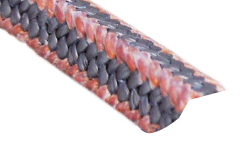
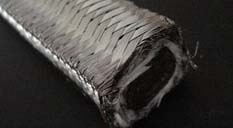
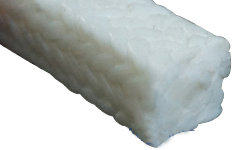
An Asbestos Gaskets is a specialized sealing component manufactured from asbestos fibers, often combined with other reinforcing materials and binders. Historically, these gaskets were the industry standard for creating reliable, heat-resistant seals in high-temperature and high-pressure applications. The unique fibrous structure of asbestos provided exceptional sealing properties, resilience under load, and resistance to chemical degradation. While modern regulations have significantly curtailed their use due to well-documented health risks, specific, controlled industrial sectors still utilize them where alternative materials cannot meet the extreme operational demands. At Kaxite Sealing, we approach this legacy material with a focus on historical context, stringent safety protocols for existing installations, and a strong emphasis on promoting our safer, high-performance alternative sealing solutions.
Despite their phased replacement, the historical prevalence of asbestos gaskets was due to a combination of unparalleled physical properties that made them ideal for punishing environments. Understanding these features is crucial for managing existing assets and for appreciating the performance benchmarks that modern alternatives aim to achieve.
Asbestos gaskets were engineered to precise specifications to meet diverse industrial standards. The following parameters detail the typical composition and performance metrics of traditional asbestos-based gasket materials, information vital for identification, replacement planning, and historical reference.
| Component | Percentage Range | Primary Function |
|---|---|---|
| Chrysotile (White) Asbestos Fibers | 70% - 85% | Provides heat resistance, strength, and flexibility. |
| Elastomeric Binder (e.g., SBR, Nitrile) | 10% - 20% | Binds fibers, adds compressibility, and improves sealability. |
| Inorganic Fillers (e.g., Clay, Talc) | 5% - 15% | Controls density, improves machining, and reduces cost. |
| Vulcanizing Agents & Antioxidants | < 5% | Promotes curing and enhances long-term aging resistance. |
| Property | Test Method (ASTM) | Typical Value Range |
|---|---|---|
| Density | F 1315 | 1.6 - 2.0 g/cm³ |
| Tensile Strength | F 152 | 8 - 15 MPa |
| Compression Set (24h @ 100°C) | F 36 | 15% - 30% |
| Continuous Service Temperature | - | -40°C to +550°C (-40°F to +1022°F) |
| pH Resistance Range | - | 2 - 12 |
| Thermal Conductivity | C 518 | 0.15 - 0.25 W/m·K |
Asbestos gaskets were once ubiquitous across heavy industry. Their use today is extremely limited and strictly regulated, often only permitted in legacy systems or specific sealed applications where removal is deemed more hazardous.
At Kaxite Sealing, our 20-year expertise informs a clear and responsible position. We recognize the historical performance of asbestos-based seals but unequivocally advocate for their replacement with advanced, non-hazardous materials. Our engineering team specializes in mapping the performance characteristics of legacy asbestos gaskets to modern alternatives, ensuring a safe, compliant, and often more efficient upgrade path for our clients. We provide comprehensive material cross-reference guides and technical support to facilitate this critical transition without compromising on system integrity or safety.
Our flagship lines of aramid fiber, graphite, and PTFE-based gaskets are designed to meet or exceed the thermal and chemical resistance of traditional asbestos materials while eliminating associated health risks. Kaxite Sealing is committed to driving industry progress through innovation in sealing technology.
Are asbestos gaskets still legal to use or purchase?
The legality varies by country and region. In many places, including the EU, UK, Australia, and most US states, the manufacture, import, and new installation of asbestos-containing products, including gaskets, are banned. However, regulations may allow for the management and controlled removal of existing asbestos gaskets in legacy equipment under strict safety protocols. It is imperative to consult local environmental and occupational health regulations.
What are the primary health risks associated with handling asbestos gaskets?
The primary risk comes from inhaling airborne asbestos fibers. When an asbestos gasket is cut, sanded, drilled, or becomes old and friable, it can release microscopic fibers. Prolonged inhalation of these fibers can lead to serious lung diseases such as asbestosis, lung cancer, and mesothelioma, which often develop decades after exposure. Proper safety procedures, including wet methods, encapsulation, and use of PPE, are non-negotiable during any disturbance.
How can I safely identify if an existing gasket contains asbestos?
Visual identification is unreliable. The only definitive method is through analysis by an accredited laboratory using Polarized Light Microscopy (PLM) or Transmission Electron Microscopy (TEM). If you suspect a gasket is asbestos-based—common in installations pre-dating the 1980s—assume it contains asbestos until proven otherwise. Do not disturb it. Engage a licensed asbestos assessment professional to take a sample for testing.
What are the best modern replacement materials for an asbestos gasket?
The optimal replacement depends on the specific application (temperature, pressure, media). Common high-performance alternatives include: Compressed Non-Asbestos (NAF) sheets (aramid/glass fibers with elastomer binders), Flexible Graphite (excellent for high temps and corrosion), PTFE (Teflon) (for extreme chemical resistance), and Mica-Based gaskets for very high-temperature, low-pressure services. Kaxite Sealing offers a full range of these materials and provides expert selection guidance.
Can I remove an asbestos gasket myself during equipment maintenance?
It is strongly discouraged for untrained individuals to remove asbestos gaskets. Improper removal creates significant contamination risk. This work should be performed by licensed asbestos abatement professionals who follow strict procedures: establishing containment, using negative air pressure, employing wet removal techniques, and using appropriate personal protective equipment (PPE) and respirators. They also ensure proper disposal of asbestos waste at designated facilities.
Does Kaxite Sealing manufacture or sell asbestos gaskets?
No, Kaxite Sealing does not and will not manufacture or distribute asbestos-containing sealing products. Our corporate policy and commitment to global health and safety standards prohibit it. We are dedicated to providing superior, innovative sealing solutions that deliver the performance required by industry without the health hazards associated with asbestos. We assist customers in safely transitioning from legacy asbestos seals to our modern, high-performance alternatives.
Copyright © 2015-2025 Ningbo Kaxite Sealing Materials Co., Ltd. All Rights Reserved.