In the realm of industrial insulation, fireproofing, and durable construction materials, few products have a history as long or as complex as the Asbestos sheet. While modern regulations strictly govern its use due to well-documented health risks from fiber inhalation, specific, high-performance applications in controlled environments still demand materials with its unique property set. This guide provides a detailed, professional overview of Asbestos sheets, focusing on technical specifications, applications, and critical handling protocols. As a leader in advanced sealing and insulation solutions, Kaxite Sealing provides expertly manufactured materials for scenarios where performance under extreme conditions is non-negotiable.
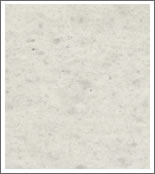
An Asbestos sheet is a composite material primarily composed of chrysotile (white Asbestos) fibers bonded with a cementitious matrix, typically Portland cement. This combination yields a product with exceptional tensile strength, outstanding resistance to fire and heat (it is non-combustible), and impressive durability against chemical corrosion and weathering. Its primary historical and contemporary niche lies in environments where these factors are paramount, and where the material can be installed, sealed, and maintained in a way that prevents fiber release.
The performance of an Asbestos sheet is defined by a series of precise technical parameters. Understanding these metrics is crucial for engineers, architects, and procurement specialists to ensure correct specification for a given project. Below is a detailed breakdown of standard and high-performance grades.
| Property | Standard Value / Rating | Notes & Application Implication |
|---|---|---|
| Fire Resistance | Non-combustible (Class A1) | Will not ignite or contribute to flame spread. Ideal for firewalls, furnace linings. |
| Continuous Service Temperature | Up to 600°C (1112°F) | Can withstand prolonged exposure to high heat without significant degradation. |
| Thermal Conductivity (k-value) | ~0.15 - 0.25 W/m·K | Provides moderate insulation, reducing heat transfer in industrial settings. |
| Acid/Alkali Resistance | Good to Excellent | Resists corrosion from many industrial chemicals, though prolonged exposure to strong acids should be avoided. |
| Weathering Resistance | Excellent | Highly resistant to UV degradation, frost, and rain, suitable for external cladding in controlled formats. |
| Sheet Type | Standard Dimensions (L x W) | Thickness Range | Common Grade |
|---|---|---|---|
| Flat Sheet | 2440 mm x 1220 mm (8' x 4') 3000 mm x 1500 mm |
3 mm - 25 mm | Industrial, Fireproofing |
| Corrugated Sheet | 2440 mm x 1220 mm | 4.5 mm - 6 mm | Cladding, Roofing |
| Perforated Sheet | Custom sizes | 3 mm - 12 mm | Acoustic, Filtration | High-Density Board | 1500 mm x 1000 mm | 6 mm - 50 mm | Gaskets, High-Pressure Applications |
Given the stringent health regulations, the use of Asbestos sheets is now exclusively confined to specific, high-temperature industrial applications where safer alternatives may not perform adequately, and where the material is fully encapsulated or sealed. Kaxite Sealing supplies these sheets strictly for such licensed and controlled purposes.
Handling Asbestos sheets requires strict adherence to national and international safety regulations (e.g., OSHA, HSE). Kaxite Sealing emphasizes that our products must only be used by trained professionals under controlled conditions.
Q: Is it legal to buy and use Asbestos sheets today?
A: The legality varies dramatically by country and region. In many countries, the manufacture and new installation of Asbestos-containing products are completely banned. In others, strict exemptions exist for certain critical high-temperature industrial applications. Kaxite Sealing only supplies these materials where legally permitted and for approved, controlled-use cases. It is the buyer's responsibility to ensure full compliance with all local, state, and national regulations.
Q: What are the main health risks associated with Asbestos sheets?
A: The primary risk occurs when the material becomes friable—meaning it can be crumbled by hand pressure, releasing microscopic fibers into the air. If inhaled, these fibers can become lodged in the lungs, potentially leading to serious diseases decades later, such as asbestosis, lung cancer, and mesothelioma. Intact, undisturbed, and properly encapsulated Asbestos sheets present a significantly lower risk, but any handling or disturbance must be managed with extreme caution.
Q: Can Asbestos sheets be painted or sealed?
A: Yes, and this is often a critical part of risk management. Specialized encapsulant paints or sealants designed for Asbestos can be applied to bind surface fibers and provide a protective coating. This must be done carefully without sanding or abrading the surface first. Kaxite Sealing can provide guidance on compatible sealing systems for our products to ensure long-term integrity and safety.
Q: How do Asbestos sheets compare to modern alternatives like fiber cement or calcium silicate?
A: Modern alternatives like fiber cement (which uses cellulose or synthetic fibers) are excellent for most construction applications (cladding, roofing) and are completely safe. For high-temperature insulation, calcium silicate or ceramic fiber boards are common replacements. However, in a very narrow range of extreme temperature/pressure/chemical conditions, the performance envelope of Asbestos-cement can be difficult to match entirely, which is why controlled exemptions exist. The choice always involves a rigorous risk-benefit analysis favoring safer substitutes where technically feasible.
Q: What precautions should be taken when inspecting existing Asbestos sheet installations?
A: Assume the material contains Asbestos if the building was constructed or renovated before the late 1980s. Do not disturb it. Visually inspect for damage, water staining, or wear. If damage is found, restrict access and consult a licensed Asbestos surveyor or abatement professional. Never attempt to take a sample yourself.
Q: Why would a company like Kaxite Sealing still be involved with these materials?
A: Kaxite Sealing operates within the highest standards of safety and regulation. Our role is to provide essential, high-performance materials for legacy industrial systems and specific exempted applications where no technically suitable alternative exists. We provide comprehensive material safety data sheets (MSDS), handling guidelines, and support to ensure our clients use these products responsibly, safely, and in full legal compliance, prioritizing the protection of people and the environment.

Copyright © 2015-2025 Ningbo Kaxite Sealing Materials Co., Ltd. All Rights Reserved.