In the demanding world of industrial sealing, finding a material that balances exceptional performance, environmental responsibility, and cost-effectiveness is paramount. Vegetable fiber packing stands out as a premier choice for a wide range of applications, from pumps and valves to mixers and agitators. At Kaxite Sealing, we specialize in engineering high-grade vegetable fiber packing solutions that meet rigorous industrial standards while supporting sustainable operational goals. This dense, braided material, derived from natural plant fibers, offers superior sealing integrity, excellent absorbency, and inherent lubricity, making it an indispensable component in systems handling hot water, cold water, light oils, acids, alkalis, and various other fluids.
Our commitment at Kaxite Sealing is to provide sealing products that not only perform under pressure but also align with global environmental initiatives. Unlike synthetic packings that can persist in landfills, our vegetable fiber packing is biodegradable and sourced from renewable materials. This guide delves into the technical specifications, advantages, and applications of our product, providing the detailed information engineers, maintenance professionals, and procurement specialists need to make an informed decision.
The performance of vegetable fiber packing is defined by its precise physical and chemical properties. Kaxite Sealing's product line is manufactured to exacting tolerances, ensuring consistent quality and reliability. Below are the key parameters that distinguish our packing.
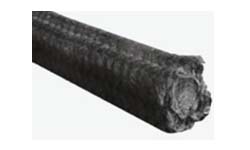
Our standard packing is constructed from long, braided fibers of high-quality abaca (Manila hemp), flax, or cotton, often impregnated with a proprietary blend of lubricants and inhibitors to enhance performance.
| Parameter | Standard Value | Test Method / Notes |
|---|---|---|
| Specific Gravity | 1.1 - 1.3 g/cm³ | ASTM D792 |
| Tensile Strength | ≥ 50 MPa | ASTM D2256 |
| Temperature Range | -20°C to +120°C (-4°F to +248°F) | Continuous operation; short peaks to 150°C possible. |
| Thermal Conductivity | 0.08 - 0.10 W/m·K | Provides good thermal insulation. |
| Chemical Compatibility | Excellent resistance to cold/hot water, steam, acids, alkalis, alcohols, light oils. | Not recommended for strong oxidizing agents, concentrated sulfuric/nitric acid. |
| Density (Braided) | 0.9 - 1.1 g/cm³ | Ensures tight packing and minimal gland adjustment. |
| Compression Recovery | > 85% | ASTM F36; maintains seal under variable pressures. |
| Max. Shaft Speed | Up to 15 m/s (3000 fpm) | For standard cross-section sizes. |
| Pressure Rating | Up to 25 bar (360 psi) | For rotating equipment; higher for static seals. |
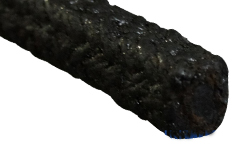
| Standard Colors | Natural (Beige), Black (Graphite-filled), White (PTFE-lubricated) | Color coding for easy identification. |
Kaxite Sealing offers vegetable fiber packing in a comprehensive range of sizes to fit all standard and custom gland dimensions.
What is vegetable fiber packing primarily used for?
Vegetable fiber packing is primarily used as a dynamic or static seal in fluid handling equipment. Its most common applications include sealing centrifugal and reciprocating pump shafts, valve stems (especially in water and wastewater services), agitator shafts in mixers, and as a gasket material for flanges in low-pressure systems. It is ideal for sealing cold water, hot water, steam, condensate, mild acids, alkalis, alcohols, and light oils. Kaxite Sealing's formulation makes it a versatile choice for food processing, pharmaceutical, marine, irrigation, and general industrial services where environmental compatibility is valued.
How does vegetable fiber packing compare to synthetic packings like PTFE or Aramid?
Vegetable fiber packing offers distinct advantages and trade-offs. Compared to high-performance synthetics, it generally has a lower maximum temperature and pressure rating. However, it excels in applications involving hot water and steam, where it exhibits superior absorbency and swelling characteristics that automatically tighten the seal. It provides excellent friction properties with minimal shaft wear when properly lubricated. Crucially, it is biodegradable and made from renewable resources, unlike most synthetic alternatives. For many standard industrial fluids within its temperature range, it provides a more cost-effective and sustainable solution. Kaxite Sealing's blends often incorporate PTFE or graphite to bridge the performance gap, enhancing chemical resistance and lubricity.
How should I install and run-in vegetable fiber packing?
Proper installation is critical for performance and longevity. First, clean the stuffing box and shaft thoroughly. Cut packing rings on a clean, angled surface using a sharp blade or a mandrel; ensure the ends are square. Stagger the ring joints by 90 degrees around the shaft. Install rings one at a time, seating each firmly with a packing tool. For Kaxite Sealing packing, initial gland follower nut tightening should be finger-tight plus one-half turn. Start the equipment and allow it to run for 15-30 minutes. The packing will heat up and compress. After this run-in period, tighten the gland gradually—a quarter-turn at a time—until a slight leakage (a few drops per minute) is observed for lubrication. Over-tightening will cause excessive heat, shaft wear, and premature packing failure.
Is vegetable fiber packing suitable for drinking water or food-grade applications?
Yes, when specified correctly. Kaxite Sealing offers specific grades of vegetable fiber packing that are manufactured with FDA-listed (or equivalent international regulatory body) lubricants and processing aids. These grades use high-purity fibers and are free from metal wires or contaminants. They are designed for use in potable water pumps, food processing equipment (like syrup or juice pumps), and brewery applications. It is essential to verify the product's certification (e.g., FDA CFR 21, NSF/ANSI 61) with our technical team to ensure compliance for your specific food-contact or potable water service.
What maintenance is required for equipment sealed with vegetable fiber packing?
Vegetable fiber packing requires periodic adjustment due to its natural compression and wear. A routine maintenance schedule should include checking for excessive leakage or heat at the gland. Minor adjustment with the gland follower nut is the primary maintenance task. Unlike some self-lubricating synthetics, some styles of vegetable fiber packing may benefit from an external lubricant drip or quench on the packing set for high-temperature or dry-running conditions. Kaxite Sealing's pre-lubricated grades minimize this need. During downtime, inspect the shaft for scoring and the packing for general wear. The lifespan varies based on service conditions but generally offers excellent service life in compatible applications with proper installation.
Can Kaxite Sealing provide custom formulations of vegetable fiber packing?
Absolutely. Kaxite Sealing's strength lies in our ability to engineer custom sealing solutions. We can modify our standard vegetable fiber packing in several ways: by blending specific fiber types for unique tensile or absorption properties, impregnating with custom lubricant blends (e.g., higher graphite content for improved heat dissipation, specific grease for alkaline service), adjusting braid density for higher pressure, or adding tracer elements for wear detection. We also manufacture custom cross-sectional shapes (rectangular, round) and large-diameter coils for OEM applications. Contact our engineering department with your application parameters for a tailored solution.
The versatility of Kaxite Sealing's vegetable fiber packing makes it a workhorse in numerous sectors.

Copyright © 2015-2025 Ningbo Kaxite Sealing Materials Co., Ltd. All Rights Reserved.