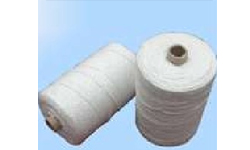
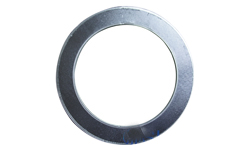
In the demanding world of industrial sealing, precision is paramount. The quality of a gasket directly influences the integrity of a seal, affecting everything from operational efficiency and safety to environmental compliance and maintenance costs. Achieving this precision consistently requires specialized equipment. This is where Machines for Cut Gaskets become indispensable. These are not simple cutting tools; they are sophisticated systems engineered to produce high-accuracy, clean-edged gaskets from a vast array of materials, from soft rubbers and fibrous sheets to complex composite and PTFE materials.
At Kaxite Sealing, we understand that your sealing solutions are only as good as the tools used to create them. For decades, we have been at the forefront of developing and supplying advanced machinery designed to meet the exacting standards of industries worldwide, including oil & gas, chemical processing, automotive, aerospace, and food & beverage.
A state-of-the-art machine for cut gaskets integrates several key systems to deliver flawless results:
Selecting the right machine requires a detailed understanding of its capabilities. Below is a breakdown of critical parameters:
| Parameter | Description | Why It Matters | Typical Kaxite Sealing Machine Range |
|---|---|---|---|
| Cutting Area (Bed Size) | The maximum dimensions (width x length) of material the machine can accommodate. | Determines the maximum size of a single gasket or the layout for nesting multiple smaller parts. | 1300mm x 2500mm up to 2000mm x 4000mm (Custom sizes available) |
| Positioning Accuracy | The machine's ability to place the cutting tool at the exact commanded position. | Directly impacts the dimensional fidelity of the finished gasket, especially critical for complex geometries and bolt holes. | ±0.05 mm to ±0.1 mm |
| Repeatability | The ability to return to the same position consistently over multiple cycles. | Ensures every gasket in a production run is identical, guaranteeing consistent sealing performance. | ±0.03 mm to ±0.05 mm |
| Cutting Speed | The maximum speed at which the cutting head can travel while maintaining quality. | Affects production throughput and overall efficiency. Higher speeds reduce cycle times. | Up to 1,200 mm/s (dependent on material and tooling) |
| Tool Force / Laser Power | For tangential knives: the downward pressure applied. For lasers: the wattage of the laser source. | Determines the range of materials that can be cut cleanly. Higher force/power is needed for dense, thick, or reinforced materials. | Tool Force: 20-80 N; Laser Power: 60W-500W CO2 / Fiber Lasers |
| Material Thickness | The range of material gauges the machine is designed to handle effectively. | Defines the application scope, from thin shims to thick, compressed fiber sheets. | 0.5 mm to 25 mm (Mechanical Cutting); Up to 15 mm (Laser Cutting, material dependent) |
| Control Software | The proprietary or third-party software used to create toolpaths and operate the machine. | Defines user-friendliness, nesting efficiency, and compatibility with common design file formats (DXF, DWG, AI). | Industry-standard CAM software with proprietary Kaxite enhancements for gasket optimization. |
The optimal technology depends on your primary materials and production requirements.
Q: What are the main advantages of using a dedicated CNC machine over manual cutting or die-cutting?
A: CNC machines offer unparalleled precision, consistency, and flexibility. They eliminate the variability and skill dependency of manual cutting. Compared to die-cutting, they require no expensive, fixed tooling (dies), making them perfect for prototypes, short runs, and just-in-time production. Design changes are made in software instantly, with zero physical tooling cost. They also produce less material waste through efficient nesting software.
Q: What type of machine is best for cutting rubber gaskets?
A: For most rubber gaskets, a CNC oscillating (tangential) knife cutter is the ideal choice. It provides a clean, compressed cut edge without fraying or distortion. The tangential action ensures the blade is always aligned with the cutting direction, producing a smooth, vertical edge on materials that can be elastic or fibrous. Kaxite Sealing's knife systems are specifically calibrated for a wide range of rubber hardness levels.
Q: Can one machine handle all the different gasket materials we use?
A: While a high-quality oscillating knife machine is remarkably versatile, covering materials from soft rubber to medium-density composites, no single machine is universal. If your work spans very soft foam and very hard PTFE or graphite, you might need two specialized machines. Kaxite Sealing experts can analyze your material portfolio and production volume to recommend the most efficient single-machine or multi-machine solution.
Q: How does laser cutting compare to knife cutting for gaskets?
A: Laser cutting is a non-contact process that excels at extreme precision and intricate details. It leaves a slightly heat-affected, fused edge which can be beneficial for preventing fraying in certain thermoplastics and PTFE. However, it can produce fumes and may discolor or thermally damage some elastomers. Knife cutting is a cool, mechanical process ideal for softer, sticky, or fibrous materials. The choice hinges on your primary material type and edge-quality requirements.
Q: What file formats do your machines accept for gasket designs?
A: Kaxite Sealing systems are designed for seamless integration into your digital workflow. They universally accept industry-standard vector file formats such as DXF and DWG. Many also support AI, PDF, and HPGL. Our software typically includes tools for cleaning up imported designs, adding toolpaths, and optimizing the nesting of parts to minimize material waste.
Q: How important is the vacuum table, and what maintenance does it require?
A> The vacuum table is critical. It immobilizes the material, preventing movement that would cause inaccuracies. A strong, evenly distributed vacuum is essential for holding dense or slippery materials. Maintenance involves regularly cleaning the table surface and the vacuum grid channels to prevent clogging from dust and debris, ensuring consistent suction power. Our machines feature easy-access, modular table designs for simplified maintenance.
Q: What kind of training and support does Kaxite Sealing provide?
A> We provide comprehensive onboarding, including in-depth operator training on both machine hardware and software. This covers daily operation, basic troubleshooting, tool changing, and maintenance procedures. We offer extensive after-sales support through phone, email, and remote desktop assistance. Our global network of technicians also provides on-site service when needed, ensuring minimal downtime for your operations.
Q: Can your machines be integrated into automated production lines?
A> Yes, many Kaxite Sealing machines are designed with Industry 4.0 connectivity in mind. They can be equipped with options for automated material loading/unloading systems, conveyor interfaces, and barcode scanners for job calling. This allows them to function as a fully automated cell within a larger, connected manufacturing process, reducing manual handling and increasing overall line efficiency.
Copyright © 2015-2025 Ningbo Kaxite Sealing Materials Co., Ltd. All Rights Reserved.