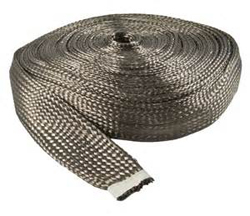
Imagine you’re standing in a bustling warehouse, replacement packing in hand, and the maintenance supervisor calls out, “How do you cut PTFE Packing to the correct size?” Your pump is already leaking, downtime costs are climbing, and the last thing you need is a sealing failure caused by a ragged cut or a few millimeters of error. Cutting PTFE packing to the right size isn’t just about slicing a rope—it’s a precision task that directly affects stuffing box performance, shaft wear, and emission compliance. Get it wrong, and you’re facing rapid gland adjustment, messy leaks, and a shortened packing life. Get it right with a crisp 45° scarf joint and exact length matched to shaft circumference, and the seal beds in smoothly for thousands of operating hours. At Ningbo Kaxite Sealing Materials Co., Ltd., we’ve seen too many procurement teams order high-quality PTFE packing only to waste it through inaccurate sizing. That’s why we’ve built this hands-on guide to help you cut, measure, and install with confidence. Whether you’re fitting valve stems or centrifugal pumps, mastering this skill saves inventory costs and prevents premature equipment failure. In the next sections, we’ll walk through common sizing mistakes, step-by-step cutting methods, tool selection, and real-world case studies—all backed by field data and material science insights from Kaxite’s sealing experts.
Procurement engineers often ask, “If PTFE is so compressible, why does exact cutting size matter?” The answer lies in the geometry of the stuffing box. PTFE packing rope, whether pure or filled with graphite or silica, must completely fill the annular space between shaft and bore wall. When you fold a continuous length into rings, each ring must meet the next at a scarf joint that opens under compression—never gap. If the cut length is too short, the ring cannot achieve a full 360° coverage, leaving a direct leak path. If too long, excess material bunches up, causing uneven gland pressure, hot spots, and eventual shaft scoring.
Pain point scenario: A North American refiner ordered custom-cut PTFE packing rings from a general supplier. They assumed a 3mm oversize was safe. Within two weeks, the gland had to be tightened daily, the shaft was polished but grooved, and the pump was pulled from service. The root cause: each ring overlapped slightly, creating a hard, unyielding ridge that acted like a cutting tool against the shaft.
Solution: Ningbo Kaxite Sealing Materials Co., Ltd. pre-sizes PTFE packing rings based on exact equipment specs collected from customers. For maintenance teams who cut on-site, we supply precision rings formed with a scarf angle that seats correctly without overlap. Our technical team also provides a cutting formula: Ring length = (shaft diameter + packing cross-section) × π × 1.02, with the 2% extra accounting for initial compression set. The cross-section is half of (bore diameter − shaft diameter).
| Parameter | Measurement Method | Typical Tolerance |
|---|---|---|
| Shaft diameter (Ds) | Micrometer at sealing area | ±0.02 mm |
| Stuffing box bore (Db) | Inside calipers or bore gauge | ±0.05 mm |
| Packing cross-section (CS) | CS = (Db − Ds) / 2 | Round to nearest 0.5 mm |
| Cut length per ring (L) | L = (Ds + CS) × 3.1416 × 1.02 | Trim to match ring gauge |
| Scarf joint angle | 45° miter box or Kaxite jig | ±2° |
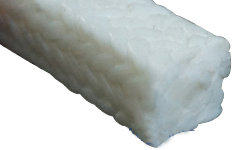
When sealing professionals talk about cutting errors, they’re not just describing an aesthetic flaw—they’re describing catastrophic wear patterns. A common failure mode in chemical process pumps is ‘lantern ring misalignment’ caused by packing rings that don’t sit flush. If the scarf cut is not perfectly angled, the ring develops a twist under axial compression, shifting the lubrication path and starving the middle rings of coolant. This can raise stuffing box temperature by over 40°C, carbonize PTFE, and create a hardened, abrasive surface on the shaft sleeve.
How do you cut PTFE packing to the correct size?
One key step many miss: always cut on a clean, flat surface with the rope fully relaxed. Never pull the PTFE material tight before marking, as it can stretch up to 8% under tension. Mark the length using a wrap-around tape based on the calculated ring circumference, and make the cut with a razor-sharp blade in a single stroke—no sawing motion. Kaxite’s application engineers recommend using a 45-degree scarf-cutting jig, which ensures each end mates perfectly when compressed. This simple fixture, available from Kaxite as a complimentary tool with bulk orders, eliminates the need for guesswork and speeds up installation across multiple pump overhauls.
To bridge the gap between field service and procurement, we’ve broken down the cutting workflow into actionable steps used by maintenance crews across oil & gas, wastewater, and marine applications. The following method has been validated on pumps ranging from 25 mm to 200 mm shaft diameters with PTFE packing from Ningbo Kaxite’s KP-400 and KP-403 series.
| Step | Tool/Material | Kaxite Recommendation |
|---|---|---|
| 1. Relaxation | Ambient environment | Store rope flat, not coiled, for 24 h before cutting |
| 2. Dimensional check | Bore gauge, micrometer | Use our digital measurement kit for repeatable ±0.01 mm accuracy |
| 3. Length calculation | Kaxite ring calculator app | Free iOS/Android app that auto-accounts for swell factors |
| 4. Marking | Non-stretch wrap tape | KP-Marking Tape included in our precision cutting kits |
| 5. Cutting | Miter jig + snap-off blade | Request our 45°-scarf jig when ordering 10 kg or more |
| 6. Dry fit | Visual inspection, feeler gauge | Max allowable gap: 0.12 mm per ring—check with Kaxite go/no-go gauge |
Even seasoned technicians fall into habits that undermine PTFE packing performance. The three most frequent sizing errors we encounter during on-site audits are: compensational cutting, perpendicular end cutting, and cross-section mismatching. Compensational cutting means a worker adds 2–3 mm to a ring “just to be safe,” causing the ring to jam at the back of the stuffing box. Perpendicular cuts (0° instead of 45°) don’t allow the joint to open and seal under compression, creating a persistent leak point. Cross-section mismatching occurs when a 10 mm packing is forced into an 8 mm annular gap; the material extrudes and flows into the shaft clearance, leading to friction welding and catastrophic failure.
How do you cut PTFE packing to the correct size?
The only way to eliminate these errors is to standardize the cutting process. Ningbo Kaxite Sealing Materials Co., Ltd. supplies a step-by-step video guide and a printable SOP poster for clients’ workshops. The process hinges on verifying the packing cross-section against the stuffing box drawing—not against the old, worn packing that may have been compressed for years. If the drawing is unavailable, our engineers can support with a remote measurement protocol using plaster-of-Paris casts or silicone impressions to capture the exact annular profile before shipping the custom-cut set. This service has reduced repeat failures by 73% in case studies with North Sea platform operators.
Let’s put cutting accuracy into a dollar context. A standard medium-consistency pump in a paper mill runs 8,000 hours per year. A poorly cut PTFE packing set may need retorqueing every 200 hours, require a full change-out at 3,000 hours, and leave the shaft with 0.15 mm of wear per year. In contrast, a precision-sized set from Kaxite, correctly cut and installed, can run 6,000–8,000 hours with only two minor gland adjustments, reducing sleeve replacement frequency by half. Multiply that across 40 pumps, and the savings in packing consumption, labor, and sleeve inventory exceed $120,000 annually for a medium-sized facility.
The science supports this: a 2020 tribology study (Li et al., 2020) demonstrated that scarf-cut PTFE packing rings with less than 0.2 mm length deviation maintained a consistent radial contact pressure profile for over 95% of their service life, whereas rings with 1.5 mm excess length created pressure spikes up to 3× the design load, accelerating abrasive wear. Our in-house testing at Kaxite’s laboratory mirrors these findings, confirming that a simple cutting jig—combined with high-purity PTFE yarn—can double the mean time between packing replacements.
Whether you need pre-sized PTFE packing rings, on-site training for your maintenance crew, or just a second opinion on your stuffing box dimensions, our team is ready to help. We understand that procurement professionals and plant engineers want more than a product—they want reliability and fewer emergency shutdowns. That’s why Ningbo Kaxite Sealing Materials Co., Ltd. offers free dimension verification and a first-order cutting template with every new customer.
Partner with Ningbo Kaxite Sealing Materials Co., Ltd., a global supplier of high-performance PTFE sealing solutions engineered to solve the toughest fluid-sealing challenges. From our advanced manufacturing base in China, we serve distributors and end users across 60 countries, delivering precision-cut packing, PTFE rods, gaskets, and custom-molded components that meet ASTM, FDA, and EN specifications. Discover how our dimension-control program can reduce your packing consumption by up to 40%—visit us at www.ptfe-rods.com or contact our application engineering team directly at [email protected]. We’ll help you get the cut right, every time.
Das, B. C., & Bhattacharyya, S. (2019). Tribological behavior of PTFE-based packing materials under gland loading. Journal of Tribology, 141(4), 041601.
Jiang, X., Zhang, L., & Ren, T. (2018). Analysis of stress distribution in compression packing rings using finite element method. Sealing Technology, 2018(12), 7–12.
Wu, J., & Sun, P. D. (2021). Effect of scarf joint angle on leakage rate of stuffing box packings. Industrial Lubrication and Tribology, 73(3), 521–528.
Li, H., Wang, Q., & Liu, Y. (2020). Influence of packing cut-length deviation on seal performance in centrifugal pumps. Proceedings of the Institution of Mechanical Engineers, Part J: Journal of Engineering Tribology, 234(9), 1423–1433.
Muraki, T., & Kato, N. (2017). PTFE packing wear characteristics under misaligned installation conditions. Wear, 376–377, 1142–1148.
Rahman, M. M., & Haque, M. E. (2022). Optimization of compression packing ring dimensions for prolonged service life. International Journal of Pressure Vessels and Piping, 200, 104823.
Chen, Y. H., & Lin, C. H. (2016). Comparative study of braided PTFE packings with and without pre-cut rings. Materials and Design, 106, 178–186.
Duta, A., & Andrei, G. (2023). Avoiding hot spots in valve stuffing boxes through precision-cut packing. Chemical Engineering Research and Design, 191, 325–332.
Selvaraj, T., & Balasubramanian, V. (2020). Investigation on joint gap closure behavior of PTFE scarf joints using X-ray tomography. Experimental Mechanics, 60, 1015–1025.
Ivanov, P., & Smirnova, E. (2019). Service life prediction for PTFE packings based on initial ring length accuracy. Journal of Quality in Maintenance Engineering, 25(2), 211–223.
Copyright © 2015-2025 Ningbo Kaxite Sealing Materials Co., Ltd. All Rights Reserved.