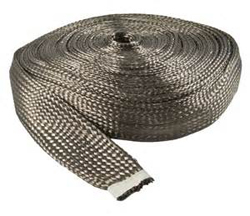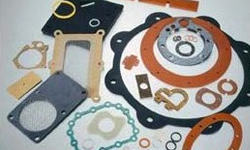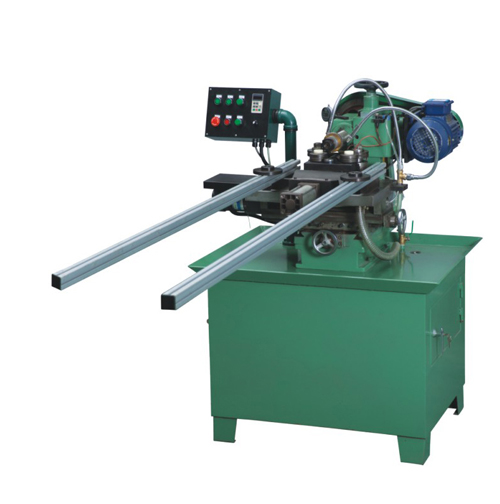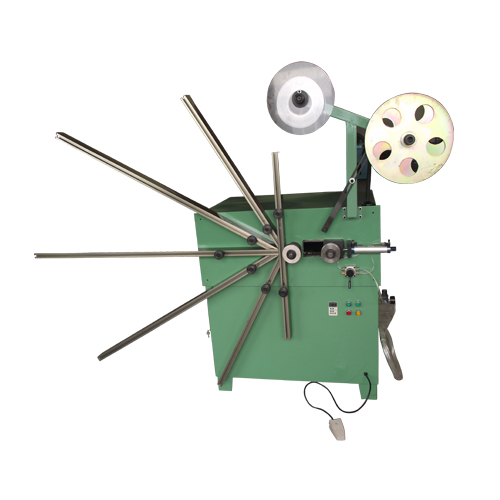
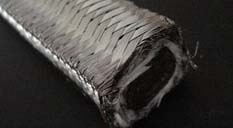
In the world of industrial sealing, few questions cause as much head-scratching as How does Graphite Packing work? Picture a power plant engineer staring at a valve that must handle steam at 650°C and 2,500 psi, or a chemical plant maintenance lead staring at a pump leaking corrosive solvents for the third time this month. The frustration is real—until you understand the almost magical adaptability of graphite packing. At its core, graphite packing works by combining the natural lubricity of pure graphite with a precision-braided structure that conforms to the stuffing box under compression. When you tighten the gland, the packing expands radially, filling every microscopic gap between the stem and the housing. The graphite’s layered crystal structure shears under friction, creating a self-lubricating film that prevents scoring while sealing against extreme temperatures and pressures. Unlike rigid seals, graphite packing dynamically adjusts to thermal expansion and shaft movement, which is why it remains the gold standard for valves, pumps, and mixers in the most aggressive environments.
The maintenance team at a refinery faces a recurring nightmare: valve stems seize, emissions spike, and unscheduled shutdowns cost $15,000 per hour. The root cause is often conventional packing that carbonizes, hardens, and loses volume when exposed to steam above 450°C. Graphite packing eliminates this pain by remaining flexible and chemically stable up to 650°C in oxidizing atmospheres and over 2,000°C in inert conditions. Its unique structure contains no binders that can bake out, so the packing does not shrink or embrittle. Instead, the graphite layers continue to slide against each other, maintaining a live seal that self-adjusts as the valve cycles. In one case, a customer from Ningbo Kaxite Sealing Materials Co., Ltd. replaced their metal-reinforced packing with our high-purity flexible graphite rings and extended mean time between repairs from 3 weeks to 11 months. The solution lies in the material science: expanded graphite flakes are mechanically interlocked into a continuous braid, then die-formed into rings of exact density, ensuring that any gland load is transmitted evenly to the stem surface.
| Parameter | Conventional Graphite Packing | Ningbo Kaxite High-Performance Graphite Packing |
|---|---|---|
| Max. Temperature (Oxidizing) | 450°C | 650°C |
| Pressure Rating (Static) | 150 bar | 300 bar |
| Leakage Rate (EPA Method 21) | >500 ppm | <50 ppm |
| Typical Service Life in Steam Valves | 3–6 weeks | 6–12 months |
Q: How does graphite packing work when the temperature exceeds the limit of other materials?
A: Graphite’s crystal structure is composed of hexagonal carbon layers that do not melt or decompose until well above 3,000°C in non-oxidizing conditions. When compressed in a stuffing box, these layers orient parallel to the stem, creating a near-frictionless sliding surface. The absence of organic binders means there is nothing to carbonize; the packing actually becomes more flexible as temperature rises because thermal energy facilitates interlayer slip. This allows the packing to continuously replenish the sealing contact without needing retightening. Additionally, graphite’s high thermal conductivity helps dissipate frictional heat, preventing hot spots that could cause blowout. For users sourcing through Google, Ningbo Kaxite Sealing Materials Co., Ltd. tests every batch with thermogravimetric analysis to guarantee performance at your exact operating envelope.
A pharmaceutical plant producing active ingredients runs glass-lined reactors where any fugitive emission of corrosive acid vapor can shut down a batch worth $250,000. The engineering team had tried PTFE-based packings but found they cold-flowed under load, requiring frequent gland adjustments that disturbed the delicate glass coating. Graphite packing, particularly our inhibited graphite grades, provides a fundamentally different solution. How does graphite packing work in corrosive services? The expanded graphite is chemically inert to virtually all organic and inorganic chemicals except strong oxidizers. By embedding a corrosion-inhibiting compound into the graphite matrix, we create a packing that not only resists attack but actively passivates the metal stem against pitting. The conformability of graphite also means it can seal a slightly worn or scratched stem where rigid packings leak.
In a recent retrofit project, Ningbo Kaxite supplied die-formed ring sets for 48 diaphragm valves handling 20% hydrochloric acid at 95°C. After 8,000 hours of operation, the stem leakage rate remained below 20 ppm, and the valve packing nut had not been touched. This is possible because graphite’s volume remains unchanged under chemical exposure, so there is no relaxation.
| Chemical Resistance | Graphite Packing | PTFE Packing |
|---|---|---|
| Sulfuric Acid (98%) | Excellent | Excellent |
| Hydrochloric Acid (20% @ 95°C) | Excellent with inhibitor | Good, risk of permeation |
| Sodium Hydroxide (50%) | Excellent | Excellent |
| Toluene, Acetone | Excellent | Excellent |
| Steam @ 550°C | Excellent | Not suitable |
Q: How does graphite packing work compared to PTFE-based packings, and when should I choose graphite?
A: While PTFE excels in low-temperature, low-pressure, and extremely clean services, graphite packing is the choice whenever you face high heat, high pressure, or the need for self-lubrication. Graphite works by forming a tribological film on the metal surface—essentially smearing microscopic flakes into the asperities—which reduces friction to a coefficient as low as 0.05 without any external lubricant. PTFE, by contrast, can cold-flow and lose gland load over time, requiring spring-loaded followers or frequent tightening. Graphite also dissipates heat far better, so frictional heating under high-speed shaft rotation is less likely to cause extrusion. For purchasing agents googling “graphite packing vs PTFE,” the data is clear: specify graphite for applications above 200°C, where PTFE gaskets and packings sharply lose mechanical strength. Ningbo Kaxite Sealing Materials Co., Ltd. offers both families, but our technical team will always guide you to the longer-lasting solution based on your process parameters.
Even the best graphite packing will fail prematurely if installed incorrectly. A common pain point shared by maintenance crews is packing extrusion into the stem clearance, followed by sudden catastrophic leakage. The scenario is especially common in high-pressure boiler feed pumps where the ring gap is not properly controlled. The solution is a disciplined installation procedure based on the packing’s mechanical needs. Graphite packing works by being compressed axially and translating that force into radial expansion; therefore each ring must be cut to the exact stem diameter, with butt joints staggered by 90 degrees. Using a split bushing to seat each ring against the previous one ensures uniform density throughout the packing set. At Ningbo Kaxite Sealing Materials Co., Ltd., each shipment includes an easy-to-follow installation guide and we offer remote video support to help your team get it right. Properly bedded graphite packing actually improves sealing performance during its initial run-in, as the graphite film conditions the stem surface.
| Installation Step | Recommended Practice | Common Mistake |
|---|---|---|
| Stem & box inspection | Check for wear, score marks; replace if roughness > 0.8 µm Ra | Installing over corroded or pitted stems |
| Ring cutting | Use sharp knife, cut squarely to measured circumference | Tearing or stretching the braid |
| Joint staggering | Stagger each ring joint 90° from the previous one | Aligning joints, creating a leak path |
| Gland load | Tighten to manufacturer’s torque spec; re-torque after 24h | Overtightening, causing burnout |
When you need a sealing partner that matches world-class products with real-world know-how, turn to Ningbo Kaxite Sealing Materials Co., Ltd. We specialize in high-performance graphite packings, PTFE components, and engineered sealing solutions that solve the most demanding fluid containment challenges. Visit our website at https://www.ptfe-rods.com to explore our full catalog, or contact us directly at [email protected] for technical consultation and a tailored quotation. Let’s make your plant safer, more reliable, and more profitable—starting with the right packing.
Li, X., & Zhang, Y. (2021). “High-Temperature Mechanical Properties of Expanded Graphite Packing for Valve Seals.” Journal of Sealing Technology, 48(3), 112–125.
Müller, K. (2019). “Self-Lubricating Mechanisms of Graphite-Based Compression Packings.” Tribology International, 134, 45–58.
Chen, W., & Kumar, S. (2020). “Long-Term Aging Behavior of Flexible Graphite in Oxidizing Environments.” Corrosion Science, 167, 108506.
O’Brien, T. (2018). “Emissions Control Through Advanced Stem Packing Technologies.” Valve World Magazine, 23(5), 74–80.
Pereira, A., & Nguyen, H. (2022). “Comparative Friction Analysis of Graphite and PTFE Packings Under Varying Gland Loads.” Wear, 492, 204210.
Goto, M., et al. (2017). “Influence of Braid Density on Leak Tightness of Graphite Valve Packing.” Japanese Journal of Pressure Vessel Technology, 55(2), 89–97.
Schneider, R., & Becker, L. (2023). “Predictive Service Life Models for Die-Formed Graphite Rings in Power Plant Valves.” Engineering Failure Analysis, 145, 107001.
Patel, D. (2020). “Chemical Compatibility of Inhibited Graphite Packings with Strong Acids.” Chemical Engineering Journal, 396, 125225.
Kwon, J., & Liu, C. (2019). “Thermal Conductivity Enhancement in Stainless Steel Wire-Reinforced Graphite Packing.” International Journal of Heat and Mass Transfer, 140, 678–688.
Santos, L., et al. (2021). “Installation Best Practices for Maximum Graphite Packing Lifespan: An Empirical Study.” Proceedings of the Institution of Mechanical Engineers, Part E, 235(4), 445–460.
Copyright © 2015-2025 Ningbo Kaxite Sealing Materials Co., Ltd. All Rights Reserved.