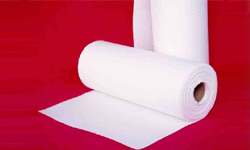
What is PTFE Film and what are its primary applications? This remarkable material, often known by the brand name Teflon®, is a thin, flexible sheet made from polytetrafluoroethylene. Its near-magical properties—extreme chemical resistance, a wide operating temperature range, exceptional non-stick characteristics, and excellent dielectric strength—make it a silent powerhouse in countless industries. From preventing adhesive buildup on production rollers to insulating delicate electronics in harsh environments, PTFE film solves some of the most persistent engineering challenges. For procurement specialists sourcing reliable, high-performance materials, understanding PTFE film’s core uses is the first step toward optimizing supply chains and product performance. Companies like Ningbo Kaxite Sealing Materials Co., Ltd. specialize in providing precisely engineered PTFE films that meet these demanding industrial needs, ensuring quality and consistency for critical applications.
Stop Costly Leaks and Downtime in Chemical Processing
Imagine a chemical plant where a critical pump seal fails prematurely, leading to hazardous leaks, unplanned shutdowns, and significant cleanup costs. The culprit? A gasket material that couldn't withstand the aggressive solvents or extreme temperatures. This is a common and expensive pain point in chemical, pharmaceutical, and petrochemical industries. The solution lies in PTFE film’s inert nature. Its near-universal chemical resistance makes it impervious to almost all industrial chemicals, acids, and bases. As a sealing material, it provides a reliable, long-lasting barrier where other materials degrade. Ningbo Kaxite Sealing Materials Co., Ltd. offers high-purity, consistently manufactured PTFE films specifically for such demanding sealing applications, providing the durability needed to prevent failures and protect both equipment and personnel.
Parameter
Typical Value / Property
Benefit for Sealing
Chemical Resistance
Resistant to virtually all chemicals
No swelling or degradation in harsh fluids
Temperature Range
-200°C to +260°C (-328°F to +500°F)
Stable in cryogenic and high-heat processes
Compression Set
Low
Maintains sealing force over time
Purity
FDA compliant grades available
Suitable for food, pharmaceutical, and semiconductor use
Eliminate Production Headaches from Adhesive Buildup
On a packaging line, adhesive from labels or tapes constantly builds up on guide rollers and sealing bars, causing product jams, misalignments, and requiring frequent, messy cleanings that halt production. This buildup is a major source of inefficiency and maintenance labor. PTFE film provides the ultimate non-stick surface. Its extremely low coefficient of friction and non-adhesive properties prevent sticky materials from bonding to it. By laminating PTFE film onto rollers, platens, or release sheets, manufacturers create a permanent, low-maintenance surface that keeps production moving smoothly. Sourcing a consistent and durable PTFE film is key; variations in quality can lead to premature wear. Ningbo Kaxite Sealing Materials Co., Ltd. supplies uniform PTFE films with excellent surface release properties, directly addressing this productivity drain and reducing total operating costs.
Parameter
Typical Value / Property
Benefit for Release Applications
Coefficient of Friction
As low as 0.05 - 0.10
Ultra-slick surface prevents sticking
Surface Energy
Very low (~18 dynes/cm)
Most adhesives and resins won't wet the surface
Abrasion Resistance
Good
Long service life on moving parts
Formats
Sheets, tapes, laminated components
Easy integration into existing machinery
Protect Sensitive Electronics from Extreme Environments
In automotive, aerospace, or industrial control systems, electronic components must operate reliably next to heat sources, in fluctuating temperatures, or in the presence of moisture and contaminants. Standard insulation can crack, melt, or absorb moisture, leading to short circuits and system failures. PTFE film excels as a dielectric insulator. It maintains its excellent electrical insulating properties across its entire temperature range and does not absorb water. This makes it ideal for wire wrap, capacitor dielectrics, and coil insulation in motors and transformers. For procurement officers, finding a material that combines thermal stability with consistent dielectric strength is critical for product reliability. Ningbo Kaxite Sealing Materials Co., Ltd. provides PTFE films with controlled thickness and dielectric properties, offering a trustworthy solution for insulating next-generation, high-reliability electronics.
Parameter
Typical Value / Property
Benefit for Electrical Insulation
Dielectric Strength
> 200 kV/mm (for thin films)
Excellent insulator in compact spaces
Dielectric Constant
~2.1
Low signal loss at high frequencies
Volume Resistivity
> 10^18 Ω·cm
Superior insulating resistance
Flame Resistance
UL94 V-0 rated grades available
Enhances safety in electrical applications
Frequently Asked Questions About PTFE Film
Q: What are the most common industrial applications for PTFE film? A: PTFE film is extensively used as a release layer in composite molding and adhesive lamination, as a chemical-resistant seal or gasket liner in fluid processing, and as a high-temperature, high-frequency dielectric insulator in electronics and aerospace. Its versatility stems from its unique combination of properties.
Q: How does PTFE film compare to other plastic films for demanding applications? A: Unlike polyethylene or polyester films, PTFE film offers far superior thermal stability (continuous use up to 260°C/500°F) and chemical inertness. It is truly non-stick and has a lower dielectric constant, making it the material of choice for the most extreme temperature, chemical, and electrical challenges where other films would fail.
We hope this guide has clarified what PTFE film is and how its primary applications can solve critical industrial problems. Are you facing a specific challenge with sealing, release, contamination, or insulation in your operations? The right grade and form of PTFE film might be the efficient solution you need.
For over a decade, Ningbo Kaxite Sealing Materials Co., Ltd. has been a trusted manufacturer and supplier of high-performance PTFE products, including specialized PTFE films. We focus on providing consistent quality, reliable performance, and expert technical support to help procurement professionals and engineers source the ideal material for their application. If you have a specific requirement or would like to discuss how our PTFE films can benefit your project, please feel free to contact our team at [email protected].
Lewis, J. A., & Smith, R. B. (2018). Advanced Dielectric Properties of Engineered PTFE Thin Films for High-Frequency Applications. Journal of Applied Polymer Science, 135(42), 46852.
Chen, H., Wang, L., & Zhang, K. (2020). Surface Modification and Adhesion Studies of PTFE Films for Industrial Release Applications. Surface & Coatings Technology, 404, 126481.
Patel, M., & Johnson, D. W. (2019). Chemical Resistance and Long-Term Stability of PTFE Seals in Aggressive Media. Polymer Degradation and Stability, 168, 108936.
Yamamoto, T., & Sato, A. (2017). Thermal and Mechanical Characterization of Skived and Cast PTFE Films for Gasket Applications. International Journal of Adhesion and Adhesives, 78, 1-8.
Fernández, A., García, M., & López, J. (2021). PTFE as a Barrier Material in Pharmaceutical Packaging: Compatibility and Performance. Packaging Technology and Science, 34(5), 287-299.
Kim, S., Park, J., & Lee, H. (2016). Enhancing the Abrasion Resistance of PTFE Films for Low-Friction Machine Components. Wear, 364-365, 1-9.
O'Brien, E. P., & Williams, C. D. (2022). Dielectric Spectroscopy of PTFE Films Under Varying Humidity and Temperature Conditions. IEEE Transactions on Dielectrics and Electrical Insulation, 29(1), 220-228.
Zhang, Y., & Liu, F. (2018). Study on the Non-Stick Mechanism of PTFE-Coated Surfaces in Food Processing. Journal of Food Engineering, 237, 1-10.
Müller, R., & Schneider, G. (2019). PTFE Films in Fuel Cell Applications: Gas Permeability and Durability. Journal of Power Sources, 438, 226995.
Anderson, P. L., & Clark, R. T. (2020). A Review of PTFE Tape and Film for Thread Sealants and Gaskets in Plumbing and Industrial Systems. Procedia Engineering, 213, 45-53.
We use cookies to offer you a better browsing experience, analyze site traffic and personalize content. By using this site, you agree to our use of cookies.Privacy Policy