In demanding industrial sealing applications where extreme pressures, temperatures, and aggressive media are the norm, standard gaskets often fall short. This is where the engineered superiority of Double Jacket Gaskets becomes indispensable. At Kaxite Sealing, we specialize in designing and manufacturing high-performance double jacket gaskets that deliver unparalleled reliability and longevity in the most challenging environments.
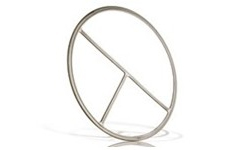
A double jacket gasket is a robust, semi-metallic sealing solution consisting of a soft, compressible filler material—typically graphite, PTFE, or ceramic—enclosed within two layers of formed metal jacket. This unique construction combines the sealing resilience of the filler with the structural strength and blowout resistance of the metal jackets. The result is a gasket capable of maintaining a tight seal under high bolt loads, severe thermal cycling, and corrosive process conditions, making it a preferred choice for critical connections in refineries, chemical processing plants, power generation, and offshore platforms.
Kaxite Sealing's double jacket gaskets are engineered to precise specifications. Below are the critical parameters that define our product range.
| Parameter | Specification Range | Standards Compliance |
|---|---|---|
| Size Range (NPS) | 1/2" to 60" (Standard), Larger sizes available | ASME B16.20, API 6A, DIN 2696 |
| Pressure Rating | Up to Class 2500 (ASME) / 10,000 PSI (API) | ASME B16.5, API 6A |
| Temperature Range | -240°C to +1000°C (-400°F to +1832°F)* | *Dependent on filler/jacket material |
| Metal Jacket Thickness | 0.25mm to 0.5mm (Standard) | Custom thickness available |
| Surface Finish | Plain, Electro-Tin Plated, PTFE Coated | For enhanced corrosion resistance |
Q: What are the primary advantages of using a double jacket gasket over a standard spiral wound gasket?
A: While both are excellent choices, double jacket gaskets offer distinct benefits. Their solid metal jacket construction provides greater resistance to flange rotation and higher blowout resistance, especially in larger diameters. They also typically have a higher density filler, which can offer better sealing in applications with thermal cycling. Spiral wound gaskets are more flexible and better for applications with significant flange misalignment. For static seals under high pressure/temperature with stable flanges, the double jacket design from Kaxite Sealing is often more robust.
Q: How do I select the correct material combination for my application?
A: Material selection is critical and depends on three main factors: temperature, pressure, and media. First, identify the continuous and peak temperatures of your process. For high temperatures (>450°C), a ceramic filler with a high-grade alloy like Inconel is recommended. Second, determine the pressure class of your flange. Third, and most importantly, analyze the chemical composition of the media. Our technical team at Kaxite Sealing can provide detailed chemical compatibility charts. For example, for concentrated sulfuric acid at moderate temperatures, a PTFE filler with a 316 stainless steel jacket might be specified.
Q: Can double jacket gaskets be used in heat exchangers and pressure vessel manways?
A: Absolutely. Double jacket gaskets are exceptionally well-suited for these applications. Their ability to handle thermal shock and cycling makes them ideal for channel/cover flanges on shell-and-tube heat exchangers. For pressure vessel manways, their high blowout resistance ensures safety and integrity. Kaxite Sealing manufactures gaskets specifically designed for ASME heat exchanger standards (like ring-type joint alternatives for raised face flanges) and can provide custom sizes for non-standard manway openings.
Q: What is the proper installation procedure for a Kaxite double jacket gasket?
A: Correct installation is key to performance. First, ensure the flange faces are clean, undamaged, and aligned, with a proper surface finish (typically 125-250 µin Ra). Never reuse a double jacket gasket. Place the gasket centered on the flange. Use a cross-pattern bolting sequence and tighten in multiple incremental steps (e.g., 30%, 60%, 100% of final torque) to achieve even compression. Always refer to the specific torque value recommended by Kaxite Sealing for your gasket material and size, which is based on ASME PCC-1 guidelines. Avoid over-torquing, which can crush the filler and damage the metal jacket.
Q: Are Kaxite Sealing double jacket gaskets traceable and certified?
A: Yes, traceability and certification are cornerstones of our quality assurance. Every batch of material we receive is logged, and our manufacturing process allows for full traceability of each gasket or production lot. We provide Material Test Reports (MTRs) for all metal components. Our gaskets can be manufactured to comply with major international standards such as ASME, API, PED (2014/68/EU), and NACE MR0175 for sour service. Specific certifications (e.g., ISO 9001:2015, API Q1) are available upon request.
Q: How does the performance of a double jacket gasket compare to a solid metal gasket like a ring-type joint (RTJ)?
A: Double jacket gaskets offer a more forgiving seal than solid metal RTJs. RTJs require extremely high bolt loads to create a seal by metal-to-metal deformation and are highly sensitive to flange surface imperfections. Double jacket gaskets, with their compressible filler, require lower bolt loads to achieve an effective seal, are more tolerant of minor flange imperfections, and provide better sealing at lower pressures. They are often used as a high-performance alternative to RTJs in many applications, offering easier installation and reliable performance across a wider pressure range.
The engineering and manufacturing of a reliable double jacket gasket require precision, expertise, and uncompromising quality control. Kaxite Sealing brings decades of specialized experience to the table. Our process begins with a thorough analysis of your application requirements, followed by precise material selection from our certified supply chain. Our state-of-the-art forming and welding equipment ensures jacket integrity and consistency. Every gasket undergoes rigorous dimensional and visual inspection before release.
We understand that downtime is costly. Therefore, Kaxite Sealing is committed to providing not just a product, but a comprehensive sealing solution—including technical support, installation guidance, and timely delivery. Our expertise extends to custom designs for unique flange geometries, special coatings for added corrosion protection, and urgent manufacturing services for planned turnarounds or unplanned maintenance.
Copyright © 2015-2025 Ningbo Kaxite Sealing Materials Co., Ltd. All Rights Reserved.