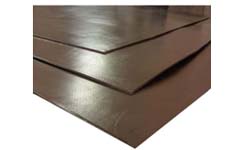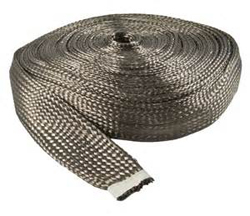
What laws and regulations govern the handling of asbestos sheets? This is a critical question for any procurement professional sourcing industrial sealing materials. Navigating the complex web of safety, environmental, and trade compliance rules can feel overwhelming, but it's non-negotiable for responsible operations and supply chain integrity. Mishandling can lead to severe legal penalties, workplace hazards, and project delays. This guide breaks down the key regulations you need to know and highlights how partnering with a compliant manufacturer like Ningbo Kaxite Sealing Materials Co., Ltd. provides a secure, reliable solution.
Article Outline:
OSHA Requirements for Worker Safety
EPA & Environmental Disposal Regulations
International Standards & Shipping Rules
Your Partner in Compliance: Ningbo Kaxite
Frequently Asked Questions (FAQs)
Imagine your maintenance team needs to replace a gasket on an older boiler. The existing sheet material is suspected to contain asbestos. Without proper procedures, you risk exposing workers to airborne fibers, triggering an OSHA inspection, and facing staggering fines. The Occupational Safety and Health Administration (OSHA) in the United States sets strict permissible exposure limits (PELs) and mandates specific handling protocols under standards like 29 CFR 1910.1001 and 29 CFR 1926.1101. The solution is proactive compliance through engineered controls, training, and using certified alternative materials. For procurement, this means sourcing from suppliers who understand these mandates and provide products with clear safety data sheets (SDS).

Key OSHA Parameters for Handling:
| Parameter | OSHA Requirement | Procurement Action |
|---|---|---|
| Permissible Exposure Limit (PEL) | 0.1 fibers per cubic centimeter (f/cc) as an 8-hour time-weighted average. | Verify supplier's manufacturing process controls dust. |
| Exposure Assessment | Required initially and periodically if asbestos is present. | Request air monitoring data from supplier's facility. |
| Communication of Hazards | Mandatory labeling and Safety Data Sheets (SDS). | Ensure SDS is provided in English and is OSHA-compliant. |
| Regulated Areas | Must be established where exposures exceed the PEL. | Source materials that eliminate the need for on-site "regulated areas." |
A project is complete, but now you have leftover cuttings or removed asbestos-containing material. Disposing of it like regular trash is illegal and environmentally harmful. The U.S. Environmental Protection Agency (EPA) regulates asbestos under the National Emission Standards for Hazardous Air Pollutants (NESHAP) and the Toxic Substances Control Act (TSCA). Disposal is primarily governed by state and local regulations, often requiring transport by licensed haulers to approved landfills. The procurement solution is to minimize waste generation by ordering precise sizes and specifying non-asbestos alternatives from the start. This is where the expertise of Ningbo Kaxite Sealing Materials Co., Ltd. becomes invaluable, offering high-performance asbestos-free sheets that sidestep these complex disposal regulations entirely.
Key Disposal and Environmental Parameters:
| Aspect | Regulatory Body / Requirement | Procurement Strategy |
|---|---|---|
| Waste Classification | Often classified as "Regulated Asbestos-Containing Material" (RACM). | Specify non-asbestos (e.g., aramid, fiberglass) materials to avoid this classification. |
| Wetting & Packaging | Material must be wetted, sealed in leak-tight containers, and labeled. | Choose materials that do not require special wetting or containment procedures. |
| Landfill Approval | Must be disposed of in a landfill approved for asbestos waste. | Reduce liability by sourcing asbestos-free products from compliant manufacturers. |
| Notification (NESHAP) | Demolition/renovation projects may require 10-day prior notification. | Using non-asbestos materials can simplify or eliminate notification requirements. |
You're procuring sealing materials for a multinational corporation with facilities in the US, EU, and Asia. The regulatory landscape shifts dramatically across borders. The European Union's REACH regulation severely restricts asbestos, while countries like Canada and Australia have their own stringent controls. Furthermore, shipping asbestos-containing materials internationally involves strict documentation under the International Maritime Dangerous Goods (IMDG) Code. The solution is to standardize your global supply chain on universally accepted, non-hazardous materials. Ningbo Kaxite Sealing Materials Co., Ltd. designs its sealing products to meet international safety standards like ISO, ensuring smooth customs clearance and safe use worldwide, freeing you from a patchwork of conflicting laws.
Key International Parameters:
| Region/Standard | Key Regulation | Impact on Procurement |
|---|---|---|
| European Union (EU) | REACH (EC 1907/2006) - Asbestos is banned. | Must procure asbestos-free materials for the EU market. |
| International Shipping | IMDG Code, Class 9 (Miscellaneous dangerous substances). | Asbestos-free materials are not classified as dangerous goods, simplifying logistics. |
| Global Harmonized System (GHS) | Standardized hazard classification and labeling. | Supplier must provide GHS-compliant labels and SDS. |
| Quality Management | ISO 9001 certification. | Indicates a supplier's commitment to consistent, reliable quality and documentation. |
Understanding "What laws and regulations govern the handling of asbestos sheets?" is only the first step. The real advantage comes from partnering with a manufacturer that builds compliance into its products. Ningbo Kaxite Sealing Materials Co., Ltd. specializes in high-performance, asbestos-free sealing solutions. Our materials, such as PTFE, compressed non-asbestos fiber (CNAF), and graphite sheets, are engineered to meet or exceed the performance of traditional asbestos sheets while ensuring full compliance with OSHA, EPA, and international regulations. We provide comprehensive, transparent documentation, including detailed SDS and certificates of analysis, making your procurement process secure, efficient, and audit-ready.
Q1: What is the single most important law governing the handling of asbestos sheets in the workplace?
A1: In the United States, the primary law is enforced by OSHA under 29 CFR 1910.1001 (General Industry) and 29 CFR 1926.1101 (Construction). These standards define the permissible exposure limit, require exposure assessments, mandate specific work practices, and enforce rigorous hazard communication through labeling and Safety Data Sheets.
Q2: How do international regulations affect my purchase of asbestos sheets from overseas?
A2: They significantly complicate it. Many countries, including all EU nations, have a total ban. Importing asbestos-containing materials may be illegal. Even if allowed, shipping requires dangerous goods classification (IMDG Code Class 9), increasing cost and liability. Sourcing asbestos-free alternatives from a globally-aware manufacturer like Ningbo Kaxite eliminates these cross-border regulatory hurdles.
We hope this guide empowers you to make safer, more compliant procurement decisions. Have more specific questions about sealing material regulations for your application?
For reliable, compliant, and high-performance sealing solutions, consider Ningbo Kaxite Sealing Materials Co., Ltd.. As a specialist manufacturer of asbestos-free sealing products, we help global procurement professionals navigate complex regulations seamlessly. Contact our team today at [email protected] for technical data sheets and compliance documentation.
Supporting Research on Asbestos Alternatives & Regulations:
Virta, R.L. (2006). Worldwide Asbestos Supply and Consumption Trends from 1900 through 2003. U.S. Geological Survey Circular 1298.
Stayner, L., Welch, L.S., & Lemen, R. (2013). The Worldwide Pandemic of Asbestos-Related Diseases. Annual Review of Public Health, 34, 205-216.
Mossman, B.T., et al. (2013). Asbestos: Mechanisms of Toxicity and Carcinogenicity in the Respiratory Tract. Annual Review of Pharmacology and Toxicology, 27, 595-615.
Landrigan, P.J., et al. (1999). The Declaration of Alma-Ata and the Future of Public Health. The Lancet, 354(9182), 865-868.
Nicholson, W.J., et al. (1982). Occupational Exposure to Asbestos: Population at Risk and Projected Mortality—1980-2030. American Journal of Industrial Medicine, 3(3), 259-311.
Henderson, D.W., et al. (2004). After Helsinki: A Multidisciplinary Review of the Relationship Between Asbestos Exposure and Lung Cancer, with Emphasis on Studies Published During 1997-2004. Pathology, 36(6), 517-550.
Roggli, V.L., et al. (2004). Pathology of Asbestos-Associated Diseases (2nd ed.). Springer-Verlag.
Berman, D.W., & Crump, K.S. (2008). A Meta-Analysis of Asbestos-Related Cancer Risk That Addresses Fiber Size and Mineral Type. Critical Reviews in Toxicology, 38(S1), 49-73.
Tossavainen, A. (2004). Global Use of Asbestos and the Incidence of Mesothelioma. International Journal of Occupational and Environmental Health, 10(1), 22-25.
Alleman, J.E., & Mossman, B.T. (1997). Asbestos Revisited. Scientific American, 277(1), 70-75.
Copyright © 2015-2025 Ningbo Kaxite Sealing Materials Co., Ltd. All Rights Reserved.