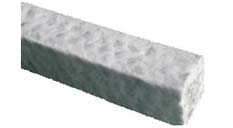
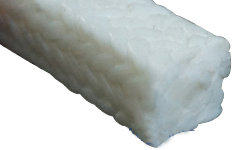
In the demanding world of industrial sealing, Machines for Graphite Reinforced Gaskets represent the pinnacle of manufacturing technology. These specialized systems are engineered to transform raw materials—primarily high-purity graphite and reinforcing media—into reliable, high-performance gaskets that seal flanges under extreme pressures, temperatures, and chemical exposures. At Kaxite Sealing, we have dedicated decades to refining this technology, understanding that the quality of the final seal is inextricably linked to the precision and capability of the machine that produces it. This guide delves into the technical specifications, operational advantages, and critical considerations of these advanced production systems.
A state-of-the-art machine for graphite reinforced gaskets is not a single unit but an integrated system. Its design focuses on consistency, material integrity, and production efficiency. Below are the key modules and their defining parameters.
This initial stage ensures homogeneous dispersion of graphite flakes with reinforcing agents (such as stainless steel wire, inserts, or other alloys) and binding materials. Inconsistent mixing leads to weak points in the final gasket.
The heart of the machine, where the mixed material is formed into a sheet or mat of precise thickness and density. This process determines the gasket's basic sealing and mechanical properties.
| Parameter | Specification Range | Impact on Product |
|---|---|---|
| Maximum Press Force | 500 to 5,000 Metric Tons | Determines final density and uniformity; higher forces for high-density, spiral-wound, or metal-core gaskets. |
| Platen Size & Heating | 1000mm x 1000mm to 2500mm x 1500mm; Electrically heated up to 400°C | Dictates maximum sheet size. Heating cures binders and improves material flow during compaction. |
| Thickness Control | Precision of ±0.05mm via laser gauging and servo-hydraulic adjustment | Critical for achieving specified compression-recovery characteristics and ensuring leak-tight seals. |
| Cycle Time | 30 seconds to 5 minutes (dependent on material and thickness) | Directly affects production throughput and operational cost. |
This module converts the calendered sheet into finished gaskets of exact dimensions, including complex inner and outer diameters, bolt holes, and anti-blowout features.
The brain of the operation. A Kaxite Sealing machine typically features an industrial PC with a Human-Machine Interface (HMI) running proprietary software.
| System Feature | Description |
|---|---|
| Programmable Logic Controller (PLC) | Manages all sequential operations, safety interlocks, and real-time adjustments. |
| Recipe Management | Stores hundreds of material and production recipes for different gasket grades (e.g., Flexpro-S, Grafoil-HP). |
| Process Monitoring | Continuous tracking of pressure, temperature, cycle time, and output with SPC (Statistical Process Control) charts. |
| Predictive Maintenance Alerts | Monitors component wear (hydraulic pumps, heaters) and schedules maintenance to prevent unplanned downtime. |
Q: What are the primary advantages of using a dedicated machine for graphite reinforced gaskets over general-purpose press equipment?
A: Dedicated machinery offers unparalleled consistency and quality control. General-purpose presses lack the integrated systems for precise material feeding, controlled calendering with heating, and in-process quality checks. A machine designed specifically for graphite reinforced materials ensures the graphite's natural lubricity and structure are preserved, the reinforcement is evenly distributed, and the binder is properly cured. This results in gaskets with predictable compression, excellent recovery, and superior sealability under thermal cycling, directly reducing the risk of flange leakage in critical applications.
Q: How does the machine handle different types of graphite (e.g., flake, exfoliated, recycled) and reinforcements?
A: Advanced machines from Kaxite Sealing are highly configurable. The mixing system can be adjusted for different graphite particle sizes and shapes—gentle agitation for delicate exfoliated graphite, more robust mixing for flake. For reinforcements like stainless steel wire mesh, perforated plate, or tanged metal, the feeding system has dedicated hoppers and guides to ensure correct orientation within the sheet. The press force and heating profiles are automatically adjusted based on the selected recipe to optimally bond the specific material combination without over-compacting or damaging the graphite layers.
Q: What is the typical production output (e.g., square meters per hour) for such a machine?
A: Output varies significantly based on the machine's size (platen area), the final gasket thickness, and material cure time. For a mid-range machine with a 1500x1500mm platen producing a 1.5mm thick sheet, typical outputs range from 15 to 30 square meters per hour. This includes the full cycle of mixing, pressing, and curing. Thicker, high-density gaskets or those requiring longer thermal cure times will have lower throughput. Our Kaxite ProLine series is designed for high-volume production with rapid cycle times, while our PrecisionLine focuses on lower-volume, highly specialized gaskets.
Q: Can one machine produce both sheet gasket material and finished, cut gaskets?
A: Yes, a complete turnkey line from Kaxite Sealing integrates all these functions. The process flows from mixing to calendering, where a continuous sheet is produced. This sheet can either be rolled for storage/shipment as raw sheet material or fed directly into an inline CNC cutting station. For finished gaskets, the web is automatically advanced, and the cutting head (waterjet or laser) punches out the required shapes. This integrated approach minimizes material handling, reduces contamination risk, and ensures dimensional consistency from raw material to final part.
Q: What are the key maintenance requirements to ensure long-term accuracy and reliability of the machine?
A: Regular preventive maintenance is crucial. Key tasks include daily inspection of hydraulic fluid levels and filters, weekly checks of heater element function and temperature calibration, and monthly lubrication of all moving guides and bearings. The most critical aspect is the regular calibration of the thickness control system and the force sensors on the press. We recommend a full professional service and calibration by a Kaxite Sealing technician every 12 months or after 2,000 operating hours. Our machines include self-diagnostic tools and easy access to modular components to simplify these tasks and maximize uptime.
Q: How does Kaxite Sealing support the installation and operation of these machines?
A: Kaxite Sealing provides comprehensive support throughout the machine's lifecycle. This begins with feasibility studies and factory layout planning. Upon delivery, our engineers supervise installation, conduct full commissioning, and provide extensive on-site training for operators, maintenance staff, and process engineers. We supply detailed operational manuals, maintenance schedules, and a library of instructional videos. Furthermore, we offer remote support via a secure connection to the machine's PLC for troubleshooting and ongoing technical support to ensure optimal performance and quick resolution of any operational queries.
To stay ahead in manufacturing, our machines incorporate features that address the evolving needs of the sealing industry.
Choosing the correct machine configuration requires a careful analysis of your product portfolio and business goals. Consider these factors:
| Your Requirement | Recommended Machine Focus |
|---|---|
| High-volume production of standard sheet grades | Machine with large platen area, high-tonnage press, and rapid cycling capability. Emphasis on raw sheet output. |
| Manufacturing custom, complex-shaped gaskets (e.g., heat exchanger, manifold) | Machine with integrated high-precision CNC cutting (preferably waterjet for no HAZ). Emphasis on precision and flexibility. |
| Producing gaskets for extreme service (nuclear, aerospace, pH/Chloride) | Machine with isolated, clean-room compatible modules, superior temperature control (±5°C), and traceability for every material batch. |
| Pilot plant or R&D for new material formulations | Modular, smaller-scale machine with extensive data logging, adjustable process parameters, and quick-change tooling for experimentation. |

Copyright © 2015-2025 Ningbo Kaxite Sealing Materials Co., Ltd. All Rights Reserved.