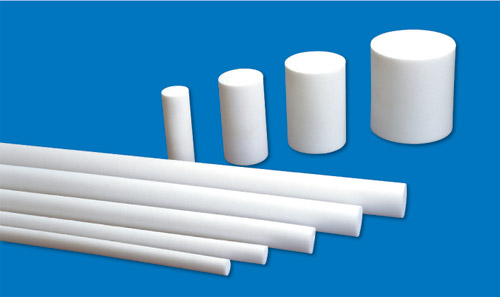
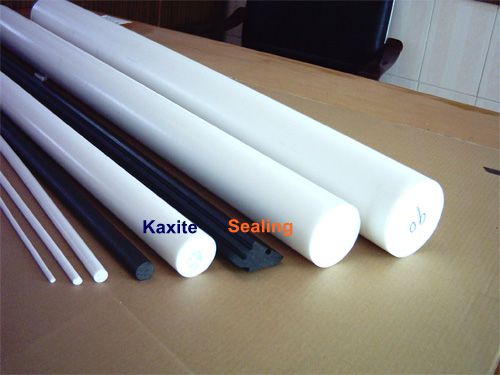
Polytetrafluoroethylene, widely recognized as PTFE, is a high-performance fluoropolymer renowned for its exceptional chemical resistance, low friction coefficient, and stability across an extreme temperature range. Among its various manufactured forms, the PTFE Rod stands out as a fundamental and versatile stock shape used in countless industrial, mechanical, and electrical applications. At Kaxite Sealing, we specialize in the precision manufacturing of high-grade PTFE rods, ensuring our clients receive material that meets the most demanding specifications for purity, consistency, and performance.
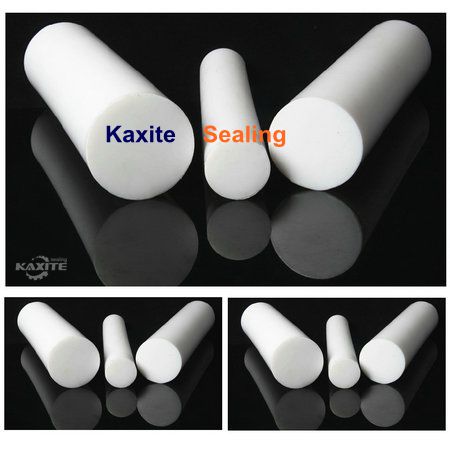
A PTFE rod is a solid cylindrical bar extruded or molded from virgin PTFE polymer. It serves as a raw material for machinists and engineers who fabricate custom parts such as seals, bearings, bushings, insulators, and valve components. Its unique properties allow it to function reliably in environments where metals, rubbers, and other plastics would fail. The inherent "slipperiness" of PTFE provides excellent anti-stick and low-friction characteristics, while its inert nature makes it compatible with nearly all industrial chemicals and solvents.
The superior performance of our PTFE rods stems from a combination of physical and chemical properties unmatched by most engineering materials.
Kaxite Sealing offers a comprehensive range of PTFE rods in various grades, diameters, and lengths to suit diverse application needs. Below are the detailed specifications for our standard virgin PTFE rod offerings.
| Grade | Description | Key Features | Typical Applications |
|---|---|---|---|
| Virgin White | 100% pure, unpigmented PTFE without additives. | Highest purity, excellent chemical resistance, FDA compliant. | Seals, gaskets, medical devices, food processing parts, chemical linings. |
| Glass Filled | PTFE compounded with glass microspheres or fibers. | Improved compressive strength, reduced creep (cold flow), better wear resistance. | Heavy-duty bearings, bushings, thrust washers, piston rings. |
| Carbon Filled | PTFE compounded with carbon or graphite powder. | Enhanced conductivity, superior wear resistance, lower friction. | Electrical contacts, antistatic components, wear strips, seals for rotating shafts. | Stainless Steel Filled | PTFE compounded with fine stainless steel powder. | Greatly improved thermal conductivity, reduced wear, higher load capacity. | Heat exchanger components, high-load bearings, wear plates. |
| Bronze Filled | PTFE compounded with bronze powder. | Excellent wear resistance, high thermal conductivity, good compressive strength. | Bearings, slides, guides, and seals in high-load, low-speed applications. |
| Diameter (mm) | Diameter (Inches) | Standard Length (mm) | Standard Length (Inches) | Tolerance |
|---|---|---|---|---|
| 5 - 50 mm | 0.20" - 2.0" | 1000 mm | 39.4" | ±0.2 mm |
| 51 - 150 mm | 2.01" - 5.9" | 500 mm / 1000 mm | 19.7" / 39.4" | ±0.3% of diameter |
| 151 - 300 mm | 5.91" - 11.8" | 500 mm | 19.7" | ±0.5% of diameter |
| Property | Test Method | Value / Range | Unit |
|---|---|---|---|
| Density | ASTM D792 | 2.15 - 2.20 | g/cm³ |
| Tensile Strength | ASTM D638 | 25 - 35 | MPa |
| Elongation at Break | ASTM D638 | 300 - 500 | % |
| Compressive Strength (1% Deformation) | ASTM D695 | 12 | MPa |
| Coefficient of Friction (Dynamic, vs Steel) | ASTM D1894 | 0.04 - 0.10 | - |
| Continuous Service Temperature | - | -200 to +260 | °C |
| Melting Point | ASTM D3418 | 327 | °C |
| Dielectric Strength | ASTM D149 | 19.7 | kV/mm |
Q: What are the most common applications for a PTFE rod?
A: PTFE rods are machined into a vast array of components. Common uses include: gaskets and seals for chemical pumps and valves; bushings, bearings, and wear pads in machinery due to low friction; electrical insulators and standoffs; laboratory equipment components; non-stick rollers and guides in food and packaging lines; and piston rings in compressors. Their chemical inertness also makes them ideal for lining tanks and pipes.
Q: Can PTFE rods be used for food contact applications?
A: Yes, absolutely. Virgin, unpigmented PTFE is compliant with FDA (Food and Drug Administration) regulations for food contact surfaces under 21 CFR 177.1550. It is also often certified to USP Class VI for pharmaceutical applications. Kaxite Sealing's virgin white PTFE rods are produced from certified raw materials suitable for these sensitive industries.
Q: What is the difference between extruded and molded PTFE rods?
A: Extruded rods are created by forcing PTFE paste through a die, resulting in a rod with a slightly grainier texture and very good length availability. Molded rods are formed by compressing PTFE powder in a mold under high pressure, then sintering. Molded rods typically offer more isotropic (uniform in all directions) properties, higher density, and better dimensional stability for precise machining. Kaxite Sealing provides both types, selecting the manufacturing method best suited to the required diameter and final application.
Q: Is PTFE rod easy to machine?
A: PTFE is generally considered one of the easier plastics to machine due to its softness and plasticity. However, its low thermal conductivity and high thermal expansion require specific techniques. Sharp, highly polished tools with positive rake angles are essential. High cutting speeds with low feed rates are recommended to prevent material from "gumming up." Adequate cooling with air or a coolant is necessary to manage heat buildup. Proper fixturing is also important to avoid deformation due to its low modulus of elasticity.
Q: How does the "cold flow" or creep property of PTFE affect its use?
A: Cold flow refers to PTFE's tendency to deform slowly under a sustained mechanical load, even at room temperature. This is a key design consideration. For static seals, proper gland design with limited compression is critical. For bearing applications, the load must be kept within recommended limits. This property is why filled PTFE grades (like glass or bronze) are often preferred for mechanical parts, as the fillers significantly reduce creep and improve load-bearing capacity.
Q: Can PTFE rods be bonded or welded to other materials?
A: Bonding PTFE is notoriously difficult due to its non-stick nature. Standard adhesives do not work. Successful bonding requires special surface treatments, such as sodium etching (a chemical process) or plasma treatment, to make the surface receptive to specialized PTFE adhesives. Welding (heat sealing) is possible for joining PTFE to itself using specialized hot gas or heated tool welding equipment. For most assemblies, mechanical fastening is the preferred and simplest method.
Q: When should I choose a filled PTFE rod over a virgin PTFE rod?
A: Choose a filled PTFE rod when your application requires enhanced mechanical properties. Virgin PTFE is best for pure chemical resistance, high purity, and electrical insulation. If your part will experience high continuous loads (bearings, bushings), select glass or bronze-filled to reduce creep and wear. For applications requiring thermal conductivity (heat exchangers) or electrical conductivity, choose stainless steel or carbon-filled grades, respectively. Carbon-filled also offers excellent wear resistance for dynamic seals.
Q: What are the temperature limits for PTFE rods, and what happens if they are exceeded?
A> The recommended continuous service temperature for PTFE is -200°C to +260°C. Short-term exposure up to 300°C is possible. Below -200°C, it remains flexible but may become more brittle upon impact. Above 260°C, PTFE begins to thermally degrade, releasing faint fumes. Prolonged exposure above 300°C leads to significant decomposition. It does not melt and flow like a thermoplastic; at its melting point (327°C), it transitions to a transparent gel but remains a solid mass until it decomposes at higher temperatures.
Q: Does Kaxite Sealing offer custom-colored or custom-sized PTFE rods?
A: Yes, Kaxite Sealing provides extensive customization options. We can produce rods in various colors for coding or aesthetic purposes using FDA-compliant pigments. We also manufacture rods in non-standard diameters and lengths to meet unique project requirements. For large-volume orders, we can tailor the sintering and processing parameters to achieve specific mechanical property targets. Contact our engineering support team with your specifications for a custom quote.
Copyright © 2015-2025 Ningbo Kaxite Sealing Materials Co., Ltd. All Rights Reserved.