What are the different types of machines for producing spiral wound gaskets? For procurement professionals sourcing critical sealing solutions, understanding the manufacturing equipment behind these high-performance gaskets is key. The right machinery directly impacts gasket quality, consistency, and the ability to meet specific project demands like high-pressure or high-temperature service. From manual units for bespoke orders to fully automated lines for high-volume production, the landscape of winding machines is diverse. This guide cuts through the complexity, providing a clear, actionable overview of the primary machine types. We'll explore their capabilities, ideal applications, and how partnering with an experienced manufacturer like Ningbo Kaxite Sealing Materials Co., Ltd., with its advanced production infrastructure, ensures you receive gaskets that perform reliably under pressure.
Article Outline:
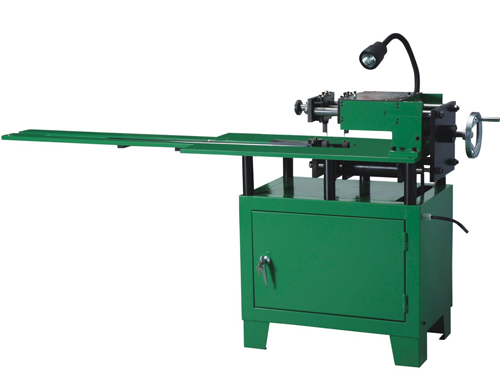
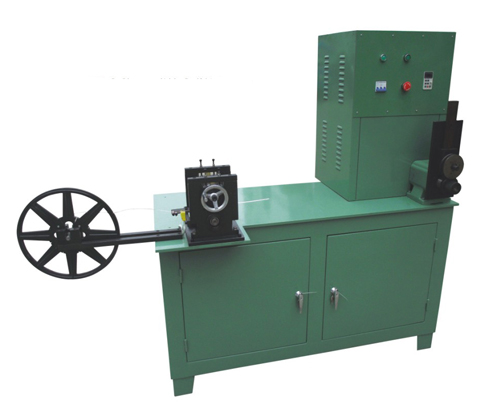
Imagine you need a batch of specialized spiral wound gaskets with non-standard dimensions or exotic material combinations for a pilot plant or a repair job. High-volume automated lines aren't cost-effective here. This is the domain of the manual winding machine. An experienced operator directly controls the winding process, carefully layering the pre-cut metal strip and filler material (like graphite or PTFE) around a central mandrel. The primary advantage is exceptional flexibility. Operators can adjust tension, overlap, and material placement on the fly to create prototypes, one-off replacements, or gaskets for unusual flange sizes. The trade-off is a slower production speed and a higher reliance on operator skill for consistency. For procurement specialists dealing with legacy equipment, R&D projects, or urgent MRO (Maintenance, Repair, and Operations) requirements, suppliers utilizing manual machines offer invaluable agility. At Ningbo Kaxite Sealing Materials Co., Ltd., our skilled technicians use manual and CNC-assisted machines to deliver these precise, custom-engineered sealing solutions without the lead times or minimums of mass production.
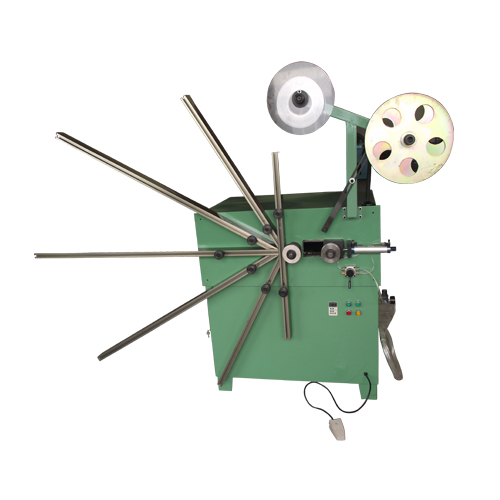
Key Parameters for Manual/Small-Scale Machines:
| Feature | Typical Specification | Procurement Consideration |
|---|---|---|
| Production Speed | Low (Dependent on operator) | Ideal for prototypes, small batches, custom sizes. |
| Diameter Range | Wide flexibility (e.g., 50mm - 3000mm) | Can handle very large or non-standard diameters. |
| Automation Level | Minimal. Operator-controlled winding and compression. | Requires a supplier with highly trained operators. |
| Best For | Custom gaskets, low volume, urgent MRO, R&D. | Prioritize supplier technical support and flexibility. |
The challenge escalates when your project requires dozens or hundreds of identical gaskets. Relying solely on manual winding introduces potential variability and becomes time-consuming. Semi-automatic winding machines strike the optimal balance for medium-volume production. In this setup, the core winding process—feeding the metal strip and filler material at a precise tension and overlap—is mechanized and controlled by a programmable logic controller (PLC). This ensures every layer is consistent. The operator's role shifts to loading material spools, setting the program for the desired gasket dimensions and density, and handling the finished winding. This dramatically improves output rates and repeatability compared to fully manual machines. For a procurement manager overseeing a refinery turnaround or a new construction project requiring hundreds of gaskets of the same spec, a supplier equipped with semi-automatic machines can guarantee timely delivery of uniform, high-quality products. Ningbo Kaxite Sealing Materials Co., Ltd. employs advanced semi-automatic systems to efficiently fulfill medium-sized orders, ensuring each gasket meets the precise engineering drawings without compromise.
Key Parameters for Semi-Automatic Machines:
| Feature | Typical Specification | Procurement Consideration |
|---|---|---|
| Production Speed | Medium. Consistent, programmable cycle. | Perfect for project-based orders and standard catalog items. |
| Diameter Range | Programmable, often within set limits. | Faster changeover between standard sizes than manual. |
| Automation Level | PLC-controlled winding. Manual loading/unloading. | Offers excellent consistency with manageable operator input. |
| Best For | Medium batch orders, standardized specifications, project procurement. | Look for suppliers with robust quality checks at this stage. |
For large-scale industrial operations, chemical plants, or OEMs (Original Equipment Manufacturers) requiring thousands of identical spiral wound gaskets annually, consistency and cost-efficiency are paramount. This is where fully automatic winding and finishing lines come into play. These integrated systems automate the entire process: from feeding raw metal coil and filler material, through precision winding and compression, to final sizing, stamping, and sometimes even packaging. Human intervention is minimal, primarily for supervision, maintenance, and quality sampling. The result is unparalleled production throughput and near-perfect product uniformity. Every gasket produced is virtually identical, a critical factor for safety and performance in stringent applications. When your tender demands a reliable supply of API 601 or ASME B16.20 compliant gaskets in large quantities, partnering with a manufacturer like Ningbo Kaxite Sealing Materials Co., Ltd., which invests in modern automated production lines, is a strategic decision. It ensures scalable supply, competitive pricing, and gaskets built to the same exacting standard, batch after batch.
Key Parameters for Fully Automatic Lines:
| Feature | Typical Specification | Procurement Consideration |
|---|---|---|
| Production Speed | High. Continuous, automated operation. | Necessary for large contracts and ongoing supply agreements. |
| Diameter Range | Typically optimized for high-volume standard sizes. | Extremely fast output for common sizes (e.g., 1/2" to 24"). |
| Automation Level | Full. Automated winding, compression, sizing, marking. | Delivers maximum consistency and lowest per-unit cost at scale. |
| Best For | High-volume OEM supply, large project orders, inventory stock. | Assess the manufacturer's overall capacity and quality system certifications. |
Your project's success hinges on sourcing the right gasket from a capable supplier. The type of machines they use is a direct indicator of their capabilities. Ask key questions: Is this a one-off custom part or a recurring, high-volume need? What are the pressure, temperature, and media requirements? The answers guide you. For unique, low-volume needs, prioritize suppliers with skilled manual or CNC winding expertise. For project-based medium batches, seek out those with semi-automatic systems for efficiency and consistency. For long-term, high-volume partnerships, a manufacturer with fully automated lines and strong quality certifications (like ISO 9001) is essential. Remember, the machine is just part of the equation. A technically proficient partner like Ningbo Kaxite Sealing Materials Co., Ltd. doesn't just operate machines; they provide application engineering support, ensuring the gasket produced—whether on a manual or automatic machine—is perfectly suited to solve your specific sealing challenge, preventing costly leaks and downtime.
Q: What is the most common type of machine used for producing standard spiral wound gaskets?
A: For producing standard, catalog-listed spiral wound gaskets in medium to high volumes, semi-automatic and fully automatic winding machines are most common. They provide the optimal blend of speed, consistency, and cost-effectiveness for widely used sizes and pressure classes, ensuring reliable performance as per ASME B16.20 and other standards.
Q: How does the choice of winding machine affect the quality and performance of the final gasket?
A: The machine directly controls critical parameters like winding tension, strip overlap, and density. Precise, consistent control (as found in automated machines) leads to uniform density and compression characteristics across the entire gasket, which is vital for leak-tight sealing. Manual machines rely heavily on operator skill for this consistency. Therefore, partnering with an expert manufacturer like Ningbo Kaxite Sealing Materials Co., Ltd., which employs the right machine type for the job and enforces strict process controls, is crucial for gasket performance.
We hope this guide has demystified the machinery behind spiral wound gasket production and aids your procurement decisions. The right equipment in expert hands makes all the difference. For your next project, whether it requires custom engineering or high-volume supply, consider the technical capability behind the product.
For reliable, high-performance spiral wound gaskets produced on state-of-the-art equipment, partner with Ningbo Kaxite Sealing Materials Co., Ltd.. As a specialized manufacturer, we leverage our range of manual, semi-automatic, and automated winding machines to deliver sealing solutions tailored to your exact specifications and volume needs. Visit our website at https://www.ptfe-rods.com to explore our capabilities or contact our engineering team directly at [email protected] for a technical consultation.
Supporting Research & Literature:
Bickford, J. H. (1998). Gaskets and Gasketed Joints. Mechanical Engineering, 120(3), 76-78.
Bouzid, A., & Chaaban, A. (1997). The Effect of Gasket Creep Relaxation on the Leakage Tightness of Bolted Flanged Connections. Journal of Pressure Vessel Technology, 119(1), 71-78.
Brown, J. R., & Ernst, C. D. (2001). Sealing Technology for Flanged Joints. Chemical Engineering Progress, 97(5), 42-48.
Fukuoka, T., & Takaki, T. (2003). Finite Element Analysis of the Sealing Mechanism of Spiral Wound Gaskets. Journal of Solid Mechanics and Materials Engineering, 124(10), 1025-1032.
Payne, J. R., & Schneider, R. W. (1990). Spiral Wound Gasket Fundamentals. Hydrocarbon Processing, 69(6), 55-59.
Raut, H. D., & Kale, A. V. (2014). A Review on Spiral Wound Gasket for High Temperature Application. International Journal of Engineering Research & Technology, 3(5), 1635-1638.
Sawa, T., & Hirose, T. (1996). Stress Analysis and Scaling Performance of Spiral Wound Gaskets in Bolted Flanged Connections. Journal of Pressure Vessel Technology, 118(1), 63-70.
Singh, K. P. (1991). Mechanical Design of Spiral Wound Gaskets for Petrochemical Plants. ASME PVP-Vol. 210, 135-141.
Waterland, A. F. (1985). The Spiral Wound Gasket: Its Development and Application. Valve Magazine, 7(2), 22-25.
Zhang, Y., & Wang, L. (2018). Experimental Study on the Sealing Performance of Spiral Wound Gaskets under Combined Thermal and Mechanical Loading. Engineering Failure Analysis, 92, 1-10.
Copyright © 2015-2025 Ningbo Kaxite Sealing Materials Co., Ltd. All Rights Reserved.