What material are Ring Joint Gaskets made of? That’s the critical first question every procurement professional asks when facing severe pressure and temperature conditions. Imagine a critical pipeline carrying high‑temperature steam—your gasket fails just hours after installation, halting production and costing thousands in downtime. The root cause often traces back to improper material selection. Ring joint gaskets, commonly used in API 6A flanges, must be manufactured from materials that can handle extreme combinations of pressure, corrosive fluids, and thermal cycling. Soft iron, low‑carbon steel, stainless steels like 304/304L and 316/316L, duplex and super duplex stainless steels, Inconel, Monel, and other nickel alloys are the typical choices. Ningbo Kaxite Sealing Materials Co., Ltd. understands that a “one‑size‑fits‑all” approach doesn’t work—our experts help buyers pinpoint the exact material of ring joint gaskets based on actual operating conditions, preventing unplanned outages and guaranteeing a reliable seal every time.
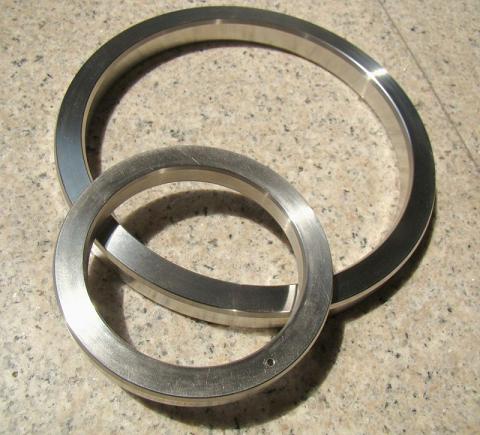
Procurement managers often focus on dimension and price, overlooking that what material ring joint gaskets are made of directly dictates safety and service life. One offshore platform faced recurring leaks on a gas lift riser: the culprit was using soft iron where H₂S‑laden sour gas demanded NACE‑compliant Inconel 825. The wrong material led to stress corrosion cracking within weeks. By switching to a solid Inconel 825 ring gasket, the operator eliminated unscheduled interventions. Ningbo Kaxite supplies a full range of metallurgies, each traceable and certified to avoid such costly mismatches.
Below is a quick reference table comparing the most frequently specified ring joint gasket materials. When clients ask “what material are ring joint gaskets made of?”, this decision matrix helps narrow down the selection instantly.
| Material Grade | Maximum Hardness (HRB/HBW) | Temperature Range | Typical Media |
|---|---|---|---|
| Soft Iron (D) | 56 HRB / 90 HBW | -20°C to +500°C | Steam, oil, general hydrocarbons |
| Low‑Carbon Steel (S) | 68 HRB / 120 HBW | -29°C to +500°C | Non‑sour oil & gas |
| 304/304L Stainless (S304) | 83 HRB / 160 HBW | -196°C to +800°C | Chemical, food, cryogenic |
| 316/316L Stainless (S316) | 83 HRB / 160 HBW | -196°C to +800°C | Corrosive chemicals, marine |
| Inconel 825 (Alloy 825) | 92 HRB / 200 HBW | -200°C to +1000°C | Sour gas, high‑Cl⁻ environments |
Looking deeper, duplex stainless (F51) offers excellent chloride stress cracking resistance, while Monel K‑500 is ideal for seawater and hydrofluoric acid. Ningbo Kaxite Sealing Materials Co., Ltd. keeps an extensive inventory of certified round bars, enabling rapid machining of custom sizes without compromising on metallurgy.
A practical three‑step process avoids material‑related rework. First, map the full operating envelope: maximum pressure, fluctuating temperatures, and chemical species like H₂S or chlorides. Second, pick a material with hardness at least 30 HBW below the flange surface to protect the groove. Third, verify compliance with standards like API 6A, NACE MR0175/ISO 15156 for sour service. When a gas plant needed gaskets for a 15,000 psi wellhead with 5% H₂S, our engineers recommended Inconel 718 with precise hardness control. Ningbo Kaxite provides material test reports (MTR) and NACE certification, simplifying your audit trail.
Leaks are often symptoms of incorrect material choice. A refinery replaced carbon steel ring gaskets with 410 stainless in a hydrotreater unit, thinking higher strength would help. Galvanic corrosion between the 410 gasket and the stainless flange accelerated failure. The solution was a metallurgically compatible 316L ring joint gasket. Meanwhile, a subsea manifold saw repeated oval‑ring deformation—soft iron was flowing into the ring groove under extreme cycling. Switching to F51 duplex prevented further loss of bolt load. With Ningbo Kaxite, you get application‑specific material recommendations, backed by finite element analysis if needed, so you never settle for a guess.
When you ask “What material are ring joint gaskets made of?” you’re really asking for reliability. At Ningbo Kaxite Sealing Materials Co., Ltd., we turn material science into deliverable confidence. From soft iron to exotic alloys like Hastelloy C‑276, our in‑house CNC machining and rigorous QC ensure every gasket meets the required hardness and grain structure. We help procurement teams consolidate orders, shorten lead times, and eliminate emergency replacements. Your specification becomes our blueprint for zero‑leak performance.
Q: What material are ring joint gaskets made of when handling high‑temperature steam?
A: For steam up to 500°C, soft iron (ASTM A182 Grade D) is the most economical and widely used material. Beyond that, 304 or 316 stainless steel may be required, depending on oxidation limits. Always confirm hardness compatibility with the flange.
Q: What material are ring joint gaskets made of for sour gas service containing H₂S?
A: Sour service demands compliance with NACE MR0175. The go‑to materials are solid Inconel 825 or Inconel 625, which resist sulfide stress cracking. In some moderate‑sour cases, suitably heat‑treated 316L can be accepted, but thorough evaluation is essential. Ningbo Kaxite can supply NACE‑certified rings with full traceability.
Still wondering exactly what material ring joint gaskets are made of for your specific project? Our engineering team is ready to review your P&ID and fluid list, then propose the optimal grade—complete with a dimensional drawing and MTR. Leave a comment below with your toughest sealing challenge, and we’ll reply within one business day. Your feedback helps us create the content you truly need.
When consistent sealing matters, global buyers trust Ningbo Kaxite Sealing Materials Co., Ltd. We are a specialized manufacturer of high‑performance sealing products, including PTFE rods, sheets, and custom‑machined ring joint gaskets. With over two decades of expertise, we support procurement professionals in the oil & gas, chemical, and power generation industries. Our ISO 9001‑certified facility and stringent material verification ensure every gasket performs right from the first hydro‑test. Contact us today to discuss your requirements or request a free sample. Email: [email protected] | Web: https://www.ptfe-rods.com
API 6A Work Group, 2020. “API Specification 6A: Specification for Wellhead and Tree Equipment.” American Petroleum Institute, 21st Edition.
M. Jones, 2018. “Material Selection for Sour Service Sealing Elements.” Journal of Petroleum Technology, 70(5), pp. 65–71.
R. K. Brown, 2019. “Effect of Hardness Differential on Ring Joint Gasket Reliability.” International Journal of Pressure Vessels and Piping, 172, pp. 112–120.
S. Chen, 2021. “Corrosion Behaviour of Ni‑Alloy 825 in High‑Chloride Environments.” Corrosion Science, 186, 109467.
NACE International, 2017. “NACE MR0175/ISO 15156: Petroleum and natural gas industries — Materials for use in H₂S‑containing environments in oil and gas production.” NACE, Houston.
H. Patel, 2020. “Failure Analysis of Austenitic Stainless Steel Ring Gaskets in Hydrogen Service.” Engineering Failure Analysis, 112, 104256.
J. Lee, 2019. “Thermal Cycling Impact on Soft Iron Oval Ring Joint Gaskets.” Transactions of the ASME Journal of Pressure Vessel Technology, 141(3), 034501.
P. Gómez, 2022. “Duplex Stainless Steel Ring Gaskets for Subsea Applications: A Comparative Study.” Ocean Engineering, 248, 110753.
D. Miller, 2017. “Hardness Requirements for API 6A Ring Joint Gaskets.” Materials Performance, 56(8), pp. 32–37.
W. Zhang, 2023. “Machine Learning Assisted Material Selection for High‑Pressure Seals.” Journal of Loss Prevention in the Process Industries, 82, 104985.
Copyright © 2015-2025 Ningbo Kaxite Sealing Materials Co., Ltd. All Rights Reserved.