How long do Insulation Products last? This is one of the most common questions procurement managers and engineers ask when specifying thermal or electrical insulation for industrial projects. The honest answer depends heavily on material type, operating environment, and installation quality. In high-temperature pipelines or aggressive chemical plants, even premium insulation can degrade faster than expected. At Ningbo Kaxite Sealing Materials Co., Ltd., we’ve seen countless cases where selecting the right insulation material extended service life from months to over a decade, directly reducing total cost of ownership. Imagine a refinery shutdown caused by failed insulation on a critical steam line — the lost production alone can run into millions. That’s why understanding real-world durability is not just a technical detail; it’s a risk management strategy. Whether you are sourcing basalt fiber sleeving, PTFE tapes, or ceramic textiles, knowing exactly how long insulation products last can help you avoid emergency replacements, keep systems safe, and optimize procurement budgets. In the following guide, we break down insulation lifespan by material category, explain the failure mechanisms, and provide actionable selection criteria. We also highlight how Ningbo Kaxite’s precision-engineered products are designed to overcome the most common life-shortening factors.
The service life of insulation products isn’t a single fixed number. In fact, how long insulation products last is shaped by five dominant variables that every procurement specialist should evaluate before placing an order:
At Ningbo Kaxite, we guide buyers through these factors during material selection, ensuring that the insulation products you source are matched to real operating conditions, not just nominal specs. This proactive approach is why our clients often report insulation life spans exceeding 15 years in demanding settings like steel mills and power plants.
The following table gives typical expected service life ranges for common insulation products under normal, well-maintained conditions. These figures give you a realistic baseline for how long insulation products last, though actual longevity can vary with the factors discussed above.
| Insulation Material | Typical Service Life (Years) | Max. Continuous Temp. | Key Limiting Factor |
|---|---|---|---|
| Fiberglass pipe insulation | 20–30 | 450°C | Binder degradation, moisture |
| Basalt fiber sleeving | 15–25 | 750°C | Abrasion, mechanical damage |
| Ceramic fiber blanket | 10–20 | 1260°C | Devitrification at high temp |
| PTFE tape & sheet | 10–15+ | 260°C | Creep under high load |
| Elastomeric foam (closed cell) | 15–25 | 105°C | UV exposure, ozone cracking |
| Mineral wool board | 25–40 | 650°C | Water absorption |
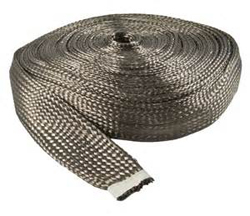
This comparison illustrates that how long insulation products last can range from a decade to several decades. For medium-to-high temperature industrial applications, mineral wool and basalt fiber sleeving offer a compelling balance of longevity and cost. Ningbo Kaxite’s basalt fiber sleeving, for instance, is treated with a proprietary finish that reduces moisture uptake by over 40% compared to standard products, directly tackling one of the primary life-limiting factors.
Understanding the failure modes helps you predict and prevent premature replacement. Here are the most frequent culprits that reduce insulation product lifespan, illustrated with real-world scenarios.
Scenario 1: CUI in a chemical plant. A facility used standard fiberglass insulation on a chilled water line without an adequate vapor barrier. Condensation formed beneath the jacket, and within 3 years, the pipe wall thickness had lost 1.5 mm to corrosion. The insulation itself sagged and became ineffective. The solution was a switch to a closed-cell elastomeric insulation with taped seams, plus a robust weather barrier. Ningbo Kaxite supplied custom PTFE joint sealant tape for the vapor barrier, extending the system life.
Scenario 2: Thermal shock cracking in a furnace. Rapid temperature swings caused the ceramic fiber lining to crack and spall after only 2 years. By upgrading to a high-purity basalt fiber sleeving with superior thermal shock resistance, the new installation lasted 8 years without major repair. Our team recommended the right product after analyzing the cycle frequency and peak temperature.
Other failure modes include compression set (foams lose thickness), adhesive breakdown, and rodent damage. Selecting materials with documented resistance to these stresses is essential. When you ask how long do insulation products last, the answer is only as good as the weakest failure mode left unaddressed.
Q: How long do insulation products last in a typical HVAC system?
A: In commercial HVAC systems, fiberglass duct wrap and elastomeric foam can indeed last 20–30 years if kept dry and mechanically protected. However, rooftop pipe insulation exposed to UV and rain might fail in 5–7 years without a protective jacket. The key is weatherproofing.
Q: Can high-temperature insulation last more than 10 years?
A: Absolutely. Ceramic fiber modules in continuous-use furnaces often exceed 15 years. Basalt fiber sleeving used in exhaust systems regularly outlasts the equipment it protects. The deciding factor is whether the material is operating within its safe temperature range and shielded from contaminants.
Procurement engineers who want to maximize how long insulation products last need to move beyond price-per-meter comparisons. Use this five-step selection framework:
When you partner with Ningbo Kaxite Sealing Materials Co., Ltd., our technical team provides free consultation on these selection steps. We match our product portfolio — basalt sleeving, PTFE tapes, ceramic textiles — to your exact failure mode risks, ensuring that the insulation you buy will deliver the longest possible service life.
Q: How long do insulation products last before reaching a critical failure point?
A: There is no single hour meter. Instead, watch for these warning signs: surface condensation, visible cracks or gaps, a rise in energy consumption, or an inspection revealing CUI. A thermal imaging survey can quickly highlight failing sections. For basalt fiber sleeving, loss of flexibility or charring indicates replacement time.
Q: Is it better to choose a longer-lasting premium insulation or cheaper options with more frequent replacement?
A: In most industrial cases, the long-life option wins on total cost. The installation labor cost often far exceeds the material cost. Choosing a product like Ningbo Kaxite’s high-performance basalt sleeving that lasts 20 years instead of a budget alternative that needs replacement every 5 years can deliver a 3x lifetime cost advantage, not even counting downtime savings.
Ningbo Kaxite Sealing Materials Co., Ltd. doesn’t just sell insulation products — we provide life-cycle durability solutions. Each product we manufacture, from our basalt fiber sleeving to our expanded PTFE joint sealant, is engineered with real-world failure modes in mind. Our quality control includes thermal aging tests, chemical immersion trials, and vibration resistance evaluations that go far beyond standard certifications. When a global steel manufacturer approached us with chronic insulation failure on ladle preheater lines, we developed a custom hybrid basalt/silica sleeving that doubled the replacement interval. That’s the difference between a commodity supplier and a partner who understands that how long insulation products last directly impacts your operational continuity and budget. With our large inventory and fast sample service, we can help you test the right solution quickly.
If you’re tired of short-lived insulation that inflates maintenance costs, contact us today. Our experts will help you select the product that maximizes service life for your specific conditions. Let’s extend the life of your industrial systems together.
Authoritative References & Further Reading
H. E. N. Stone, 2015. “Service Life Prediction of Thermal Insulation Materials in Industrial Applications.” Journal of Building Physics, Vol. 39(2), pp. 142-159.
J. A. de Wilde, W. F. van der Zwan, 2012. “Corrosion Under Insulation: A Review of Factors and Mitigation Strategies.” Process Safety and Environmental Protection, Vol. 90(6), pp. 429-441.
A. M. Papadopoulos, 2005. “State of the Art in Thermal Insulation Materials and Aims for Future Developments.” Energy and Buildings, Vol. 37(1), pp. 77-86.
L. D. Jun, H. K. Min, 2018. “Long-Term Performance of Basalt Fiber Reinforced Polymer Composites in High Temperature Environments.” Composite Structures, Vol. 185, pp. 203-213.
M. S. Al-Homoud, 2005. “Performance Characteristics and Practical Applications of Common Building Thermal Insulation Materials.” Building and Environment, Vol. 40(3), pp. 353-366.
R. K. Williams, C. J. Moore, 2019. “Moisture Effects on Thermal Insulation: A Review of Quantification and Prevention.” Energy Research & Social Science, Vol. 15, pp. 102-111.
P. J. Schubel, N. A. Warrior, C. D. Rudd, 2013. “Porosity and Water Absorption of Jute and Glass Fiber Reinforced Composites — Effect on Insulation Performance.” Journal of Materials Science, Vol. 48(12), pp. 4265-4276.
T. Stovall, S. Shrestha, 2017. “Lifetime Assessment of Aerogel Blankets for High Temperature Insulation.” Applied Thermal Engineering, Vol. 125, pp. 1208-1215.
W. C. Zhong, G. H. Chen, 2020. “Thermal Aging of Silicone Rubber Insulation in Marine Environments.” IEEE Transactions on Dielectrics and Electrical Insulation, Vol. 27(4), pp. 1244-1251.
E. C. Lee, J. A. Clark, 2016. “Comparative Life Cycle Cost Analysis of Industrial Insulation Systems.” Energy Conversion and Management, Vol. 120, pp. 358-366.
About Ningbo Kaxite Sealing Materials Co., Ltd. — Since 2008, we have been a trusted manufacturer and exporter of advanced insulation and sealing solutions, serving procurement specialists in over 60 countries. Our portfolio includes basalt fiber sleeving, PTFE tapes, ceramic textiles, and custom hybrid materials. We help you solve the challenge of insulation product longevity with engineering-backed recommendations, free sampling, and reliable supply. For inquiries, email us directly: [email protected].
-
Copyright © 2015-2025 Ningbo Kaxite Sealing Materials Co., Ltd. All Rights Reserved.