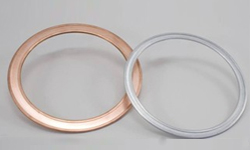
In the demanding world of industrial sealing, where pressure, temperature, and corrosive media are constant adversaries, finding a reliable and durable sealing solution is paramount. This is where the Molded Packing Ring stands out as a cornerstone of modern sealing technology. Unlike traditional braided or die-cut packing, a molded packing ring is precisely engineered and formed in a mold under controlled heat and pressure. This manufacturing process creates a product with superior dimensional consistency, enhanced density, and uniform mechanical properties throughout its entire structure. For engineers and maintenance professionals seeking to minimize downtime, reduce leakage, and extend the service life of equipment, understanding the specifications and applications of high-performance molded rings is essential.
At Kaxite Sealing, we leverage over decades of material science expertise to produce Molded Packing Rings that meet the most rigorous international standards. Our rings are not merely components; they are precision-engineered sealing systems designed for specific service conditions.
The effectiveness of a Molded Packing Ring is defined by a set of critical parameters. Selecting the correct ring requires a careful match between these specifications and your application's operating environment.
Kaxite Sealing offers a range of material compounds to address diverse industrial needs. Each material imparts unique characteristics to the sealing ring.
The following table summarizes the core technical specifications for standard Kaxite Sealing Molded Packing Rings. Custom formulations are available for specialized requirements.
| Parameter | Typical Range / Value | Measurement Standard | Significance for Application |
|---|---|---|---|
| Density | 1.1 - 2.2 g/cm³ | ASTM D3800, ISO 9080 | Determines the ring's structural integrity, extrusion resistance, and ability to conform to gland surfaces. |
| Temperature Range | -328°F to 3000°F (-200°C to 1650°C)* | ASTM E831 | Defines the operational limits; material-specific. *Upper limit for graphite in inert gas. |
| Pressure Rating | Up to 3000 psi (200 bar) | ANSI/FCI 91-1, ISO 5208 | Maximum sealing pressure capability under defined temperature and media conditions. |
| pH Range | 0 - 14 (Material Dependent) | N/A | Indicates chemical compatibility across the acidity-alkalinity spectrum. PTFE covers full range. |
| Compression Set | <15% - 40% | ASTM F36 | Measures the ring's ability to recover after compression; lower is better for long-term sealing force. |
| Thermal Conductivity | 5 - 150 W/m·K | ASTM E1225 | Critical for heat dissipation in high-temperature applications; graphite excels here. |
Kaxite Sealing manufactures molded rings in a vast array of standard ASME, DIN, and JIS flange sizes, as well as custom dimensions. Precision molding ensures tight tolerances.
Q: What is the main advantage of a molded packing ring over a spiral-wound or braided packing?
A: The primary advantage lies in its structural homogeneity and consistency. The molding process creates a ring with uniform density and mechanical properties throughout, eliminating the risk of layered separation or density variations found in wound products. This results in more predictable sealing performance, better extrusion resistance, and often a longer, more reliable service life, especially in high-pressure or thermal cycling applications.
Q: Can Kaxite Sealing Molded Packing Rings be used in rotary equipment like pumps and mixers?
A: Yes, absolutely. While often associated with static flange seals, specific formulations of molded rings, particularly those made from reinforced PTFE or aramid fibers, are excellent for dynamic sealing. Their uniform structure provides consistent friction and wear characteristics, leading to stable operation and reduced shaft or sleeve wear. It is crucial to select the material grade specifically designed for rotary service and ensure proper gland design and installation.
Q: How do I select the correct material for my application involving sulfuric acid at elevated temperatures?
A: For aggressive chemicals like sulfuric acid, especially at elevated temperatures, material selection is critical. Expanded PTFE (ePTFE) or pure, high-density PTFE molded rings from Kaxite Sealing are generally the preferred choice. PTFE is virtually inert to sulfuric acid at a wide range of concentrations and temperatures. For very high temperatures beyond PTFE's limit, our specially impregnated or reinforced graphite materials may be evaluated based on exact acid concentration and aeration. We strongly recommend consulting our engineering team with your specific operating parameters (concentration, temperature, pressure) for a definitive recommendation.
Q: Are these rings suitable for food, beverage, or pharmaceutical (FDA/USP Class VI) applications?
A: Yes. Kaxite Sealing offers a dedicated line of compliant molded packing rings. We use FDA-listed ingredients and PTFE compounds that meet FDA 21 CFR 177.1550 and USP Class VI requirements for elastomeric components. These rings are manufactured in a controlled, clean environment to ensure they meet the stringent hygiene and non-toxicity standards required in these sensitive industries.
Q: What is the proper installation procedure for a molded graphite packing ring?
A: Proper installation is key to performance. First, ensure the gland cavity and mating surfaces are clean, dry, and free of old packing debris. For graphite rings, they are often supplied in a pre-compressed state. Handle them carefully to avoid cracking or tearing. Do not lubricate graphite rings. Place the ring squarely into the gland. For multiple-ring sets, stagger the joints by 90 or 180 degrees. Follow the manufacturer's torque specifications for the flange bolts, using a criss-cross pattern to ensure even compression. Re-torque after the first heat cycle, as recommended by Kaxite Sealing's installation guidelines.
Q: Can I get custom-shaped molded packing rings, not just standard O-rings or rectangles?
A: Yes, the molding process at Kaxite Sealing is highly adaptable to custom geometries. This includes special profiles like delta shapes, octagonal rings, kidney shapes, or complex combined sealing/damping profiles. By using custom molds, we can produce rings that perfectly fit unique gland designs, solve specific sealing challenges, or replace obsolete part numbers. Providing a detailed drawing or sample is the starting point for our custom manufacturing service.
The versatility of Kaxite Sealing Molded Packing Rings makes them indispensable in countless sectors. In the oil & gas industry, they seal critical flanges on offshore platforms, refinery heat exchangers, and high-pressure valve stems. Chemical processing plants rely on their chemical resistance in reactors, pump housings, and pipe connections. In power generation, from traditional fossil fuel to nuclear and emerging geothermal plants, they contain steam, condensate, and cooling fluids under extreme temperatures. They are also found in marine engines, aerospace systems, heavy machinery, and any application where a reliable, leak-free seal is non-negotiable. The precision and reliability of a Kaxite Sealing molded ring provide engineers with a trusted solution to maintain operational integrity, safety, and environmental compliance.
Copyright © 2015-2025 Ningbo Kaxite Sealing Materials Co., Ltd. All Rights Reserved.