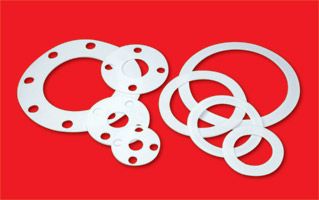
What are the Common Applications for PTFE Tubing? If you're sourcing components for demanding industrial or scientific projects, you've likely encountered PTFE tubing. Known for its exceptional chemical resistance, wide temperature tolerance, and non-stick properties, this versatile material is a cornerstone in countless sectors. From ensuring the purity of sensitive fluids in a pharmaceutical lab to protecting wiring in a high-temperature aerospace engine, PTFE tubing solves critical challenges where other materials fail. Its inert nature makes it indispensable for handling aggressive chemicals, while its electrical insulation properties are vital for protecting sensitive electronics. Understanding its common applications is key to selecting the right component for reliability, safety, and cost-effectiveness. This guide will explore the primary uses of PTFE tubing and highlight how a reliable supplier like Ningbo Kaxite Sealing Materials Co., Ltd. provides solutions that meet these rigorous demands.
Article Outline:
In chemical plants and laboratories, transferring aggressive acids, solvents, or ultra-pure process fluids poses a major risk. Standard tubing can degrade, contaminate the fluid, or even fail catastrophically. This is a critical pain point for procurement specialists who need to ensure plant safety and product purity.
Solution: PTFE tubing is the definitive answer. Its nearly universal chemical resistance ensures long-term integrity when exposed to harsh substances. Its non-stick, low-friction inner surface prevents buildup and allows for complete fluid evacuation, which is crucial for batch processes and cleaning. For high-purity applications like semiconductor manufacturing, PTFE's inertness prevents leaching of contaminants into sensitive chemicals.
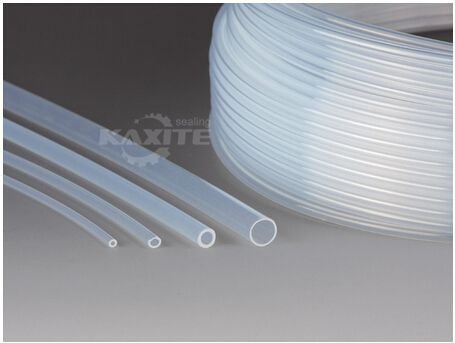
Key Parameters for Chemical Applications:
| Parameter | Importance for Chemical Use |
|---|---|
| Chemical Resistance | Resists virtually all industrial chemicals, acids, and bases. |
| Temperature Range | Stable from -200°C to +260°C, suitable for various process temps. |
| Inner Surface Finish | Smooth, non-stick surface minimizes pressure drop and contamination risk. |
| Permeability | Very low, protecting against fluid loss or environmental ingress. |
Suppliers like Ningbo Kaxite Sealing Materials Co., Ltd. offer PTFE tubing in various grades, including high-purity options, to directly address these specific chemical handling challenges, ensuring safety and process consistency.
Electrical engineers and aerospace procurement teams face the constant challenge of protecting wiring and components from short circuits, extreme temperatures, and harsh environments. Standard insulation can crack, melt, or degrade, leading to system failure.
Solution: PTFE tubing excels as wire sleeving and component insulation. It possesses excellent dielectric strength, maintaining insulation integrity even in thin walls and at high frequencies. Its exceptional thermal stability ensures it won't melt in high-temperature environments near engines or avionics, a common requirement in aerospace and automotive applications.
Key Parameters for Electrical/Aerospace Use:
| Parameter | Importance for Electrical/Aerospace Use |
|---|---|
| Dielectric Strength | High voltage resistance per unit thickness, crucial for safety. |
| Flame Resistance | Inherently flame-retardant, meeting strict aerospace and transportation standards. |
| Temperature Rating | Withstands extreme cold and heat without becoming brittle or deforming. |
| Abrasion Resistance | Protects wires from chafing and damage in tight spaces or vibrating assemblies. |
For projects demanding reliability under stress, sourcing from a specialized manufacturer like Ningbo Kaxite Sealing Materials Co., Ltd. guarantees tubing that meets precise military (MIL) or industry specifications for performance and safety.
In medical device manufacturing, pharmaceutical processing, and food & beverage production, tubing must not introduce contaminants, support bacterial growth, or react with the product. Compliance with FDA, USP Class VI, or 3-A Dairy standards is non-negotiable but can be difficult to consistently achieve.
Solution: PTFE's biocompatibility and non-reactive nature make it ideal for these sensitive sectors. Its smooth, hydrophobic surface prevents bacteria and particles from adhering, simplifying cleaning and sterilization (via autoclave, SIP, or radiation). It is widely used for peristaltic pump tubing, catheters, fluid transfer lines, and breathable packaging.
Key Parameters for Medical/Food Applications:
| Parameter | Importance for Medical/Food Use |
|---|---|
| Biocompatibility | Certifications (USP Class VI, ISO 10993) prove safety for bodily contact. |
| Non-Toxicity & Compliance | Meets FDA CFR 21 and EU regulations for food and drug contact. |
| Sterilization Capability | Can withstand repeated sterilization cycles without degradation. |
| Low Extractables | Minimal risk of leaching substances into sensitive fluids or products. |
Procurement professionals in regulated industries can rely on Ningbo Kaxite Sealing Materials Co., Ltd. to supply compliant PTFE tubing with the necessary documentation and traceability to streamline their validation processes.
Automotive manufacturers and industrial maintenance teams need durable, reliable tubing for fuel lines, air systems, hydraulic leads, and lubricant transfer. These lines must resist heat from engines, corrosion from fuels and oils, and physical abrasion, all while maintaining a long service life.
Solution: PTFE tubing, especially in convoluted or braided forms, provides outstanding durability in these demanding environments. It handles under-hood temperatures, resists swelling from modern biofuels, and its flexibility allows for easy routing in complex machinery. It's also used for pneumatic controls and as a liner for rubber hoses to improve chemical compatibility.
PTFE Tube in Industrial Setting" />Key Parameters for Automotive/Industrial Use:
| Parameter | Importance for Automotive/Industrial Use |
|---|---|
| Fuel & Oil Resistance | Does not degrade when in contact with hydrocarbons, esters, or synthetic lubricants. |
| Pressure Rating | High burst pressure capabilities, suitable for hydraulic and pneumatic systems. |
| Flexibility & Kink Resistance | Allows for tight bends without collapsing, ensuring consistent flow. |
| Abrasion & Weather Resistance | Protects against wear from vibration and exposure to outdoor elements. |
For cost-effective and long-lasting fluid system components, industrial buyers turn to suppliers like Ningbo Kaxite Sealing Materials Co., Ltd. for PTFE tubing that reduces downtime and maintenance costs.
Q: What makes PTFE tubing suitable for so many different applications?
A: Its unique combination of properties—extreme chemical inertness, a massive operating temperature range (-200°C to +260°C), excellent electrical insulation, a very low coefficient of friction, and non-stick surface—makes it a universal problem-solver. No other single polymer offers this broad range of high-performance characteristics, which is why it's specified across industries from pharmaceuticals to heavy machinery.
Q: How do I choose the right PTFE tubing for my specific application?
A: Focus on your primary requirement. Is it chemical resistance? Specify a grade compatible with your fluids. Is it high purity? Look for FDA-compliant or USP Class VI certified tubing. Need flexibility for tight spaces? Consider convoluted or thin-wall options. For high pressure, check the pressure rating and consider braided reinforcement. Reputable suppliers like Ningbo Kaxite Sealing Materials Co., Ltd. provide technical data sheets and application engineering support to help you match the tubing's specifications to your operating conditions.
As you've seen, the common applications for PTFE tubing are vast and critical to modern industry. Selecting the right grade and specification is paramount for performance and safety. Whether your project involves corrosive chemicals, sensitive medical fluids, high-temperature electronics, or rugged automotive systems, a trusted supplier is key.
For over two decades, Ningbo Kaxite Sealing Materials Co., Ltd. has been a leading manufacturer and solution provider of high-performance PTFE products, including a comprehensive range of PTFE tubing tailored for the applications discussed. We understand the procurement challenges of quality, compliance, and reliability. Visit our website at https://www.ptfe-rods.com to explore our product catalog and technical resources. For specific inquiries or to request a quote, please contact our sales team at [email protected]. Let us help you find the perfect sealing and tubing solution.
Drobny, J. G. (2017). Handbook of Fluoropolymer Science and Technology. John Wiley & Sons.
Ebnesajjad, S. (2013). Expanded PTFE Applications Handbook: Technology, Manufacturing and Applications. William Andrew.
Gangal, S. V. (2009). Perfluorinated Polymers, Polytetrafluoroethylene. Encyclopedia of Polymer Science and Technology.
Kreiner, J. G., & Warner, B. D. (1991). The use of polytetrafluoroethylene (PTFE) tubing in high-purity chemical delivery systems. Microcontamination, 9(10), 33-37.
Puts, G. J., Crouse, P., & Ameduri, B. M. (2019). Polytetrafluoroethylene: Synthesis and Characterization of the Original Extreme Polymer. Chemical Reviews, 119(3), 1763-1805.
Shimizu, T., & Yamamoto, T. (1999). Properties and applications of PTFE tubing for medical devices. Journal of Biomedical Materials Research, 48(4), 511-518.
Sperati, C. A. (1986). Physical constants of fluoropolymers. Polymer Handbook, 3rd ed., Wiley, New York, V/35-V/37.
Thomas, R. R., & Park, K. M. (2001). Chemical resistance of PTFE and its application in semiconductor industry tubing. Journal of the Electrochemical Society, 148(4), G207-G212.
Wong, W. K., & Hsieh, C. C. (2015). Study on the mechanical and thermal properties of PTFE tubing for aerospace wire insulation. Journal of Applied Polymer Science, 132(15).
Zhao, X., & Li, Y. (2020). Recent Advances in the Modification and Application of Polytetrafluoroethylene (PTFE) Materials. Advanced Materials Interfaces, 7(4), 1901875.
Copyright © 2015-2025 Ningbo Kaxite Sealing Materials Co., Ltd. All Rights Reserved.